
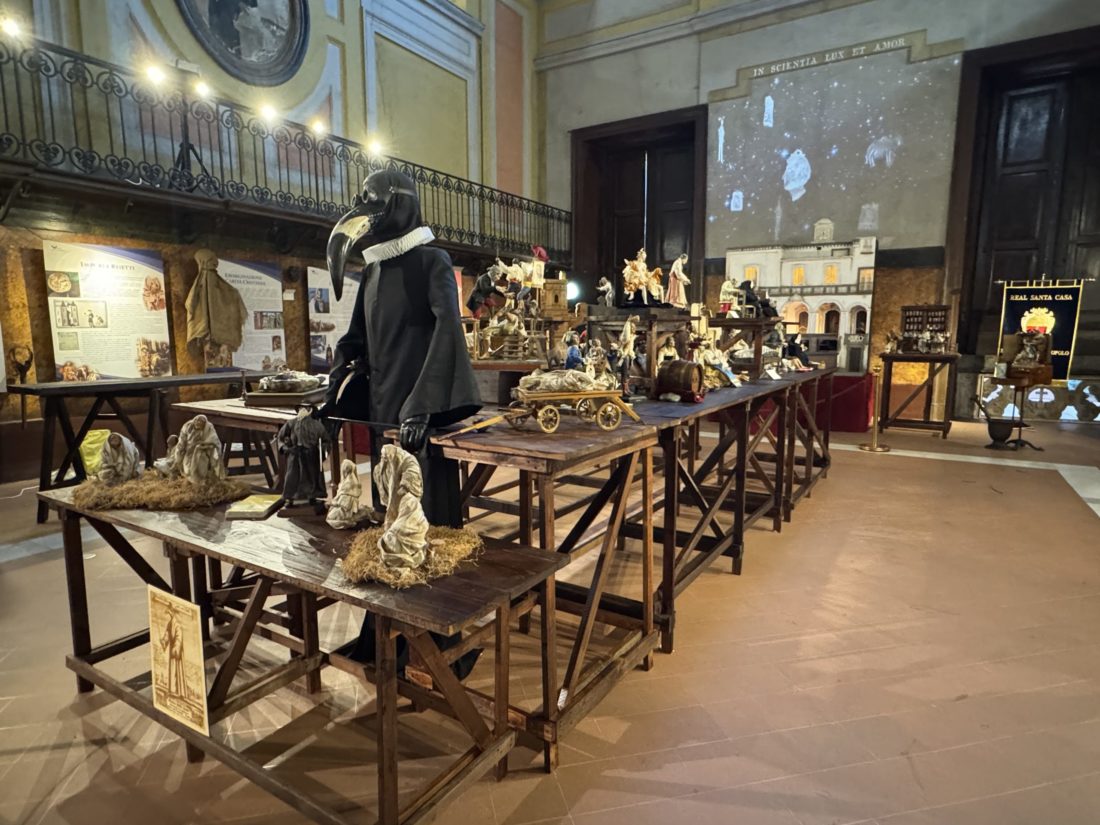
Lebbrosi, amputati, malati di peste. Un presepe dedicato ai più fragili. Lo propone (foto) il Museo delle Arti Sanitarie all’ex ospedale della pace (via dei Tribunali 277) realizzato con il finanziamento della Città Mmetropolitana di Napoli.
“Incurabili pastori e guaritori ciarlatani” ripercorre ogni malattia, compreso il covid: è stato riallestito nella sala Lazzaretto. Si consiglia la visita guidata per fruire del valore scientifico della raccolta. L’ingresso è libero previa prenotazione (tramite i numeri 081 440647 – 33335718341 oppure la mail info@ilfarodippocrate.it).
Spiega Gennaro Rispoli, direttore scientifico del museo: «Si tratta di un presepe tecnico, un omaggio alla nostra scuola medica, che usa il pastore napoletano, manufatto artigianale tipico della nostra terra, per mostrare tutte le malattie del mondo ed esorcizzarle. È il nostro modo di augurare una buona salute a tutti e una pronta guarigione ai malati e omaggiare gli operatori sanitari e tutte le istituzioni che da sempre assicurano le cure. Anticamente, molte malattie erano incurabili e chi curava era spesso un ciarlatano. La medicina, in questo senso, ha fatto molta strada, riuscendo a guarire morbi che si credevano incurabili. Raccontiamo, in fin dei conti, qualcosa che fa parte della vita quotidiana, anche nel presepe tradizionale c’è sempre un gobbo, un malformato o un amputato come rilievo epidemiologico della società civile. Al nostro, abbiamo deciso di non apporre cartelline che spiegassero il tipo di malattia che affligge ogni pastore per lasciare la possibilità ai visitatori di intuire le patologie ed i vari sedicenti dottori».
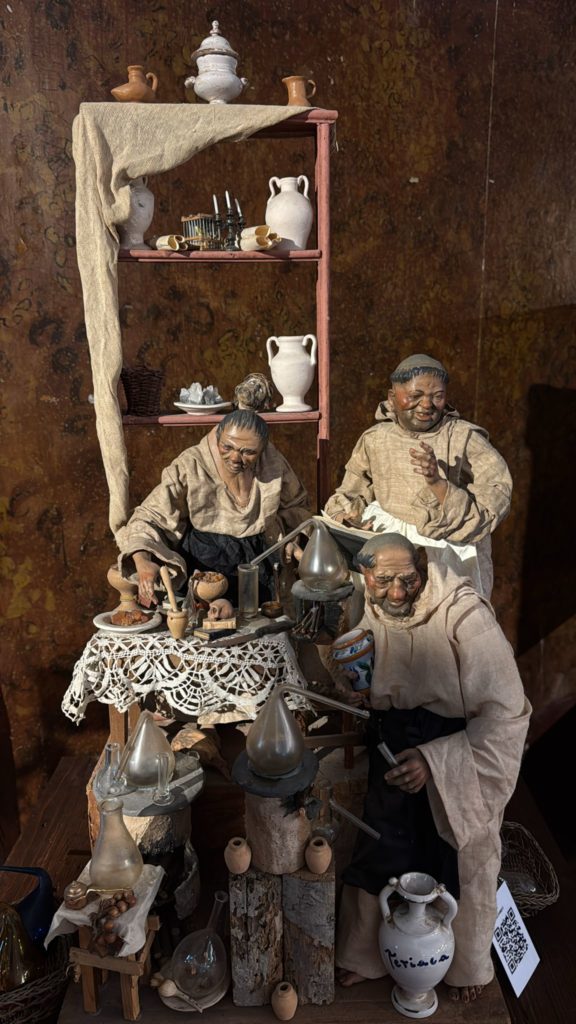
Nell’allestimento ambientato in una corsia dell’antico lazzaretto tra i cento pastori malati, speziali, cerusici ci sono anche i medici in costume settecentesco, i barbieri che usavano le sanguisughe come terapia fino agli inizi degli anni ’70, oppure i salumieri che insaccando salami si ritenevano capaci di operare anche l’ernia nel ‘500.
Persino gli edifici che fanno da sfondo sono in linea con la finalità scientifica del presepe, riproduzioni in scala degli ospedali più antichi e belli di Napoli: la farmacia degli Incurabili di Napoli, l’ospedale psichiatrico Annunziata di Aversa e gli ospedali Annunziata e San Gennaro di Napoli. Attraverso l’evoluzione delle malattie e dei metodi curativi si racconta la storia più autentica della città e della sua solidarietà.
Exhibition designer Luca De Lorenzo, video mapping a cura di Emanuele Buonocore.
Museum of Health Arts/ Lepers, amputees, plague victims: a scientific crib in the Lazzaretto room of the former hospital of peace. Tribute to the Neapolitan medical school
Leprosy sufferers, amputees, plague victims. A nativity scene dedicated to the most vulnerable. It is presented by the Museum of Health Arts at the former hospital of peace (Via dei Tribunali 277) and was created with funding from the Metropolitan City of Naples.
“Incurabili pastori e guaritori ciarlatani” (Incurable shepherds and charlatan healers) traces every disease, including COVID-19: it has been rearranged in the Lazzaretto room. A guided tour is recommended to appreciate the scientific value of the collection. Admission is free upon reservation (by calling 081 440647 – 33335718341 or emailing info@ilfarodippocrate.it).
Gennaro Rispoli, scientific director of the museum, explains: “This is a technical nativity scene, a tribute to our medical school, which uses the Neapolitan shepherd, a typical handicraft of our land, to show all the diseases in the world and exorcise them. It is our way of wishing good health to everyone and a speedy recovery to the sick, as well as paying tribute to healthcare workers and all the institutions that have always provided care. In ancient times, many diseases were incurable and those who treated them were often charlatans. Medicine, in this sense, has come a long way, managing to cure diseases that were once believed to be incurable. Ultimately, we are recounting something that is part of everyday life. Even in traditional nativity scenes, there is always a hunchback, a deformed person or an amputee as an epidemiological reflection of civil society. In ours, we decided not to add labels explaining the type of illness afflicting each shepherd, to allow visitors to guess the pathologies and the various self-styled doctors”.
The setting is a ward in the old lazaretto, among a hundred sick shepherds, apothecaries and surgeons. There are also doctors in 18th-century costume, barbers who used leeches as therapy until the early 1970s, and butchers who, by stuffing salami, believed themselves capable of operating on hernias in the 16th century.
Even the buildings in the background are in keeping with the scientific purpose of the nativity scene, as they are scale reproductions of the oldest and most beautiful hospitals in Naples: the Incurabili pharmacy in Naples, the Annunziata psychiatric hospital in Aversa, and the Annunziata and San Gennaro hospitals in Naples. Through the evolution of diseases and methods of treatment, the most authentic history of the city and its solidarity is told.