

L’Iran e le donne. La dittatura e la protesta. La voce del popolo contro la feroce supponenza dell’ayatollah Ali Khamenei. I social mostrano la sua foto bruciata dalle ragazze con la sigaretta. Mentre il regista pluripremiato Jafar Panahi, rilasciando interviste alla stampa, appare fiducioso sulla caduta del regime. Accadrà, anche se nessuno può prevedere quando, in un mondo incendiato da odio, rabbia, sopraffazione.
La vita traballa tra i suoi sconsiderati paradossi che Rosa Panaro, artista napoletana con radici a Casal di Principe nel Casertano di cui andava fiera, ha modellato in sculture e disegni fino ai suoi ultimi giorni, lasciandoci in eredità quel pensiero artistico spiazzante e liberatorio. Capace di smantellare luoghi comuni, fare a pezzi logiche conformiste, fracassare tranquillizzanti gabbie sociali.
Che cosa avrebbe detto e creato Rosa, oggi, incalzata dalle incandescenti immagini captate attraverso internet prima che la rete venisse silenziata dalla Repubblica islamica, se lei non se ne fosse andata per sempre quel 5 marzo del 2022? Se lo chiede chi scrive questa cronaca d’arte mentre ne ammira le opere esposte nella galleria Tiziana Di Caro, in piazzetta Nilo, nel cuore di una Napoli che non smette di incantare chi la abita e chi la visita per la prima volta.
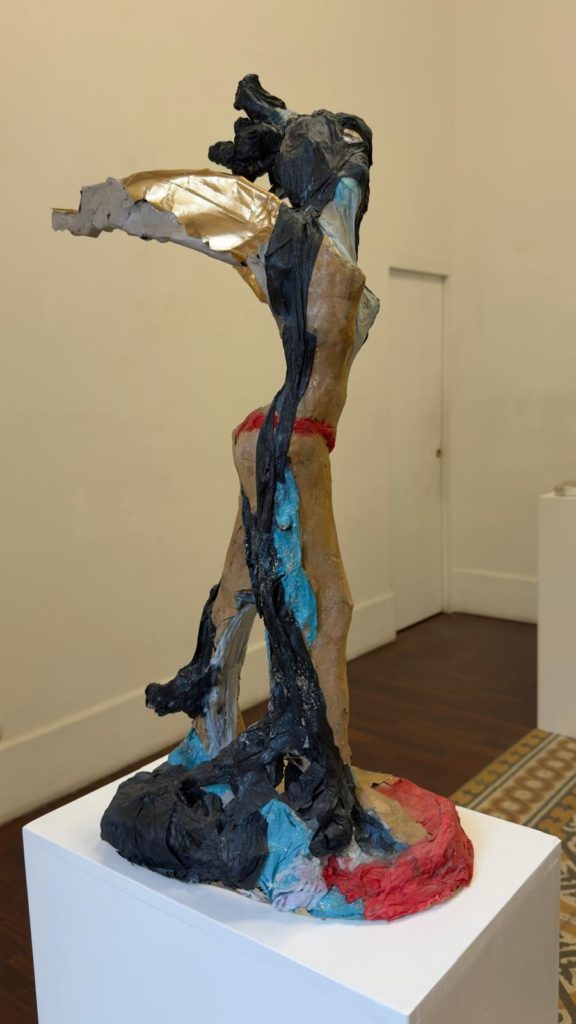
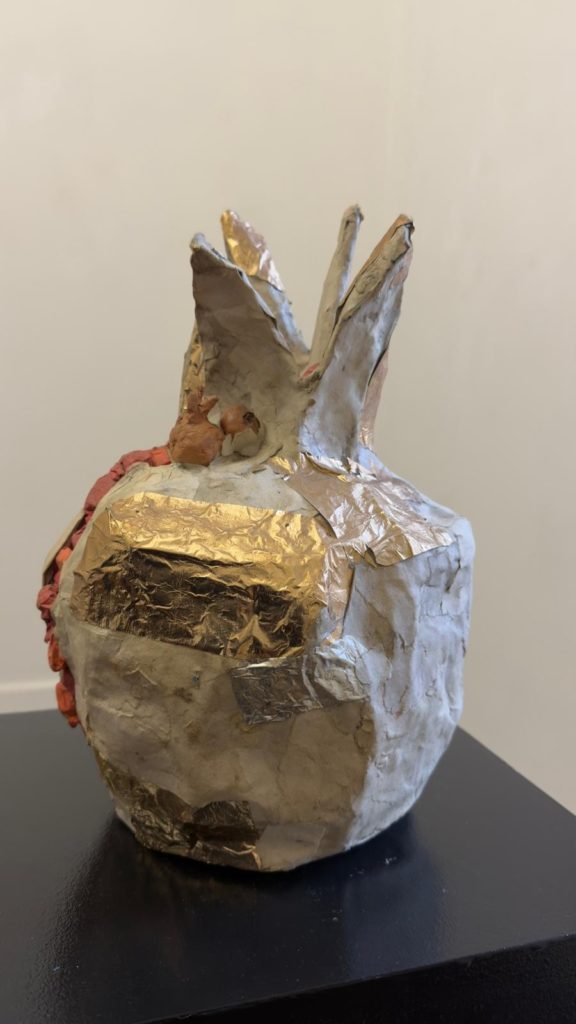
Ogni scultura è un urlo di ribellione contro una realtà che classifica, impacchetta, deturpa, distrugge natura e umanità. Piccole e grandi, le sue creature di cartapesta continuano a commuovere e sorprendere. La grande farfalla sembra sbattere le ali a ogni respiro che le si avvicina; le salamandre alle pareti invocano resistenza e promettono rinascita; le sue figure femminili sono audaci reinterpretazioni di Lilith e Parthenope, materne o inquietanti, aggrappate a un archetipo demoniaco o a un mito accogliente che invita a riflettere sul futuro delle nostre anime; il melograno diffonde speranza di salvezza e prosperità; il cormorano vorrebbe indicare l’anelito alla libertà ma vola sulla scia di un mare inquinato e le sue piume sono chiazzate di catrame; persino la colomba che porta un ramoscello d’ulivo nel becco è incazzata perché vede compromessa e ammaccata quella pace di cui vorrebbe essere portatrice.
Essere un’artista significa prolungare all’infinito la propria presenza sulla terra: ed è quello che avviene con Rosa che continua a trasmettere forza, ironia, resistenza. Che non abbia mai smesso di contrastare logiche di potere maschilista è evidente in ogni suo tocco creativo femminista, da quando, negli anni Cinquanta, frequentava il liceo artistico (prima) e l’accademia di Belle arti a Napoli (dopo). Impavida, temeraria, pioniera di un’energia indelebile, di quella che nasce dalla consapevolezza di venire discriminata e di volerla superare creando aggregazione con le altre artiste.
Rasserena sapere che già poco prima della sua scomparsa, il Museo Madre (Fondazione Donnaregina per le arti contemporanee) si sia accorto del suo impatto espressivo e l’abbia inserita nelle iniziative espositive, proseguendo, adesso, in una indagine sulla memoria con il secondo capitolo della mostra “Gli anni” a cura della direttrice Eva Fabris (affiancata da Marta Federici e Silvia Salvati). Così il pubblico potrà vedere le sculture di Rosa tra le opere di altri 14 artisti, in esposizione fino al 6 aprile di quest’anno.
Ma la Fondazione Donnaregina potrebbe rivelarsi meno avara e dedicarle finalmente l’antologica che merita un’artista così coraggiosa, trasgressiva e dirompente.
©Riproduzione riservata
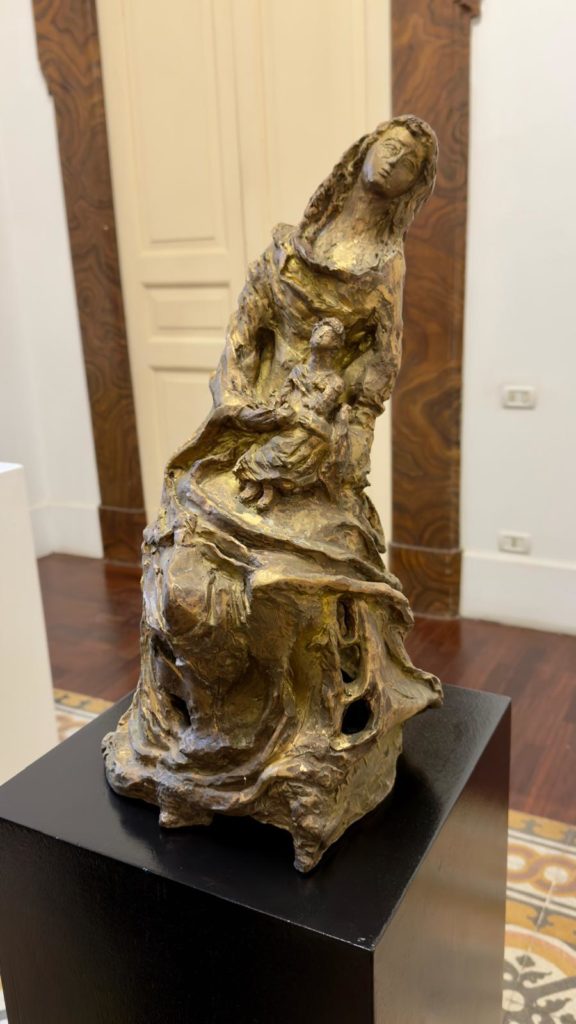
Le foto in pagina sono di Nando Calabrese autore anche del video
Clicca in basso
The photos on this page are by Nando Calabrese, who also created the video
Please click below
Mostra di Rosa Panaro alla Galleria Tiziana Di Caro
Galleria Tiziana Di Caro/ Rosa Panaro: papier-mâché sculptures that capture the irony of reality
Iran and women. Tyranny and protest. The voice of the people against the brutal arrogance of Ayatollah Ali Khamenei. Social media show his photo being burned by girls with cigarettes. Meanwhile, award-winning film director Jafar Panahi appears confident about the fall of the regime in interviews with the press. It will happen sooner or later, even if no one can predict when, in a world inflamed by hatred, anger and oppression.
Life is shaken by its reckless paradoxes, which Rosa Panaro, a Neapolitan artist with roots in Casal di Principe in the Caserta area, which she was proud of, shaped into sculptures and drawings until her last days, leaving us a legacy of her unsettling and liberating artistic thought. Capable of dismantling clichés, tearing apart conformist logic and smashing tranquillising social cages.
What would Rosa have said and created today, bombarded by the incandescent images captured on the internet before the network was silenced by the Islamic Republic, if she had not left us forever on the 5th of March 2022? This is the question asked by the author of this art chronicle as she admires her works on display in the Tiziana Di Caro’s gallery, in Piazzetta Nilo, in the heart of Naples, a city that never ceases to enchant those who live there and those who visit it for the first time.
Each sculpture is a scream of rebellion against a reality that classifies, packages, defaces and destroys nature and humanity. Small and large, his papier-mâché creatures continue to move and surprise. The large butterfly seems to flap its wings with every breath that approaches it; the salamanders on the walls invoke resistance and promise rebirth; his female figures are audacious reinterpretations of Lilith and Parthenope, maternal or disturbing, clinging to a demonic archetype or a welcoming myth that invites us to reflect on the future of our souls; the pomegranate spreads hope for salvation and prosperity; the cormorant would like to indicate the yearning for freedom but flies in the trail of a polluted sea and its feathers are stained with tar; even the dove carrying an olive branch in its beak is angry because it sees the peace it would like to bring compromised and damaged.
Being an artist means prolonging one’s presence on earth indefinitely: and this is what happens with Rosa, who continues to convey her strength, irony and resilience. It is clear from every creative feminist touch that she has never stopped fighting against male-dominated power structures, ever since she attended art school in the 1950s and then the Academy of Fine Arts in Naples. Fearless, daring, a pioneer of indelible energy, the kind that comes from the awareness of being discriminated against and wanting to overcome it by creating a community with other female artists.
It is reassuring to know that shortly before her death, the Madre Museum (Donnaregina Foundation for Contemporary Arts) recognised her expressive impact and included her in its exhibition initiatives, continuing now with an exploration of memory in the second chapter of the exhibition “Gli anni” (The Years), curated by director Eva Fabris (assisted by Marta Federici and Silvia Salvati). The public thus has the opportunity to see Rosa’s sculptures alongside the works of 14 other artists, on display until 6 April this year.
However, the Donnaregina Foundation could be less stingy and finally dedicate the anthology that such a courageous, transgressive and disruptive artist deserves.
.