
Il ninfeo romano della Grotta Azzurra. Fotografie di Luigi Spina. Domani, giovedì 30 luglio, a Capri, nel chiostro grande della Certosa, alle 18, si inaugura una mostra di venti scatti (foto) in grande formato realizzati da Luigi Spina.
L’esposizione è organizzata dalla Città di Capri e dal Comune di Anacapri e si inserisce nel programma di iniziative promosso dai Musei di Capri per celebrare il bicentenario della scoperta della Grotta Azzurra.
Il percorso visivo è completato da una selezione di immagini provenienti dall’Archivio storico del Museo Archeologico Nazionale di Napoli sulle operazioni di recupero delle statue rinvenute nella Grotta Azzurra durante le campagne archeologiche degli anni Sessanta e Settanta.
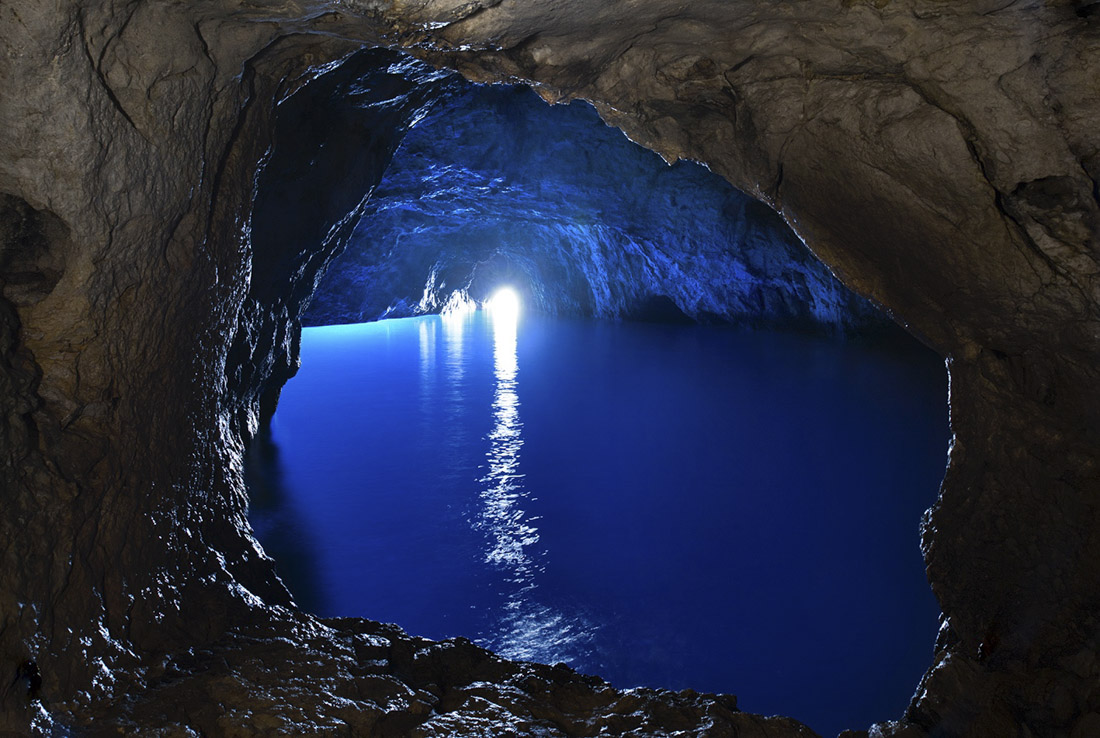
Si restituisce così a questo luogo la rilevanza storica, archeologica e monumentale. Se la Grotta Azzurra è universalmente nota come uno dei luoghi simbolo del paesaggio caprese, le indagini archeologiche hanno consentito di riportarne in primo piano la funzione originaria, quale raffinato spazio di rappresentanza e di otium della villa di Gradola, residenza imperiale, attualmente oggetto di interventi di scavo che consentiranno di restituirla al pubblico.
Riscoperta nel 1826 da August Kopisch ed Ernst Fries, la Grotta Azzurra entrò rapidamente nell’immaginario del Grand Tour. Fu tuttavia tra il 1964 e il 1976, con le campagne di recupero dirette da Alfonso De Franciscis, che emerse con chiarezza la sua natura di ninfeo romano.
Il ritrovamento di cinque statue e di numerosi frammenti marmorei ha infatti permesso di ricondurre la cavità al sistema delle residenze imperiali dell’isola, frequentate dagli imperatori tra Augusto e Tiberio.
Le venti fotografie di Luigi Spina propongono una rilettura contemporanea di questo contesto archeologico. Le immagini, infatti, indagano il rapporto tra architettura, mare e luce, mettendo in evidenza la relazione i tra il monumento e l’ambiente naturale che lo accoglie.
Lo sguardo fotografico invita a una lettura più profonda della sua dimensione storica e percettiva, restituendo il carattere unico di uno spazio concepito in età romana come luogo in cui natura e architettura si univano per costruire un’esperienza estetica.
Per saperne di più
Read more
https://museicapri.cultura.gov.it/it/musei-e-parchi-archeologici-di-capri/
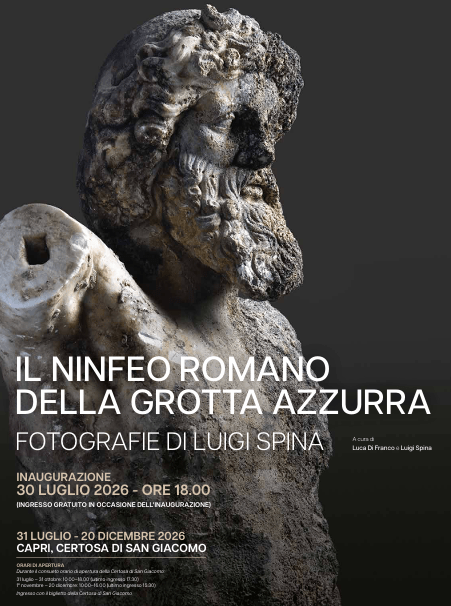
The Certosa di Capri / The Blue Grotto? A space for entertainment (and leisure) at the imperial residence. This is documented trough 20 photos by Luigi Spina
The Roman Nymphaeum of the Blue Grotto. Photographs by Luigi Spina. Tomorrow, Thursday, the 30th of July, in Capri, in the large cloister of the Certosa, at 6:00 p.m., an exhibition of twenty large-format photographs by Luigi Spina will open.
The exhibition is organized by the City of Capri and the Municipality of Anacapri and is part of a program of initiatives promoted by the Museums of Capri to celebrate the bicentennial of the discovery of the Blue Grotto.
The visual journey is complemented by a selection of images from the Historical Archives of the National Archaeological Museum of Naples, documenting the recovery of statues found in the Blue Grotto during the archaeological campaigns of the 1960s and 1970s.
This exhibition thus restores the Blue Grotto’s historical, archaeological, and monumental relevance. While the Blue Grotto is universally known as one of the iconic landmarks of the Capri landscape, archaeological investigations have brought its original function back into focus: that of a refined space for reception and leisure within the Villa of Gradola, an imperial residence currently undergoing excavations that will eventually allow it to be reopened to the public.
Rediscovered in 1826 by August Kopisch and Ernst Fries, the Blue Grotto quickly became a favourite destination on the Grand Tour. However, it was between 1964 and 1976, during the restoration campaigns led by Alfonso De Franciscis, that its nature as a Roman nymphaeum became clearly evident.
The discovery of five statues and numerous marble fragments has, in fact, made it possible to link the cave to the island’s system of imperial residences, used by emperors from Augustus to Tiberius.
Luigi Spina’s twenty photographs offer a contemporary reinterpretation of this archaeological context. The images explore the relationship between architecture, the sea, and light, highlighting the connection between the monument and the natural environment that surrounds it.
The photographic perspective invites a deeper understanding of its historical and perceptual dimensions, capturing the unique character of a space conceived in Roman times as a place where nature and architecture came together to create an aesthetic experience.