
Andrea Fogli al Museo e Real Bosco di Capodimonte con il suo ultimo progetto: Atlas Partenope. La mostra di Napoli (23.10.2026 – 31.01.2027) segue la recente antologica organizzata dal Palazzo delle Esposizioni di Roma in cui sono stati presentati i 7 Atlanti, ovvero i suoi principali cicli di opere degli ultimi 25 anni.
L’Atlas Partenope è il primo inedito capitolo di un (ottavo) Atlante delle devozioni, dedicato a una galassia immaginale partenopea, in una città dove una statua o un vulcano, un sogno o un rito quotidiano, un teschio, una maschera o un calciatore straordinario, hanno tuttora il loro culto.
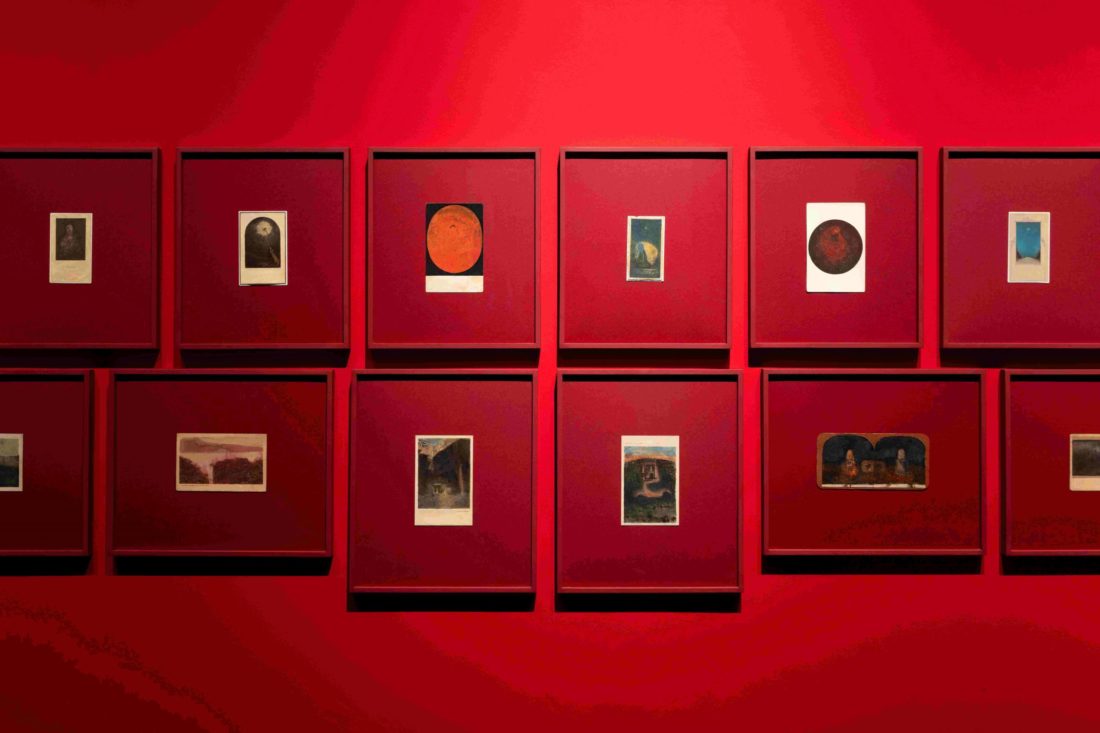
La mostra si trova al secondo piano della Reggia (sale 81, 83-84), in 3 ambienti diversi ma collegati. Quello centrale con i disegni dell’Atlas Partenope dialoga con le “ripitture” di santini e cartoline postali realizzati negli ultimi venti anni e con l’inedita installazione in argilla cruda nell’ultima sala della mostra.
Attraversando ogni tecnica artistica (disegno, pittura, scultura), emerge la trasfigurazione di immagini preesistenti appartenenti a una memoria comune: quella rappresentata dalle cartoline e dai santini, oltre che dal diorama di immagini presenti nell’Atlas, ma anche dal teschio nelll’ultima sala, dove una frase trascritta sul muro (“cenere torna argilla”) lascia interpretare la mostra come un esorcismo vitale, per restituire vita alle immagini depositate nella nostra psiche.
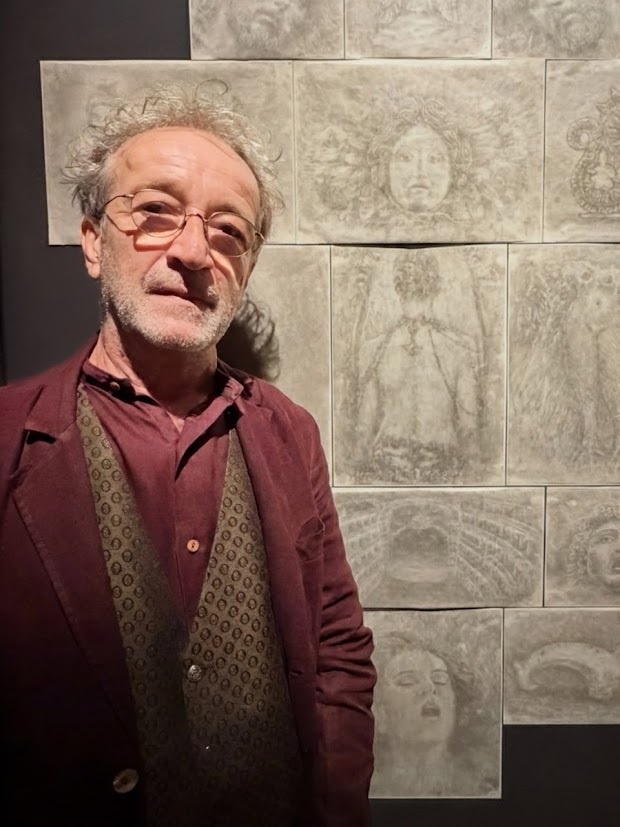
La mostra ruota intorno i dieci polittici dell’Atlas Partenope nella sala centrale: una quadreria di evanescenti disegni a carboncino in cui il visitatore potrà rintracciare varie figure presenti nelle opere di Capodimonte, in altri musei e chiese della città, o nelle case e per le vie, ma anche in film e spettacoli teatrali realizzati a Napoli.
Il pensiero guida lo sintetizza l’artista stesso: «Un Atlante delle ‘immagini del cuore’ cancellare, deformare, crogiolarsi tra le rovine, è atto, anche artistico, che asseconda il lavoro della morte, che se ci guardiamo intorno non ha certo bisogno del nostro aiuto. Le rovine, le immagini, vanno invece riabitate, rianimate».
Tra le immagini della mostra, Veneri, Madonne e terrificanti Meduse. Il serpente e il Benino sotto la stella del Presepe. Le scarpette dell’Annunziata e il teschio con le orecchie. Il vulcano e il sacro bosco. L’immacolata, la Mater Matuta e la voce delle Sirene. Pulcinella, l’unicorno e la Sfinge…
Introduce il percorso espositivo, un video girato in super 8 dal regista sperimentale napoletano Salvatore Sansone, che documenta un’escursione da Cuma a Castel dell’Ovo in compagnia dell’artista, in cui le 140 immagini dell’Atlas sono state sparse in vari luoghi emblematici dell’area partenopea. L’artista torna a Napoli dopo aver già esposto nel 2023 al Museo Nazionale della Ceramica Duca di Martina in una personale a cura di Marta Ragozzino.
Capodimonte Museum and Royal Park / Andrea Fogli: ‘Here is my Atlas dedicated to Partenope. Images from the heart that need to be brought back to life’
Andrea Fogli presents his latest project, Atlas Partenope, at the Capodimonte Museum and Royal Park. The exhibition in Naples (from 23th October 2026 to 31st January 2027) follows the recent retrospective organised by the Palazzo delle Esposizioni in Rome, which showcased the 7 Atlanti – that is, his main series of works from the last 25 years.
Atlas Partenope is the first, previously unseen chapter of an (eighth) Atlas of Devotions, dedicated to a Neapolitan imaginary universe, in a city where a statue or a volcano, a dream or a daily ritual, a skull, a mask or an extraordinary footballer, are still the objects of worship.
The exhibition is located on the second floor of the Royal Palace (rooms 81, 83–84), spread across three distinct yet interconnected spaces. The central space, featuring the drawings from the Atlas Partenope, engages with the ‘repainted’ holy cards and postcards created over the last twenty years, as well as with the previously unseen installation in raw clay in the final room of the exhibition.
Spanning every artistic medium (drawing, painting, sculpture), the transfiguration of pre-existing images belonging to a shared memory emerges: that represented by postcards and holy cards, as well as by the diorama of images featured in the Atlas, but also by the skull in the final room, where a phrase inscribed on the wall (‘ash returns to clay’) suggests the exhibition can be interpreted as a vital exorcism, designed to breathe new life into the images lodged within our psyche.
The exhibition centres on the ten polyptychs of the Atlas Partenope in the central hall: a collection of evanescent charcoal drawings in which visitors can recognise various figures found in the works of Capodimonte, in other museums and churches across the city, or in homes and on the streets, as well as in films and theatre productions set in Naples.
The artist himself sums up the guiding principle: ‘An Atlas of “images of the heart” – erasing, distorting, revelling amidst the ruins – is an act, an artistic one too, that goes along with the work of death, which, if we look around us, certainly needs no help from us. The ruins, the images, must instead be re-inhabited, reanimated’.
Among the images in the exhibition are Venuses, Madonnas and terrifying Medusas. The serpent and the Benino under the star of the Nativity scene. The little shoes of the Annunciation and the skull with ears. The volcano and the sacred grove. The Immaculate Conception, the Mater Matuta and the voice of the Sirens. Pulcinella, the unicorn and the Sphinx…
The exhibition itinerary is introduced by a Super 8 film shot by the Neapolitan experimental filmmaker Salvatore Sansone, documenting an excursion from Cuma to Castel dell’Ovo in the company of the artist, during which the 140 images from the Atlas were scattered across various emblematic locations in the Neapolitan area. The artist returns to Naples having previously exhibited in 2023 at the Duca di Martina National Ceramics Museum in a solo exhibition curated by Marta Ragozzino.