
Lei nei sarebbe felice. Lei è Rosa Panaro, scultrice che è stato simbolo della battaglia femminista sin dagli anni cinquanta quando frequentava l’Accademia di belle arti di Napoli Una donna appassionata, amica delle altre donne sempre pronta a creare nuove sinergie, e a priettarsi verso nuovi orizzonti.
Il fatto che sia una donna, Tiziana Di Caro, per un’artista così fiera delle priore battaglie sarà motivo di orgoglio, dovunque si trovi adesso. La gallerista, infatti, che a Napoli, nella sua galleria del centro storico le ha dedicato una bellissima personale poco tempo fa, è a Torino per Artissima fino a domani, primo novembre, nello stand 4 per la mostra Back to the future/ corridoio bianco (OVAL Lingotto Fiere | via Giacomo Mattè Trucco, 70 ).
Nata a Casal di Principe (in provincia di Caserta), è partita dalla lezione del suo maestro Antonio Venditti, Panaro raggiungerà un suo stile particolare attraverso la cartapesta, interpretando la realtà e plasmando la materia come se fosse perenne ipnotizzata dall’istinto e dalla passione. Alla cartapesta arriverà dopo una lunga sperimentazione che passa attraverso resina, cemento, amianto, bronzo. Non solo scultrice ma anche finissima disegnatrice, capace di creare intensi bozzetti.
Anche se l’impronta femminista esplode in sintonia con il movimento degli anni settanta, Rosa femminista lo è sempre stata, sin dai tempi della sua primissima a formazione napoletana vincendo premi e superando in bravura molti dei suoi colleghi maschi.
Quello che l’ha sempre guidata nella sua vita d’artista, trascorsa insieme al marito Tony Stefanucci (anche lui artista e scenografo) è l’attenzione per la sofferenza delle donne nel mondo, come quella delle donne afgane che protestavano contro il burqa bruciato in piazza e contro l’oppressione dei talebani.
Tra le sue donne simbolo della ribellione, c’è Lilith la prima moglie di Adamo che osò ribellarsi all’autorità di Dio. Panaro resta un faro di lungimiranza ancora oggi in una società che cammina all’indietro e che vorrebbe mettere in discussione tante conquiste sociali femminili, indietreggiando pericolosamente verso una cultura patriarcale.
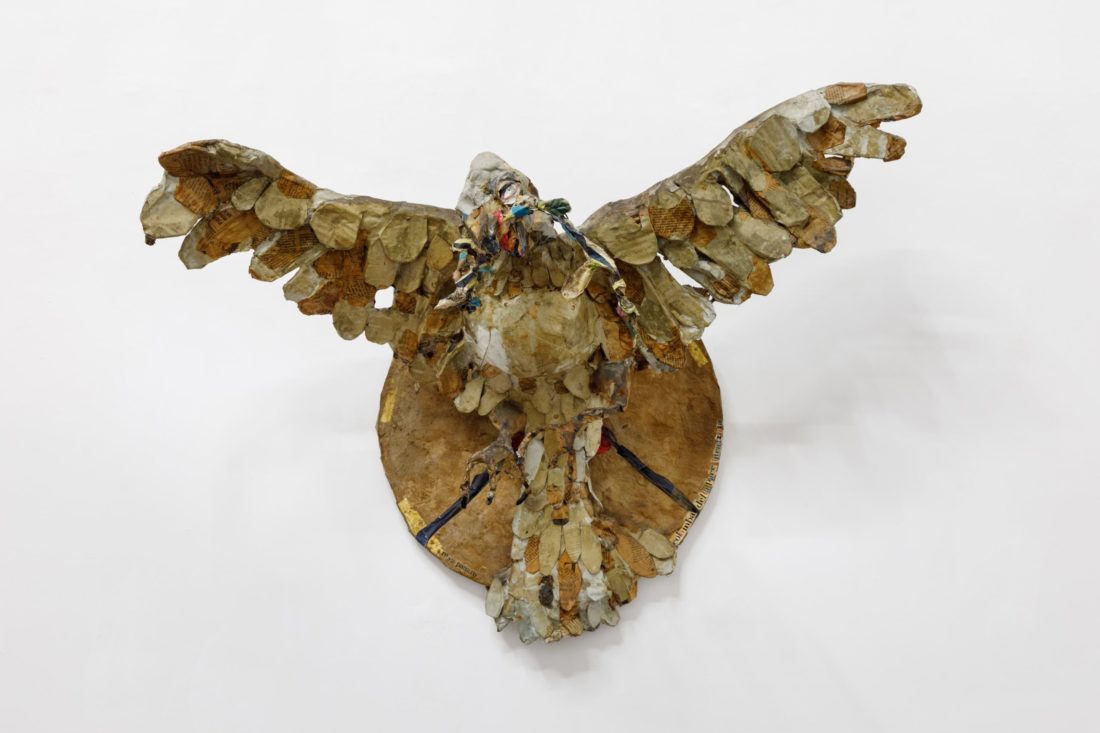
Le sue donne non sono mai serene, ma inquiete e arrabbiate come la colomba della pace (foto) che è incazzata proprio per aver fallito la propria missione.
Per saperne di più
Learn more
Galleria tiziana di caro
Turin/ Artissima 2026: Rosa Panaro, the art of the future. Those rebellious women who go through papier-mâché
She would be delighted. She is Rosa Panaro, a sculptor who has been a symbol of the feminist struggle since the 1950s, when she was a student at the Academy of Fine Arts in Naples. A passionate woman, a friend to other women, always ready to forge new partnerships and to reach out towards new horizons.
The fact that Tiziana Di Caro is a woman will be a source of pride for an artist so proud of her past struggles, wherever she may be now. The gallery owner, who recently dedicated a beautiful solo exhibition to her in her gallery in Naples’ historic centre, is in Turin for Artissima until tomorrow, the first of November, at stand 4 for the exhibition ‘Back to the Future’ (OVAL Lingotto Fiere | Via Giacomo Mattè Trucco, 70).
Born in Casal di Principe (in the province of Caserta), she began her artistic journey under the tutelage of her mentor Antonio Venditti; Panaro went on to develop her own distinctive style through papier-mâché, interpreting reality and shaping the material as if perpetually mesmerised by instinct and passion. She turned to papier-mâché after a long period of experimentation involving resin, concrete, asbestos and bronze. She is not only a sculptor but also an exceptionally fine draughtswoman, capable of creating intense sketches.
Although her feminist ethos came to the fore in step with the movement of the 1970s, Rosa has always been a feminist, ever since her very early days of training in Naples, when she won prizes and surpassed many of her male colleagues in artistic skills.
What has always guided her throughout her life as an artist – spent alongside her husband Tony Stefanucci (himself an artist and set designer) – is her focus on the suffering of women around the world, such as that of the Afghan women who protested against the burqa being burnt in the square and against the oppression of the Taliban.
Among her women who symbolise rebellion is Lilith, Adam’s first wife, who dared to defy God’s authority. Panaro remains a beacon of foresight even today in a society that is moving backwards and would like to call into question so many of women’s social achievements, regressing dangerously towards a patriarchal culture.
Her women are never serene, but restless and angry – like the dove gof peace, who is furious precisely because she has failed in her mission.
.