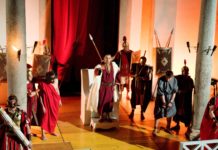

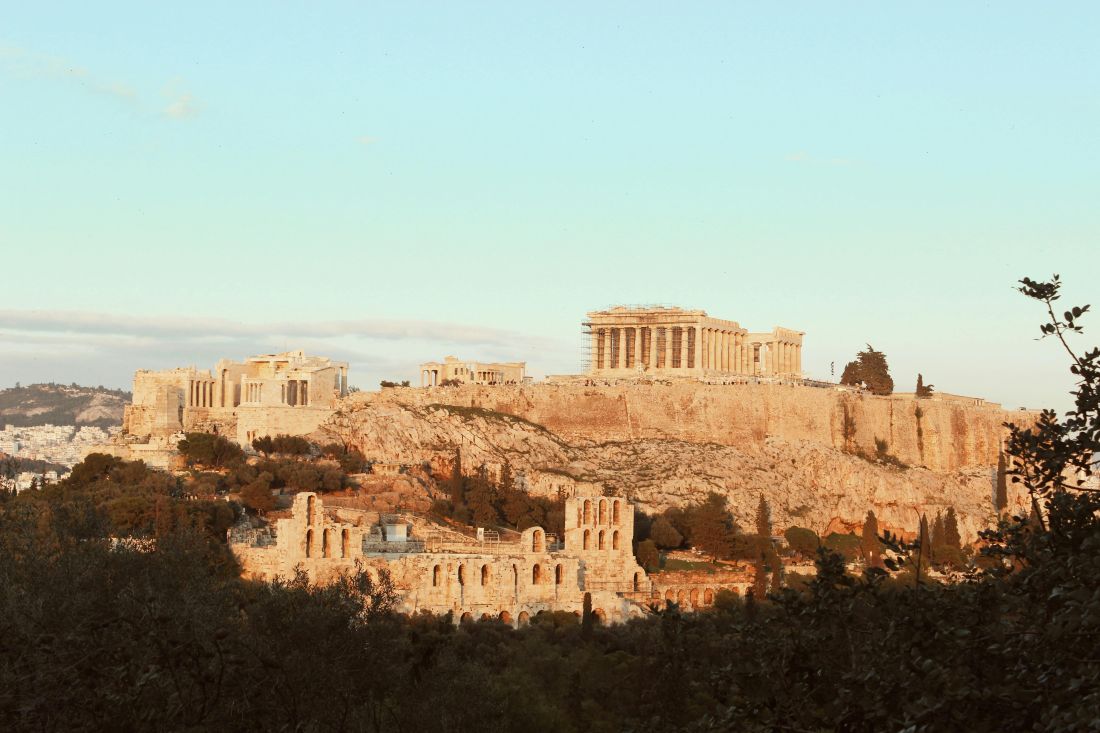
Napoli e la Grecia. Un legame antico che da oltre dieci anni si rinnova con un’iniziativa ideata da Jannis Korinthios, già prof all’università L’Orientale di Napoli (di lingua e letteratura neogreca). E’ la giornata mondiale della lingua greca (riconosciuta dall’Unesco) che si celebra il 9 febbraio.
La manifestazione è organizzata, con il supporto del Comune di Napoli (assessorato alle politiche giovanili), dal comitato sintonia-coordinamento docenti licei per la Giornata mondiale della lingua greca.
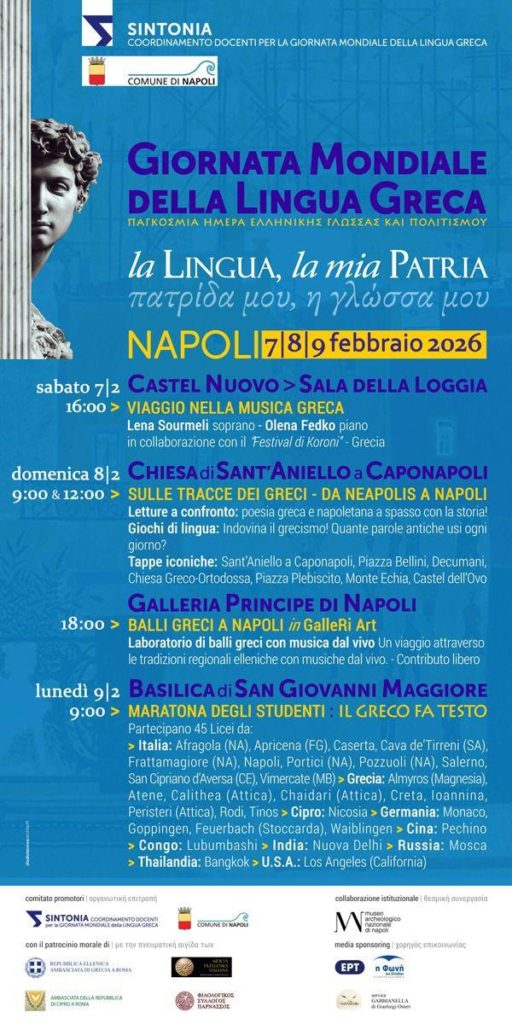
Questa edizione si sviluppa in tre giorni ricchi di incontri: primo appuntamento oggi, sabato 7 febbraio, alle 16 nella Sala della Loggia di Castel Nuovo con un viaggio nella musica greca. Il soprano Lena Sourmeli sarà accompagnata al piano da Olena Fedko. L’appuntamento è realizzato in sinergia con il Festival (ellenico) di Koroni.
Domenica 8, i numerosi studenti greci, ospiti in città con i loro insegnanti, potranno visitare i luoghi più importanti della Napoli greca, sull’onda delle celebrazioni dei 2500 anni di Neapolis. Non potrà mancare la visita al Museo nazionale archeologico di Napoli (il Mann) e la partecipazione a un pomeriggio di giochi, balli e letture poetiche.
Il fulcro della manifestazione sarà ancora una volta la maratona degli studenti “Il greco fa testo”, lunedì dalle 9 alle 15 nella Basilica di San Giovanni Maggiore, situata nell’omonimo largo del centro antico, sul tema “La mia lingua è la mia patria”, con la partecipazione di università, licei e scuole dall’Italia, dalla Grecia e da altre parti del mondo.
Spiega Korinthios: «Il mare fa viaggiare persone, idee, valori, lingue, culture e saperi. Il viaggio, il mare e la lingua hanno forgiato nel tempo il carattere del popolo greco. E la cultura greca è quella che è solo grazie al suo viaggio sulla nave del tempo, grazie agli incontri e alle contaminazioni. Grecia e Italia sono indissolubilmente legate alla cultura del mare e hanno una storia e una cultura comune. E, quando celebriamo oggi nel 2026 la lingua e la cultura greca, parliamo anche un po’ di noi, di quel ‘noi’ che siamo, o che vorremmo essere».
Essenziale in questo progetto il contributo delle scuole, come sottolinea Angela Iannuzzi del coordinamento docenti. La bellezza e la specificità di questo format napoletano, la maratona “Il greco fa testo”, si deve alla sinergia di studenti, docenti e dirigenti dei licei, che, con il sostegno del Comune, si prodigano per dare vita e continuità nel tempo a questa festa del greco, convinti che conoscere sé stessi e interpretare la realtà in cui siamo immersi passi anche attraverso la comprensione e lo studio di una lingua (e della cultura che in quella lingua si è espressa e si esprime) quanto mai affascinante come il greco».
Events/ World Greek Language Day: Naples meets its Hellenic roots. Universities and secondary schools (from around the world) come together to celebrate culture on the ship of time
Naples and the Greece. An ancient bond that has been renewed for about ten years with an initiative conceived by Jannis Korinthios, former professor at the L’Orientale University of Naples (Modern Greek language and literature). It is World Greek Language Day (recognised by UNESCO), which is celebrated on the 9th of February.
The event is organised, with the support of the Municipality of Naples (Department of Youth Policies), by the committee of high school teachers for World Greek Language Day.
This edition will take place over three days packed with events: the first event is today, Saturday 7 February, at 4 pm in the Sala della Loggia of Castel Nuovo, with a journey through Greek music. Soprano Lena Sourmeli will be accompanied on the piano by Olena Fedko. The appointment is held in collaboration with the (Hellenic) Festival of Koroni.
On Sunday the 8th, the numerous Greek students visiting the city with their teachers will be visiting the most important sites of Greek Naples, in the wake of the celebrations for the 2500th anniversary of Neapolis. A visit to the National Archaeological Museum of Naples (the Mann) and an afternoon of games, dancing and poetry readings are also on the agenda.
On Sunday the 8th, numerous Greek students, visiting the city with their teachers, will be able to visit the most important sites of Greek Naples, in the wake of the celebrations for the 2500th anniversary of Neapolis. A visit to the National Archaeological Museum of Naples (the Mann) and participation in an afternoon of games, dancing and poetry readings are also on the agenda.
The focus of the programme will once again be the student marathon “Il greco fa testo” (Greek is the benchmark), on Monday from 9 a.m. to 3 p.m. in the Basilica of San Giovanni Maggiore, located in the square of the same name in the old town centre, on the theme “My language is my homeland”, with the participation of universities, high schools and schools from Italy, Greece and other parts of the world.
Korinthios explains: “The sea allows people, ideas, values, languages, cultures and knowledge to travel. Travel, the sea and language have shaped the character of the Greek people over time. And Greek culture is what it is only thanks to its journey on the ship of time, thanks to encounters and influences. Greece and Italy are inextricably linked to the culture of the sea and have a common history and culture. And when we celebrate Greek language and culture today in 2026, we also talk a little about ourselves, about who we are, or who we would like to be”.
The contribution of schools is essential to this project, as Angela Iannuzzi from the teachers’ coordination team points out. “The beauty and uniqueness of this Neapolitan format, the “Il greco fa testo” marathon, is due to the synergy of students, teachers and high school administrators who, with the support of the municipality, strive to bring this celebration of Greek to life and ensure its continuity over time, convinced that knowing oneself and interpreting the reality in which we are immersed also requires understanding and studying a language (and the culture that has been and is expressed in that language) as fascinating as Greek”.