
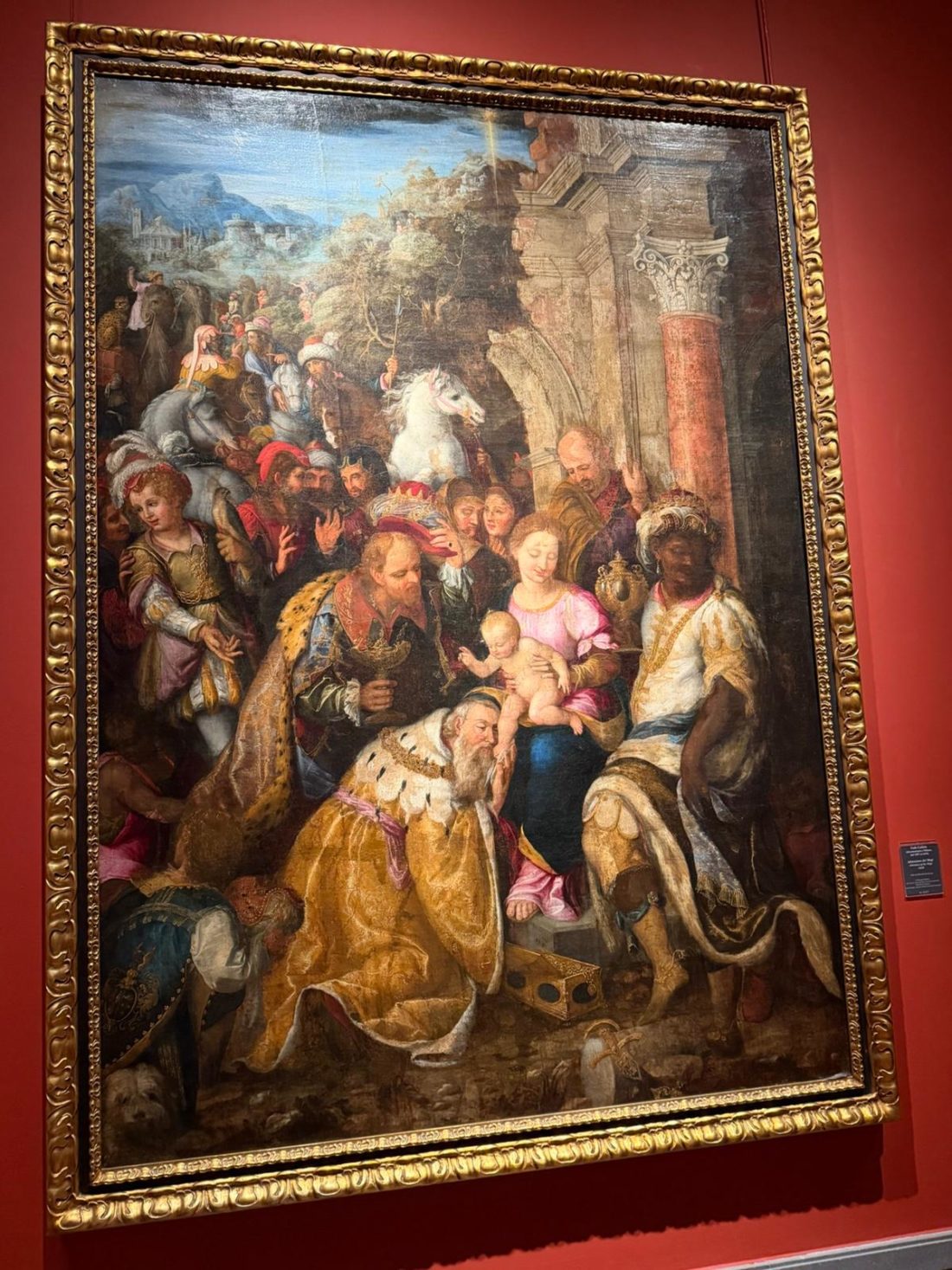
Benvenuta, Fede Galizia. Arriva al museo di Capodimonte la sua Adorazione dei re Magi (1610) da oltre due secoli nella Collezione Borbone, patrimonio del Museo e Real Bosco, ma non è mai stata esposta nella Reggia.
Prima pala d’altare firmata dalla celebre ‘pittoressa’, opera creduta dispersa e declassata a lungo come ‘anonimo fiorentino’: da oggi si potrà ammirare nella sua collocazione definitiva, la sala 79, nella galleria del secondo piano della Reggia, riaperta per l’occasione dopo i lavori.
Fede Galizia (documentata a Milano, dal 1587 al 1630), affermata ritrattista e autrice di famose nature morte conservate in importanti musei e collezioni in Italia e all’estero, nella pala per Napoli si confronta con i maestri del ‘500: Leonardo per la composizione intorno alla Madonna, ma anche Raffaello, Correggio.
Il nuovo arrivo nelle collezioni racconta anche un pezzo di storia dell’arte a Napoli al pubblico atteso a Capodimonte nelle festività: il giorno di Pasqua coincide con la prima domenica del mese a ingresso gratuito, museo aperto anche nel lunedì dell’Angelo (solo secondo piano, Real Bosco chiuso come di consueto a Pasquetta).
Il grande dipinto era stato commissionato da Baldassare Noirot, mercante fiammingo, al quale era affidata la Cappella dei Magi nell’ antica Chiesa di S. Anna dei Lombardi (1581): nel 1798 il crollo del soffitto la rese inagibile, le opere furono spostate nella vicina Santa Maria di Monteoliveto (la Sant’ Anna dei Lombardi attuale) in tempo per evitare il terremoto del 1805 che distrusse anche la “Resurrezione” di Caravaggio.
La pala di Galizia giunge al Real Museo Borbonico tra 1816 e il 1821, con la firma ben evidente: un accorgimento che le pittrici donne del tempo adottavano per non essere ‘cancellate’. Ma nel 1937 il Museo divenuto nazionale’, indica il dipinto come opera di Ignoto fiorentino del XVI‘ dandolo in temporanea consegna alla Chiesa di San Giuseppe a Rione Luzzatti edificata per accogliere le opere della distrutta chiesa di San Giuseppe Maggiore in via Medina.
Con la seconda guerra mondiale la distruzione della chiesa nel rione e la spoliazione delle sue opere, si perdono le tracce dell’Adorazione e di altre tre tele di Capodimonte, nel 1957 divenuto sede della Pinacoteca nazionale, prima ospitata nell’attuale Mann.
Ma è solo nel 2021 che la ricerca pubblicata nel catalogo della mostra a Trento ‘Fede Galizia Mirabile Pittoressa’ svela che l’Adorazione si trova al Convento di San Pasquale a Chiaia a Napoli. Fondamentale per l’identificazione il contributo dello studioso Federico Maria Giani coinvolto nell’esposizione curata da Giovanni Agosti e Jacopo Stroppa che celebra le origini trentine della pittrice. Ed è stato proprio il dipinto di Fede Galizia ad aprire il percorso della recente mostra dedicata alle donne del ‘600 alle Gallerie d’Italia di Napoli, ultima tappa prima di tornare, anzi essere esposta per la prima volta, a Capodimonte.
Tra le due Annunciazioni di Scipione Pulzone e di Francesco Curia (proveniente anch’essa da Sant’Anna dei Lombardi), e di fronte all’Adorazione dei Pastori di Santafede, la pala di Galizia è così inserita nell’ambito delle opere prodotte per Napoli e per il Regno tra la fine del ‘500 e il primo decennio del ‘600, a sottolineare la varietà della proposta culturale del periodo, tra manierismo e influenze caravaggesche.
A Napoli si trova anche una seconda opera di Fede Galizia, la pala d’altare San Carlo in Estasi nella chiesa di San Carlo alle Mortelle.
Per saperne di più
Learn more
https://capodimonte.cultura.gov.it/
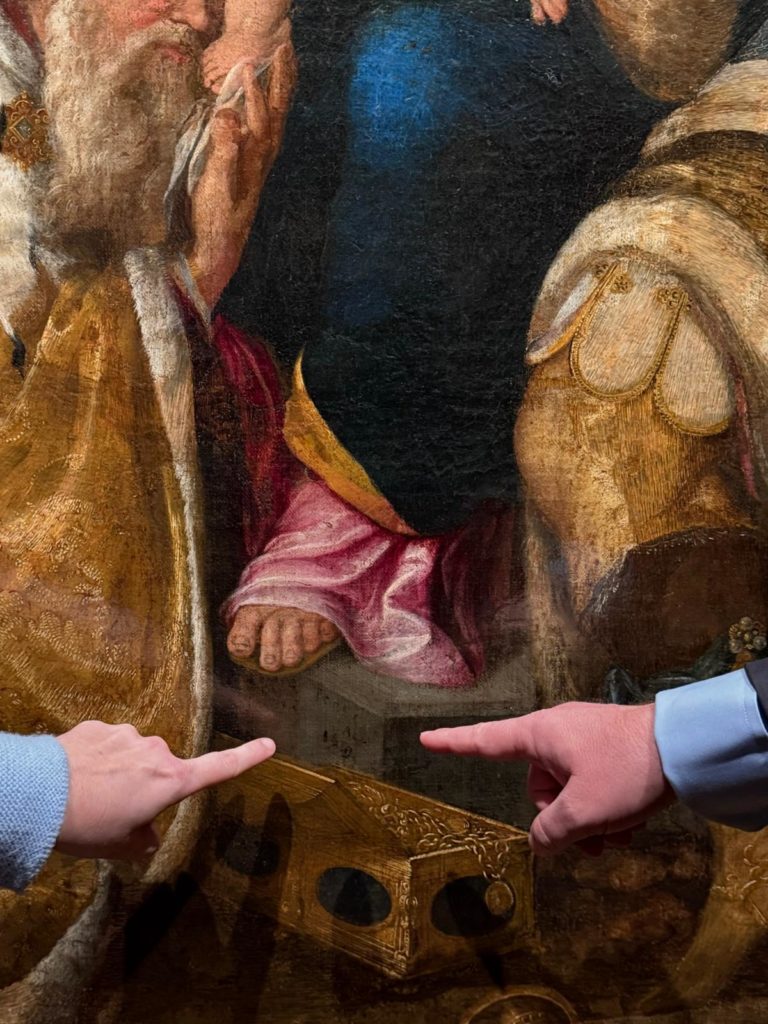
Capodimonte Museum and Royal Park / Visitors will (finally) have the chance to admire Fede Galizia’s Adoration of the Magi. Free admission at Easter; special opening on Easter Monday
Welcome, Fede Galizia. Her *Adoration of the Magi* (1610) has arrived at the Capodimonte Museum; it has been part of the Bourbon Collection – the heritage of the Museum and the Royal Park – for over two centuries, but has never previously been exhibited in the Royal Palace.
The first signed altarpiece by the famous ‘female painter’, a work long believed lost and classified as the work by an ‘unknown Florentine artist’: from today, it can be admired in its permanent home, Room 79, in the second-floor gallery of the Royal Palace, which has reopened for the occasion following renovation work.
Fede Galizia (documented in Milan from 1587 to 1630), an accomplished portraitist and creator of famous still lifes held in major museums and collections in Italy and abroad, in this altarpiece for Naples draws inspiration from the masters of the 16th century: Leonardo for the composition centred on the Madonna, but also Raphael and Correggio.
This new arrival in the collections also offers visitors coming to Capodimonte over the festive period a glimpse into the history of art in Naples: Easter Sunday coincides with the first Sunday of the month, when admission is free; the museum is also open on Easter Monday (second floor only; the Real Bosco is closed as usual on Easter Monday).
The large painting had been commissioned by Baldassare Noirot, a Flemish merchant, who was entrusted with the Chapel of the Magi in the ancient Church of S. Anna dei Lombardi (1581): in 1798, the collapse of the ceiling rendered it unsafe, and the works were moved to the nearby Santa Maria di Monteoliveto (now Sant’Anna dei Lombardi) in time to avoid the 1805 earthquake, which also destroyed Caravaggio’s ‘Resurrection’.
The Galizia altarpiece arrived at the Real Museo Borbonico between 1816 and 1821, bearing a clearly visible signature: a precaution that female painters of the time took to ensure their work was not ‘erased’. However, in 1937, the museum—now a national institution—attributed the painting to an ‘unknown 16th-century Florentine artist’ and temporarily transferred it to the Church of San Giuseppe in the Rione Luzzatti, built to house the works from the destroyed Church of San Giuseppe Maggiore in Via Medina.
With the second world war, the devastation of the church in the district and the looting of its artworks, all traces of the Adoration and three other canvases from Capodimonte were lost; in 1957, the site became the home of the National Art Gallery, previously housed in the current Mann.
But it was only in 2021 that the research published in the catalogue of the exhibition in Trento, ‘Fede Galizia: Mirabile Pittoressa’, revealed where the Adoration was: at the Convent of San Pasquale a Chiaia in Naples. Crucial to this identification was the contribution of the scholar Federico Maria Giani, who was involved in the exhibition curated by Giovanni Agosti and Jacopo Stroppa celebrating the painter’s Trentino origins. And it was Fede Galizia’s painting that opened the recent exhibition dedicated to 17th-century women at the Gallerie d’Italia in Naples, the final stop before returning—or rather, being exhibited for the first time—at Capodimonte.
Between the two Annunciations by Scipione Pulzone and Francesco Curia (also from Sant’Anna dei Lombardi), and directly opposite the Santafede’s Adoration of the Shepherds, Galizia’s altarpiece is thus placed within the context of works produced for Naples and the Kingdom between the late 16th century and the first decade of the 17th century, highlighting the variety of the cultural output of the period, ranging from Mannerism to Caravaggesque influences.
There is also a second work by Fede Galizia in Naples: the altarpiece Saint Charles in Ecstasy in the church of San Carlo alle Mortelle.