
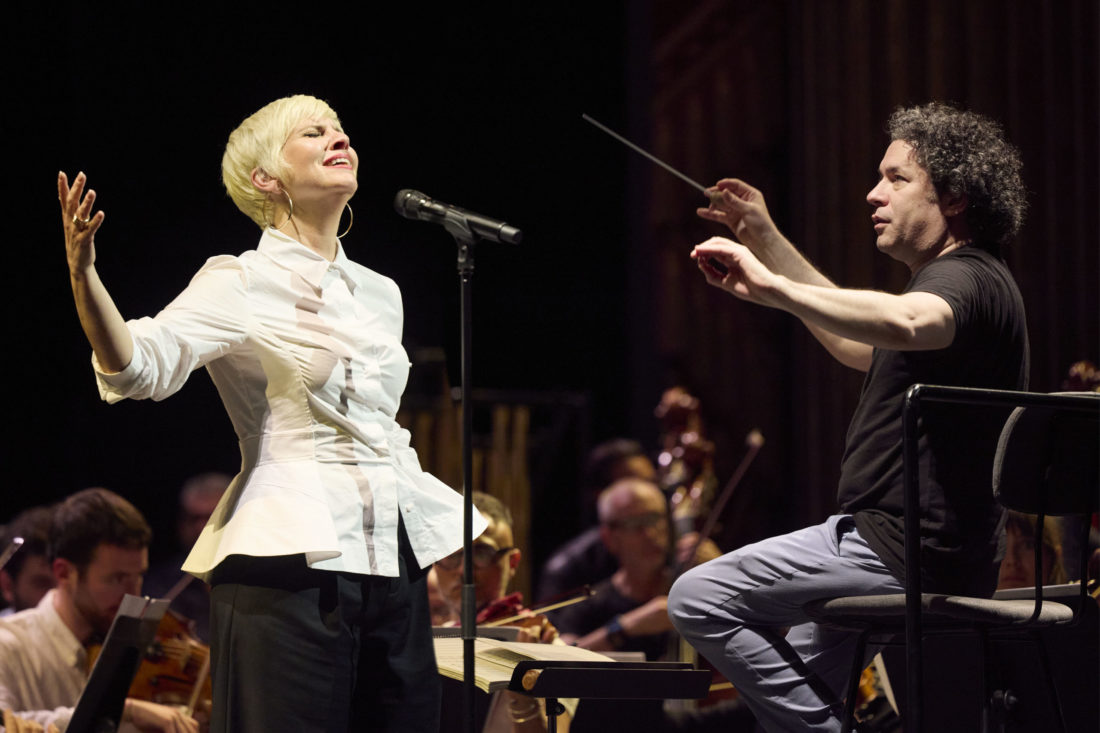
Tutto esaurito, nove minuti di applausi e un bis richiesto a gran voce: così il Teatro di San Carlo di Napoli ha accolto la prima assoluta del progetto che unisce tre personalità fuori scala – Gustavo Dudamel, Marina Abramović e Nabil Elderkin – in un esperimento scenico che fonde musica, immagine e gesto in un’unica esperienza immersiva.
Un incontro che non si limita a sovrapporre linguaggi, ma costruisce un nuovo spazio teatrale, dove suono e visione si interrogano, si amplificano, talvolta si contraddicono.
Lo spettacolo affianca due capolavori del Novecento – L’Histoire du soldat di Igor Stravinskij ed El amor brujo di Manuel de Falla – in una coproduzione internazionale che lega il San Carlo alla New York Philharmonic, dove il progetto approderà nel marzo 2027.
Tre visioni che convergono. Dudamel porta la sua energia visionaria e la precisione architettonica maturata tra Los Angeles e New York; Abramović trasforma la scena in un territorio rituale dove il corpo diventa drammaturgia; Elderkin costruisce immagini che non illustrano, ma aprono varchi.
«La musica è un ponte», dice Dudamel. «Il rito è una necessità», afferma Abramović. «Le immagini devono respirare con il suono», aggiunge Elderkin.
Il patto, il corpo, l’ombra. Stravinsky tra jazz, esilio e teatro ambulante L’Histoire du soldat (1918), su musica di Stravinsky e testo di Ramuz, racconta la parabola di un soldato che, tornando in licenza, incontra il Diavolo e cede il suo violino in cambio di ricchezza, perdendo così la propria identità.
L’opera nasce durante l’esilio svizzero del compositore, in un periodo segnato da difficoltà economiche e dall’impossibilità di lavorare con grandi orchestre. Da qui l’idea di un teatro ambulante, essenziale, con sette strumenti e tre voci recitanti.
Valentino Mannias dà ritmo e precisione alla narrazione, cambiando voce, postura e gesto con naturalezza.
Dudamel offre una lettura serrata, che valorizza i solisti e mette in luce la natura “a scatti” della partitura. Abramović non illustra: trasforma. Fa dell’opera un rituale contemporaneo sul tema del patto e della metamorfosi.
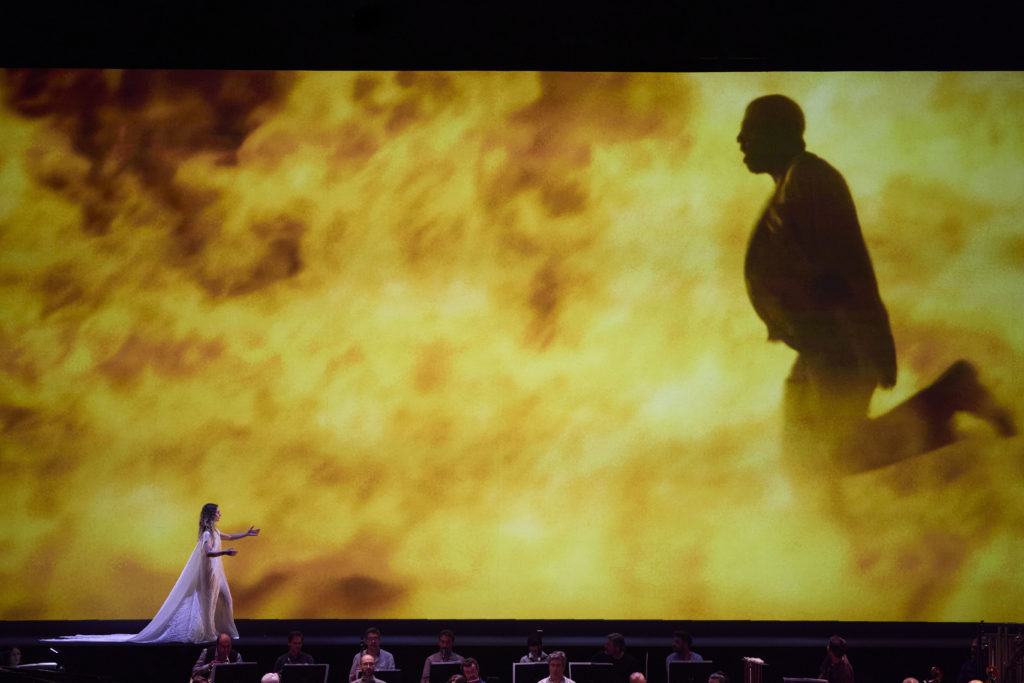
Le videoproiezioni di Elderkin diventano paesaggi mentali: simboli, metamorfosi, atmosfere sospese.
Colori primordiali, simboli e trasparenza dell’umano.[1] La triade cromatica: Bianco, Nero, Rosso, Nelle due opere, la triade cromatica non è un semplice elemento estetico, ma una bussola emotiva che guida lo spettatore attraverso i temi del destino, del folklore e della ritualità.
Rosso: fuoco fatuo, passione ossessiva, sangue del sacrificio, forza magica che si oppone alla morte. Nero: l’occulto, il fantasma che perseguita Candela e l’ombra del Diavolo nel Soldato. Bianco: la luce della verità, la purezza originaria dell’anima prima della corruzione.
Il momento della sedia accanto al violino è il cuore metafisico dell’opera.
Il violino è l’anima del Soldato; la sedia è il focolare, la casa, la vulnerabilità dell’uomo spogliato di ciò che lo rende vivo.
Questa povertà scenica richiama il teatro itinerante per cui Stravinsky concepì l’opera: bastano un uomo, uno strumento e una sedia per raccontare la tragedia dell’esistenza.
Il gioco di riflessi tra la tela bianca e l’abito dell’interprete crea un ponte visivo che trasforma la materia in spirito. La tela diventa estensione del corpo; l’abito bianco assorbe le immagini del video, rendendo l’interprete trasparente al destino del Soldato.
Bianco, nero e rosso sono i primi colori codificati dall’umanità. Il contrasto bianco/nero attiva la percezione primaria: luce contro ombra. Il rosso, primo colore riconosciuto dal cervello, parla direttamente all’amigdala: paura, desiderio, allerta. Vedere una figura immersa nel bianco assoluto amplifica l’effetto simbolico: l’essenza dell’umano si staglia contro il destino che lo attraversa.
Con El amor brujo (“L’amore stregone”1915), De Falla e Martínez Sierra – con il contributo decisivo di María Lejárraga – costruiscono una leggenda gitana che intreccia amore, gelosia e magia. Candela tenta un sortilegio per liberarsi del fantasma dell’uomo che l’ha abbandonata.
Abramović legge Candela come una performer che attraversa un percorso di guarigione. Elderkin amplifica la dimensione psicologica con fiamme astratte, grotte reinventate e silhouette che si moltiplicano. Pasión Vega affronta la Canción del fuego fatuo con autorevolezza e autentico “color andaluso”.
Due opere, un’unica domanda Che cosa siamo disposti a perdere per essere liberi? Accostate nella stessa serata, le due opere rivelano un dialogo potente. Il Soldato cede la propria anima per un’illusione; Candela attraversa il fuoco per ritrovare sé stessa. Due magie opposte: inganno e guarigione.
Il messaggio finale. L’Histoire du soldat e El amor brujo parlano a noi con una chiarezza sorprendente: ogni essere umano si trova davanti a un bivio.
Cedere qualcosa di essenziale per un’illusione o attraversare il fuoco per ritrovare sé stesso.
Il progetto Dudamel–Abramović–Elderkin lo restituisce con forza: musica, gesto e immagine possono ancora raccontare ciò che siamo, ciò che temiamo e ciò che desideriamo diventare
©Riproduzione riservata
NOTA
[1] Approfondimento di Klara Sârbu
Per saperne di più
Learn more
https://www.teatrosancarlo.it/
Teatro di San Carlo/ Dudamel, Abramovic and Elderkin achieved their greatest success at the world premiere of a production that merged Igor Stravinsky’s soldier with the passion of Manuel de Falla
Sold out, nine minutes of applause, and a much-requested encore: this is how the Teatro di San Carlo in Naples welcomed the world premiere of the project, which unites three world personalities –Gustavo Dudamel, Marina Abramović, and Nabil Elderkin– in a scenic experiment that blends music, image, and gesture into a single immersive experience.
An encounter that does not simply overlap languages, but constructs a new theatrical space, where sound and vision are questioned, amplified, and sometimes contradicted.
The show combines two twentieth-century masterpieces – Igor Stravinsky’s L’Histoire du soldat and Manuel de Falla’s El amor brujo– in an international co-production linking the San Carlo to the New York Philharmonic, where the project will arrive in March 2027.
Three visions that converge. Dudamel brings his visionary energy and the architectural precision he’s developed between Los Angeles and New York; Abramović transforms the stage into a ritual territory where the body becomes dramaturgy; Elderkin constructs images that don’t illustrate, but open gaps.
«Music is a bridge», says Dudamel. «The rite is a necessity», says Abramović. «Images must breathe with sound», Elderkin adds.
The pact, the body, the shadow. Stravinsky between jazz, exile and itinerant theatre L’Histoire du soldat (1918), with music by Stravinsky and lyrics by Ramuz, tells the parable of a soldier who, returning on leave, meets the Devil and gives up his violin in exchange for wealth, thus losing his identity.
The work was born during the composer’s Swiss exile, in a period marked by financial difficulties and the impossibility of working with large orchestras. Hence the idea of a walking, essential theatre, with seven instruments and three acting voices.
Dudamel offers a tight reading, which enhances the soloists and highlights the “jerk” nature of the score. Abramović does not illustrate: she transforms. She makes the work a contemporary ritual on the theme of pact and metamorphosis. Elderkin’s video projections become mental landscapes: symbols, metamorphoses, suspended atmospheres.
Primordial colors, symbols and transparency of the human.[1] The Chromatic Triad: White, Black, Red, In the two works, the chromatic triad is not a simple aesthetic element, but an emotional compass that guides the viewer through the themes of destiny, folklore and ritual. Red: will-o’-the-wisp, obsessive passion, blood of sacrifice, magical force that opposes death. Black: the occult, the ghost that haunts Candela, and the Devil’s shadow in the Soldier. White: the light of truth, the original purity of the soul before corruption.
The moment of the chair next to the violin is the metaphysical heart of the work. The violin is the soul of the Soldier; the chair is the hearth, the home, the vulnerability of man stripped of what makes him alive.
This scenic poverty recalls the traveling theater for which Stravinsky conceived the opera: all it takes is a man, an instrument, and a chair to recount the tragedy of existence.
The interplay of reflections between the blank canvas and the interpreter’s dress creates a visual bridge that transforms matter into spirit. The canvas becomes an extension of the body; the white dress absorbs the images of the video, making the interpreter transparent to the Soldier’s fate.
White, black, and red are the first colors codified by humanity. The black/white contrast activates primary perception: light versus shadow. Red, the first color recognized by the brain, speaks directly to the amygdala: fear, desire, alertness. Seeing a figure immersed in absolute white amplifies the symbolic effect: the essence of the human stands out against the destiny that passes through it.
With El amor brujo (1915), De Falla and Martínez Sierra – with the decisive contribution of María Lejárraga – create a gypsy legend that intertwines love, jealousy and magic. Candela attempts a spell to free herself from the ghost of the man who abandoned her.
Abramović reads Candela as a performer on a healing journey. Elderkin amplifies the psychological dimension with abstract flames, reinvented caves, and multiplying silhouettes. Pasión Vega approaches the Canción del fuego fatuo with authority and authenticity “Andalusian color”.
Two works, one question: What are we willing to lose to be free? Paired together in the same evening, the two works reveal a powerful dialogue. The Soldier gives up his soul for an illusion; Candela crosses the fire to find herself. Deception and healing are two opposite spells.
The final message. The Histoire du soldat and El amor brujo speak to us with surprising clarity: every human being faces a crossroads. To give up something essential to an illusion or to cross the fire to find ourselves.
The Dudamel–Abramović–Elderkin project gives it back with strength: music, gesture and image can still tell what we are, what we fear and what we wish to become.
NOTE
[1] In-depth analysis by Klara Sârbu