
Nel Museo e Real Bosco di Capodimonte, diretto da Eike Schmidt, dall’11 giugno, ha riaperto la Galleria delle porcellane. In 16 sale è esposta una selezione del grande nucleo ceramico tra i più importanti d’Europa. Circa 7000 pezzi (porcellane e terraglie) in gran parte provenienti dalla collezione Borbone, arricchita da ulteriori acquisti e doni a partire dall’Unità d’Italia a oggi. Carmine Negro, nell’articolo che segue, ci conduce in questo mondo di fragile bellezza.
Visitare le nuove sale della ceramica di Capodimonte significa entrare in uno spazio che invita a un ascolto silenzioso. Le porcellane non si offrono come semplici oggetti, ma come forme che trattengono gesti, intenzioni, tracce di chi le ha create. Ogni superficie lucente sembra custodire una storia, trasformando la ceramica in un linguaggio più che in una decorazione.
Il percorso pone una domanda che attraversa tutta la mostra: ciò che osserviamo è un oggetto concluso o un racconto ancora aperto? Le opere abitano una soglia ambigua, dove funzione ed espressione convivono. In questa tensione la ceramica rivela la sua natura più contemporanea: non si limita a mostrarsi, ma invita a riflettere.
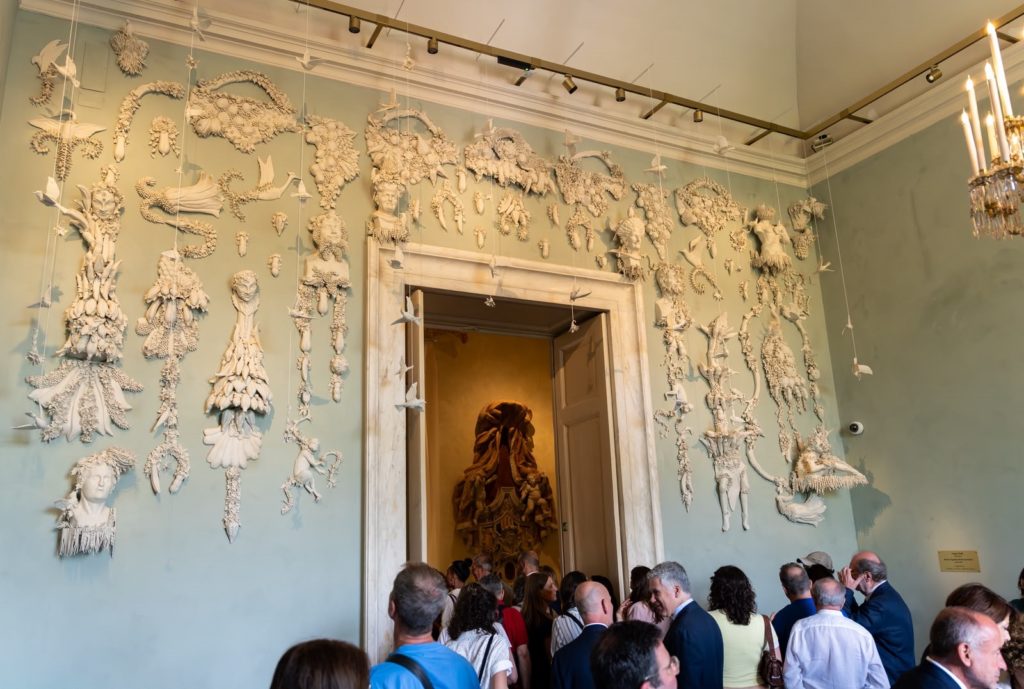
La ceramica parla al presente. L’opera di Diego Cibelli Beata Fragilità del Bosco Amato, in porcellana biscuit e collocata nell’atrio che introduce alla Galleria delle Porcellane, colpisce per la sua ricchezza visiva. La scultura, composta da centinaia di elementi plastici che si intrecciano in una narrazione corale, presenta dettagli fitomorfi, animali, frutti, ortaggi e figure fantastiche. L’immaginario rimanda, in forma sintetica, alle feste pubbliche della Napoli borbonica, dove celebrazioni aristocratiche e giochi popolari convivevano in un’unica dimensione collettiva.
L’ingresso alla mostra è concepito come un passaggio concettuale. L’installazione di Cibelli accoglie e disorienta, invitando lo sguardo a rallentare. Non introduce semplicemente il percorso: lo attiva, chiedendo al visitatore di entrare in relazione con la materia.
Qui la ceramica si presenta come processo più che come forma definitiva. Le strutture si moltiplicano, sfuggono a una lettura immediata e aprono alla dimensione contemporanea del linguaggio ceramico. La domanda iniziale ritorna: ciò che vediamo è oggetto o racconto? L’ingresso non offre risposte, ma prepara a un percorso che unisce estetica e pensiero.
Proseguendo, la mostra arretra verso la storia e rivela ciò che nella ceramica resta nascosto: i processi, le trasformazioni, la tensione tra controllo e imprevedibilità. Terra e fuoco non sono solo elementi tecnici, ma forze che modellano la materia e la volontà umana.
Nel Settecento questa ricerca raggiunge un momento decisivo con la “corsa all’oro bianco”, quando le corti europee tentarono di dominare il segreto della porcellana, simbolo di prestigio e conoscenza. È in questo contesto che nasce la Fabbrica di Capodimonte, voluta da Carlo di Borbone, che sviluppa un impasto tenero originale e riconoscibile.
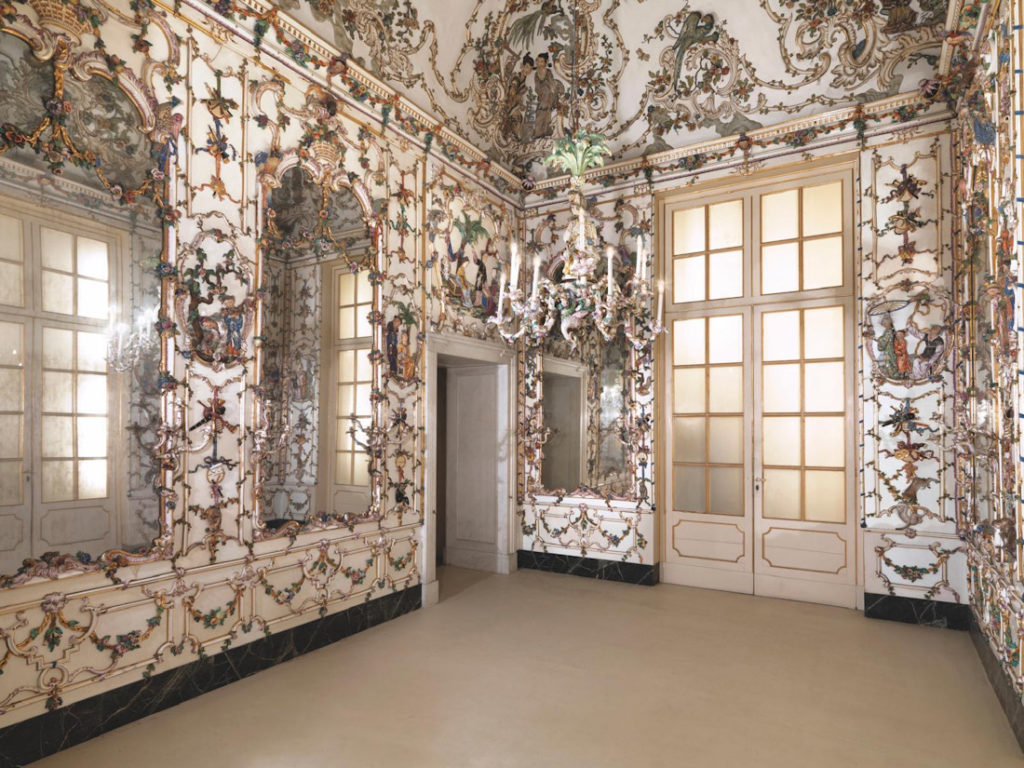
A questo periodo appartiene il celebre Salottino di Portici, interamente rivestito in porcellana per la regina Maria Amalia: un capolavoro rococò fatto di specchiere, festoni e scene di gusto orientale in altorilievo.
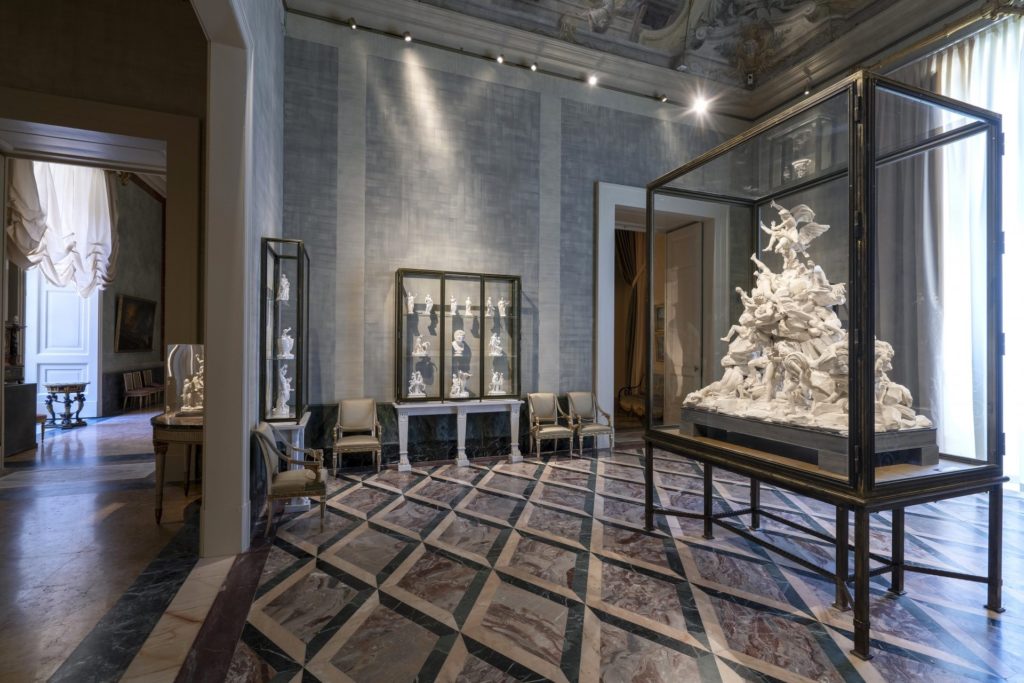
Con Ferdinando IV la manifattura evolve: la scoperta del caolino meridionale permette il passaggio alla porcellana a pasta dura e apre la strada alla produzione del biscuit, una porcellana opaca che imita il marmo. Sotto la direzione dello scultore Filippo Tagliolini nascono così gruppi mitologici monumentali, come la Caduta dei Giganti, pensati per decorare le tavole reali e testimoniare la raffinatezza tecnica raggiunta.
La perfezione apparente di queste opere nasconde un equilibrio fragile tra sperimentazione e disciplina: ogni pezzo conserva la memoria del fuoco e dell’errore possibile, come se il processo continuasse a vibrare al suo interno.
La ceramica come memoria viva. Le sale non seguono un ordine puramente cronologico: costruiscono una trama in cui le opere dialogano tra loro. La fragilità, evidente nelle superfici sottili e nei dettagli minuziosi, non è un limite ma una forma di resistenza. Le ceramiche attraversano secoli e mutamenti senza perdere la loro capacità di parlare.
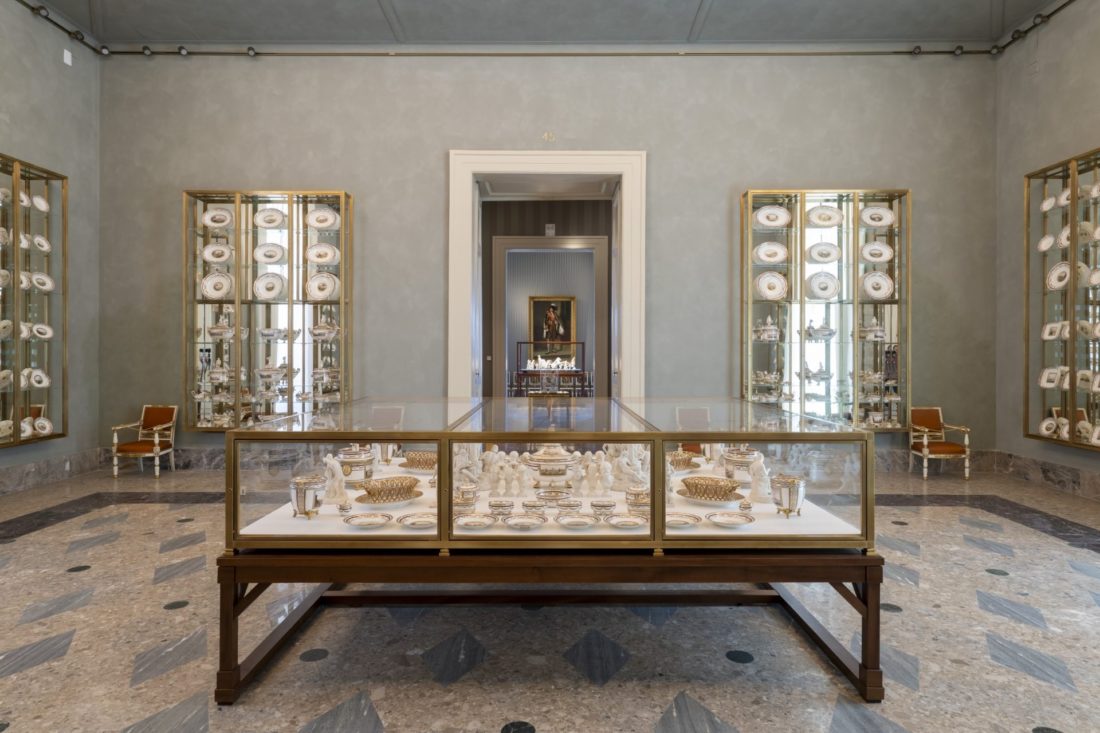
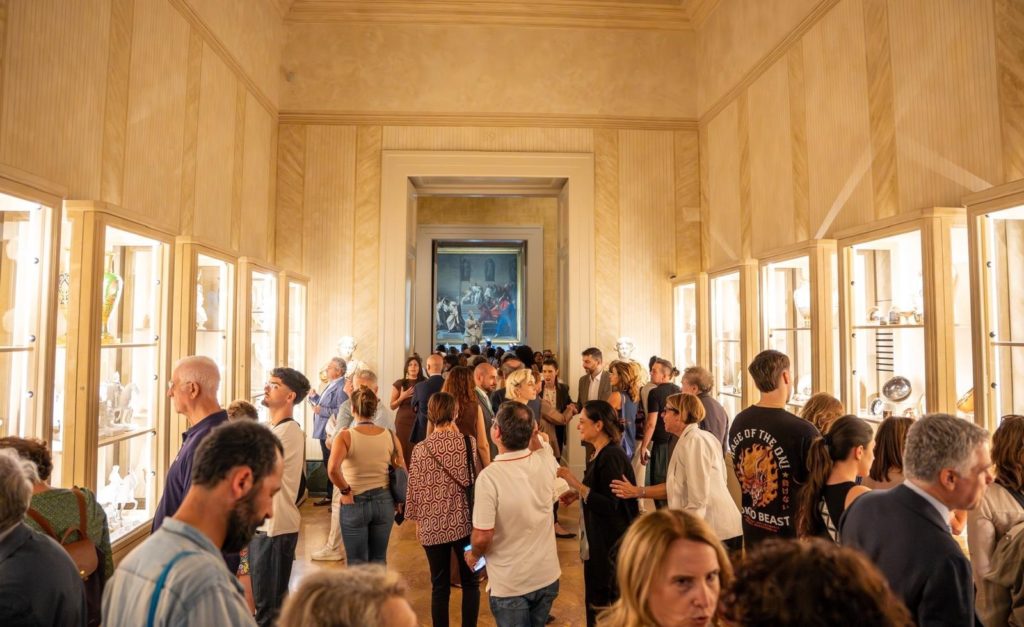
L’allestimento, curato dal maestro Federico Forquet — napoletano di origini francesi, figura di rara eleganza progettuale — amplia il percorso e lo rende più immersivo. Le nuove teche, pensate per mimetizzarsi con l’architettura borbonica, garantiscono protezione e microclima controllato senza alterare gli ambienti storici.
Nel Salone Camuccini, il grande tavolo circolare proveniente dall’antica Ercolano diventa un fulcro scenografico che intreccia archeologia e porcellana, creando un ponte visivo tra epoche diverse.
Il percorso invita a soffermarsi su alcuni capolavori che raccontano l’ambizione e la raffinatezza della manifattura napoletana. Tra questi, il monumentale gruppo in biscuit della Caduta dei Giganti, modellato da Tagliolini, sorprende per la sua energia drammatica e per la complessità tecnica: un’opera che sembra sfidare i limiti stessi della porcellana.
Accanto, il Servizio delle Vedute del Regno, noto anche come Servizio dell’Oca (foto in copertina), che con le sue miniature topografiche dedicate ai paesaggi borbonici, restituisce l’immagine di una corte che usava la ceramica come strumento di rappresentazione politica e culturale. Completano il percorso i vasi napoleonici della manifattura di Sèvres e i rari pezzi di Meissen giunti a Napoli come dono diplomatico.
Il risultato è un racconto in cui passato e presente si intrecciano: la ceramica diventa un luogo in cui il tempo non scorre soltanto, ma si deposita, trasformando ogni oggetto in una memoria viva da riscoprire.
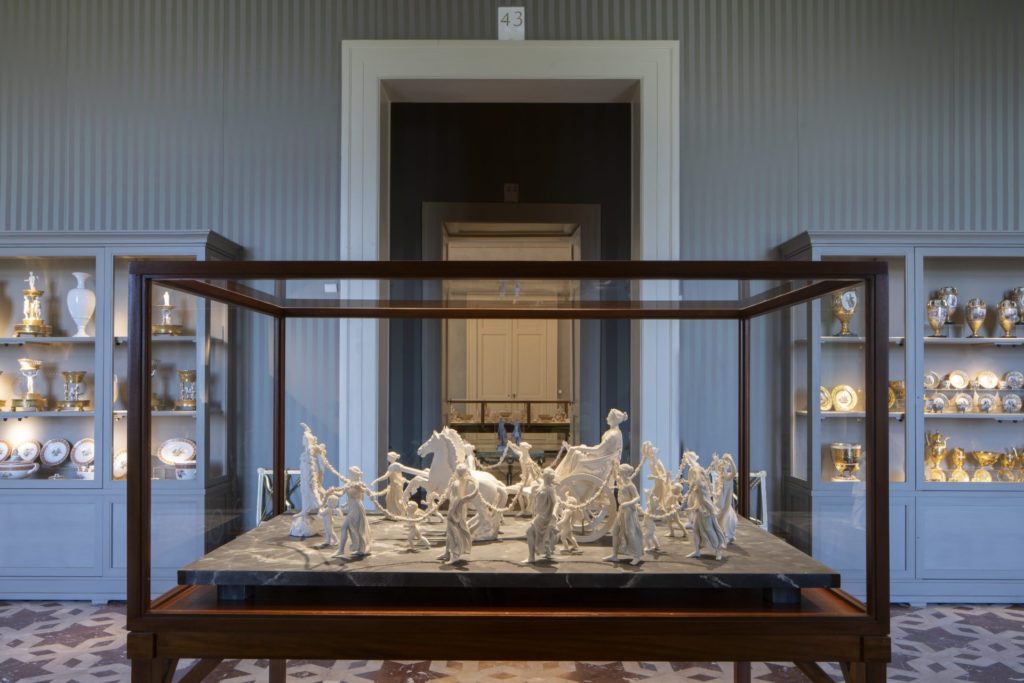
Il tempo nelle mani: storie di materia e trasformazione. La Sala Tagliolini è concepita come un trionfo del bianco assoluto. Quattro consolle storiche della Reggia ospitano altrettanti celebri Trionfi in porcellana biscuit modellati da Filippo Tagliolini. Il Trionfo di Bacco e Sileno, articolato su due livelli, anima la scena con figure danzanti; il Sacrificio a Diana d’Efeso, databile intorno al 1790, testimonia la finezza del modellato; il Giudizio di Paride restituisce il mito con eleganza teatrale; le teste di Seneca e Agrippina mostrano la capacità dell’artista di tradurre in porcellana la statuaria romana.
Dietro ogni forma c’è un gesto. Prima dell’opera finita, c’è la mano che modella, incide, smalta. È un tempo lento, fatto di attese e ripensamenti, che la ceramica rende visibile. Le irregolarità minime rompono l’illusione della perfezione meccanica e restituiscono all’oggetto la sua dimensione umana.
La ceramica diventa così un luogo di relazione: tra l’uomo e la materia, ma anche tra l’uomo e il tempo. Ogni oggetto nasce da una negoziazione continua tra idea e limite, tra volontà e resistenza. In questa tensione si riflette qualcosa di profondamente umano: il desiderio di dare forma e lasciare traccia.
Uscendo dalle sale, ciò che resta è un nuovo modo di guardare. La ceramica insegna a soffermarsi, a riconoscere nella materia una storia che va oltre l’apparenza. La fragilità diventa una chiave di lettura: ciò che può rompersi è anche ciò che può durare, perché accoglie il tempo e lo trasforma.
Il percorso si rivela un viaggio nelle idee oltre che nelle forme. La ceramica diventa testimonianza di un rapporto antico e attuale tra creazione e consapevolezza. In un frammento di terra trasformato dal fuoco continua a risuonare qualcosa che parla di noi e del nostro desiderio di permanenza.
©Riproduzione riservata
Per saperne di più
Learn more
https://capodimonte.cultura.gov.it/
The Fragile Beauty of the Eternal: A Journey Through Capodimonte’s New Ceramics Galleries
At the Capodimonte Museum and Royal Park, directed by Eike Schmidt, the Porcelain Gallery has reopened on the 11th of June. A selection from one of Europe’s most significant ceramic collections is on display across 16 rooms. Around 7,000 pieces (porcelain and earthenware), mostly from the Bourbon collection, enriched by further acquisitions and donations from the unification of Italy to the present day. In the following article, Carmine Negro guides us through this world of fragile beauty.
To enter the new ceramics galleries at Capodimonte is to step into a space that invites a quiet, attentive form of listening. These porcelain pieces do not appear as mere objects; they are forms that hold gestures, intentions, and the faint memory of the hands that shaped them. Every luminous surface seems to suspend a story, turning ceramics into a language rather than an ornament.
A question threads through the entire exhibition: are we looking at a finished object, or at a narrative still unfolding? Each piece inhabits a threshold where function and expression coexist. In this delicate tension, ceramics reveal their most contemporary essence: they do not simply show themselves, they ask us to think, to linger, to look again.
Ceramics Speaking to the present. Diego Cibelli’s Beata Fragilità del Bosco Amato, crafted in biscuit porcelain and placed in the atrium leading to the Porcelain Gallery, immediately captivates with its abundance of forms. Hundreds of sculpted elements—botanical motifs, animals, fruits, vegetables, fantastical creatures—interlace into a single, breathing narrative. Its imagery subtly evokes the festive world of Bourbon Naples, where aristocratic celebrations and popular games once shared the same civic stage.
The entrance is conceived as a conceptual threshold. Cibelli’s installation welcomes and unsettles, slowing the visitor’s gaze. It does not merely introduce the exhibition: it activates it, asking us to enter into a relationship with matter itself.
Here, ceramics appear less as finished forms and more as processes in motion. Shapes multiply, elude immediate interpretation, and open the way to a contemporary understanding of the medium. The initial question returns: object or story? The entrance offers no answers, but prepares the visitor for a journey where thought and beauty move together.
As the exhibition unfolds, it steps back into history and reveals what remains hidden within ceramics: the processes, the transformations, the fragile balance between control and unpredictability. Earth and fire are not simply technical elements; they are forces that shape matter and human desire.
In the eighteenth century, this pursuit reached a decisive moment with the “white gold rush,” when European courts sought to master the secret of porcelain, a symbol of prestige and knowledge. It was in this climate that the Capodimonte Factory was founded by Charles of Bourbon, developing a distinctive soft‑paste porcelain. From this period comes the celebrated Porcelain Boudoir of Portici, created for Queen Maria Amalia: a Rococo marvel of mirrors, garlands, and chinoiserie reliefs.
Under Ferdinand IV, the factory evolved further. The discovery of southern Italian kaolin enabled the transition to hard‑paste porcelain and opened the way to the production of biscuit, an unglazed porcelain with the quiet, velvety presence of marble. Under the direction of sculptor Filippo Tagliolini, monumental mythological groups such as the Fall of the Giants emerged—works that seem to test the very limits of the material.
The apparent perfection of these pieces conceals a delicate equilibrium between experimentation and discipline: each object retains the memory of fire and the possibility of error, as if the process continued to resonate within it.
Ceramics as living memory. The galleries do not follow a strict chronology; instead, they weave a narrative in which the works speak across time. Fragility—visible in thin surfaces and meticulous details—is not a weakness but a form of endurance. These objects have crossed centuries without losing their ability to communicate.
The installation, curated by Federico Forquet—a Neapolitan designer of French origins and rare aesthetic refinement—expands the exhibition path and deepens its atmosphere. The new display cases, designed to blend seamlessly with the Bourbon architecture, protect the works while preserving the integrity of the historic rooms. In the Camuccini Hall, a circular table from ancient Herculaneum becomes a scenographic fulcrum, creating a visual bridge between archaeology and porcelain.
The exhibition invites visitors to linger on certain masterpieces that embody the ambition and sophistication of Neapolitan porcelain. Among them, Tagliolini’s monumental Fall of the Giants astonishes with its dramatic energy and technical daring. Nearby, the Views of the Kingdom Service—also known as the Goose Service—with its miniature landscapes of the Bourbon territories, reveals how porcelain became a tool of political and cultural representation. Completing the journey are the Napoleonic vases from Sèvres and rare Meissen pieces offered to Naples as diplomatic gifts.
The result is a narrative in which past and present intertwine: ceramics become a place where time does not merely pass, but settles, turning each object into a living memory.
Time in the hands: stories of materials and transformation. The Tagliolini Room is conceived as a triumph of absolute white. Four historic consoles from the Royal Palace display some of the sculptor’s finest biscuit creations. The Triumph of Bacchus and Silenus, arranged on two levels, animates the scene with dancing figures; the Sacrifice to Diana of Ephesus reveals the delicacy of late eighteenth‑century modeling; the Judgment of Paris stages the myth with theatrical grace; while the busts of Seneca and Agrippina demonstrate Tagliolini’s ability to translate Roman statuary into porcelain.
Behind every form lies a gesture. Before becoming an object, each piece was shaped, incised, glazed by hand. It is a slow time—made of pauses, revisions, and repeated movements—that ceramics make visible. Tiny irregularities break the illusion of mechanical perfection and restore the human dimension of the work.
Ceramics thus become a place of relationship: between humans and matter, but also between humans and time. Each object is the result of a continuous negotiation between idea and limit, intention and resistance. In this tension, something profoundly human emerges: the desire to shape, to transform, to leave a trace.
Leaving the galleries, what remains is a renewed way of looking. Ceramics teach us to pause, to recognize in matter a story that extends beyond appearance. Fragility becomes a key to understanding: what can break is also what can endure, because it welcomes time and transforms it.
The exhibition reveals itself as a journey through ideas as much as through forms. Ceramics become a testimony to an ancient yet ever‑current relationship between creation and awareness. In a fragment of earth transformed by fire, something continues to speak of us—of our presence in time and our enduring desire for permanence.