
“Sostegni ovvero il senso della vite per le connessioni”. È questo il tema delle sette serate che accendono di cultura, enogastronomia e convivialità l’estate di Guardia Sanframondi, affascinante borgo medievale della provincia di Benevento.
Da martedì 4 a lunedì 10 agosto si svolgerà la rassegna ultratrentennale Vinalia che ha i patrocini della Regione Campania, della Provincia di Benevento e del Comune di Guardia Sanframondi, oltre il contributo della Camera di Commercio Irpinia Sannio e del Gal Titerno.
Spiega Titina Pigna, responsabile del Comitato Vinalia: «Il tema di quest’anno è stato dettato da una riflessione sull’attuale, distopico assetto mondiale, sulla capacità di reazione delle cosiddette potenze medie e sugli insegnamenti dati all’umanità, da 8.000 anni a questa parte, dalla pianta di vite. Una liana tenace e fruttuosa che ha avuto, per la sua fame di luce, sempre bisogno del sostegno altrui. La metafora che paragona l’umanità alla vite è un’immagine forte che unisce agricoltura e condizione umana. Le persone, le comunità e i singoli Stati, come la nostra pianta del cuore, trovano la loro forma migliore non nell’isolamento, ma nel reciproco sostegno».
Lo stesso concetto di “Sostegno e connessione” ispira la sezione creativa Vinarte, ideata e diretta da Giuseppe Leone, con Azzurra Immediato, curatrice della parte dedicata alla fotografia.
Ci si interroga, così, sulla geografia dell’arte contemporanea, concentrandosi sulla connessione tra artisti, mettendo in relazione poetiche, materiali e sensibilità differenti. Facendo emergere la possibilità che ogni linguaggio trovi nell’altro un’occasione di apertura. Il percorso espositivo si trasforma in momento corale, dove il sostegno coincide con il riconoscimento reciproco.
Per Giuseppe Leone, che, da docente di tecniche pittoriche, ha formato all’Accademia napoletana di Belle arti tante artiste e artisti delle nuove generazioni, esiste un filo che unisce un’esperienza avviata negli anni settanta a questa XVI edizione di VinArte. Un metodo mai abbandonato.
Ricorda l’artista: «Già nel 1974 portammo l’Accademia di belle Arti nel Beneventano, a Buonalbergo, mio paese natio, con artisti e docenti che uscivano dalle mura storiche dell’istituzione per incontrare i borghi e le persone. Fu una delle prime sperimentazioni di questo genere e funzionò perché l’arte non arrivava come qualcosa di estraneo ma entrava in relazione con il luogo. Quell’esperienza è diventata un asse del mio lavoro e VinArte nasce dalla stessa convinzione: l’entroterra non è uno spazio minore, ma un territorio al quale restituire centralità culturale».
Il centro storico di Guardia Sanframondi offre la possibilità a ogni artista di confrontarsi con una storia, una funzione, una memoria che ne precedono l’arrivo.
L’itinerario espositivo attraversa una costellazione di luoghi, ciascuno con una propria identità.
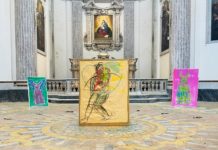
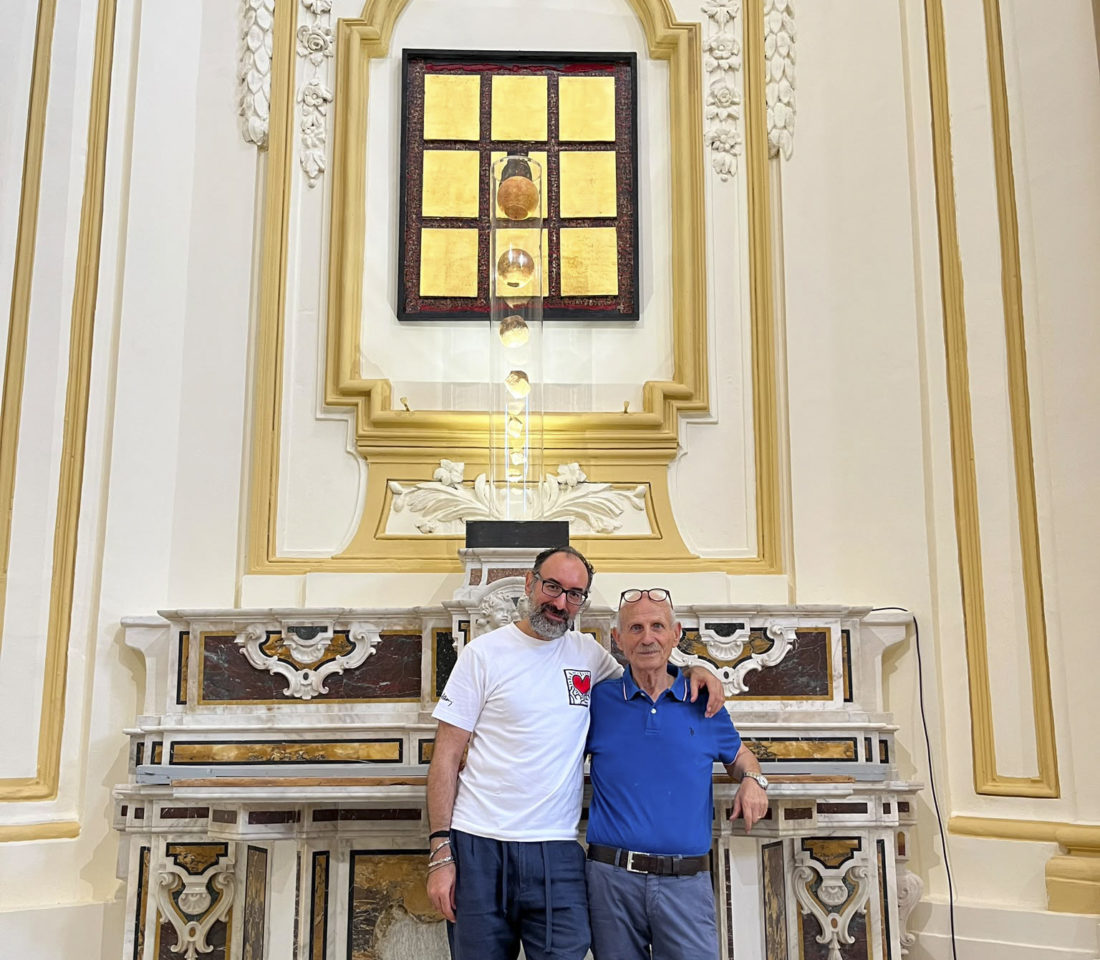
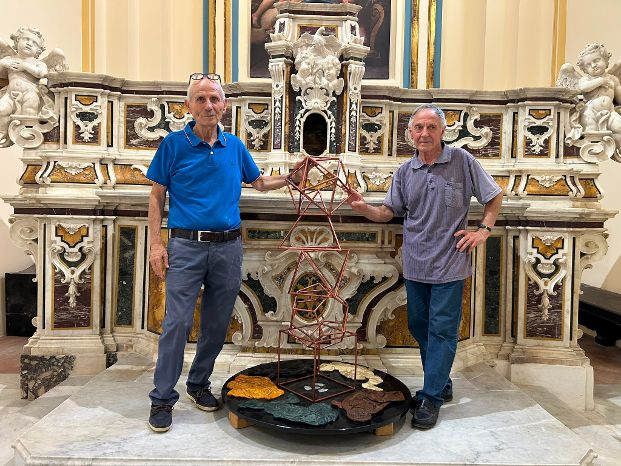
Nella restaurata Chiesa dell’Ave Gratia Plena, il progetto degli Altari dell’Arte riunisce Giuseppe Leone, MaxCoppeta, Marco Abbamondi, Amedeo Sanzone ed Ernesto Pengue.
Cinque autori apparentemente lontani per linguaggio, chiamati a confrontarsi con uno spazio affatto neutrale, in cui l’opera rinuncia alladimensione autoreferenziale per misurarsi con un luogo già carico di memoria e significato.
Coppeta punta sull’equilibrio geometrico per riflettere sulla relazione come costruzione paziente; Abbamondi fa dialogare materia, pigmento e luce in una pittura che vive di stratificazioni e trasformazioni; Sanzone lavora sul confine tra rigore costruttivo e dimensione interiore, mentre Pengue conduce la scultura verso una sintesi formale che trova nella misura e nella sospensione la propria forza espressiva.
La Sagrestia accoglie, invece, il progetto dedicato al Genius Loci, costruito attorno alle differenti ricerche di Margherita Palmieri e Francesco Garofano.
La prima, attraverso un’installazione, guarda alla vita come metafora della relazione e della crescita, restituendo al gesto del sostenere un valore esistenziale prima ancora che simbolico.
Il secondo, sulla strada della fotografia, porta nel cuore della mostra immagini nate lungo la rotta balcanica, dove il sostegno assume il volto concreto della dignità, dell’accoglienza e della responsabilità verso l’altro.
Mentre il Monte dei Pegni accoglie pluralità di linguaggi; Luciano Ferrara, attraverso un’opera condivisa con il pubblico, introduce uno sguardo fotografico che osserva il quotidiano come scena in cui la connessione continua a manifestarsi nei gesti più essenziali.
Ludovica Buonanno, utilizzando la geometria, trasforma la relazione in struttura; Stefania Ianniello restituisce alla figura umana la sua vulnerabilità come spazio di resistenza; Mariapia Saccone lavora sulla possibilità di ricomporre legami e memorie; Noemi Verdoliva intreccia mito, simbolo e trasformazione in un racconto aperto sul presente.
L’ultima tappa espositiva conduce a Palazzo Marotta Romano, alla sezione fotografica affidata ad Azzurra Immediato che considera lo scatto come possibilità di un’elaborazione critica della realtà tra presente e passato.
Ecco, dunque, che Alessandro Caporaso lavora sul confine ambiguo fra percezione e immagine; Pierluigi Fresia crea una dimensione meditativa e poetica; Angelo Lanfranchi è attento al rapporto fra architettura, tempo e presenza; Anna Rosati mette in dialogo arte e scienza per riflettere sulla fragilità dell’ecosistema. Infine, Natalino Russo restituisce alla fotografia la capacità di trasformare il documento in esperienza umana.
VinArte continua a sorprendere per le sue infinite sfumature di espressione partendo dalla bellezza di un patrimonio architettonico e storico rigenerato.
Per saperne di più
Learn more
https://www.facebook.com/VinArteVinalia/
www.vinalia.it.
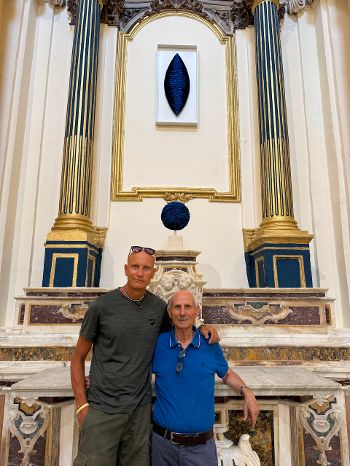
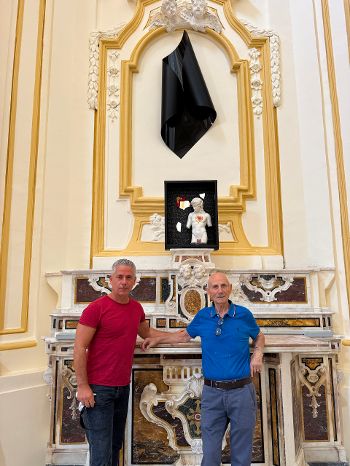
In the photos, Giuseppe Leone is setting up the exhibition with the artists exhibiting in the beautiful Ave Gratia Plena Church, which has been reopened to the public thanks to a significant restoration project
Guardia Sanframondi / “VinArte”: a geography of contemporary creativity in the historic village. Director Giuseppe Leone: “We’re giving the hinterland back its cultural prominence”
“Supports, or the meaning of the grapevine for connections.” This is the theme of the seven evenings that will bring culture and conviviality to the summer in Guardia Sanframondi, a charming medieval village in the province of Benevento.
From Tuesday, the 4th, to Monday, the 10th of August, the Vinalia festival—now in its 30th year—will take place under the patronage of the Campania Region, the Province of Benevento, and the Municipality of Guardia Sanframondi, with additional support from the Irpinia Sannio Chamber of Commerce and GAL Titerno.
Titina Pigna, head of the Vinalia Committee, explains: “This year’s theme was inspired by a reflection on the current, dystopian global order, on the capacity of so-called middle powers to respond, and on the lessons the grapevine has taught humanity for the past 8,000 years. A tenacious and fruitful vine that, due to its thirst for light, has always needed the support of others. The metaphor comparing humanity to the vine is a powerful image that unites agriculture and the human condition. People, communities, and individual nations, like our beloved plant, find their best form not in isolation, but in mutual support.”
The very concept of “Support and connection” inspires the Vinarte creative section, conceived and directed by Giuseppe Leone, with Azzurra Immediato serving as curator of the photography section.
The exhibition thus explores the geography of contemporary art, focusing on the connections between artists and bringing together different artistic approaches, materials, and sensibilities. It highlights the possibility that each artistic language may find in the other an opportunity for openness. The exhibition itinerary becomes a collective experience, where support goes hand in hand with mutual recognition.
For Giuseppe Leone—who, as a professor of painting techniques at the Neapolitan Academy of Fine Arts, has trained many artists of the new generations—there is a thread linking an experience that began in the 1970s to this 16th edition of VinArte: a method he has never abandoned.
The artist recalls: “As early as 1974, we brought the Academy of Fine Arts to the Benevento area, to Buonalbergo, my hometown, with artists and professors stepping outside the historic walls of the institution to engage with the villages and the people. It was one of the first experiments of its kind, and it worked because art didn’t arrive as something foreign but instead formed a connection with the place. That experience has become a cornerstone of my work, and VinArte stems from the same conviction: the hinterland is not a secondary space, but a territory to which we must restore cultural prominence.”
The historic center of Guardia Sanframondi offers every artist the opportunity to engage with a history, a function, and a memory that precede their arrival.
The exhibition itinerary passes through a constellation of sites, each with its own identity.
In the restored Church of Ave Gratia Plena, the Altari dell’Arte project brings together Giuseppe Leone, MaxCoppeta, Marco Abbamondi, Amedeo Sanzone, and Ernesto Pengue.
In the restored Church of Ave Gratia Plena, the Altari dell’Arte project brings together Giuseppe Leone, Max Coppeta, Marco Abbamondi, Amedeo Sanzone, and Ernesto Pengue.
Five artists whose artistic languages seem worlds apart are called upon to engage with a space that is anything but neutral—one in which the artwork sets aside its self-referential dimension to measure itself against a place already steeped in memory and meaning.
Coppeta uses geometric balance to reflect on relationships as a patient process of construction; Abbamondi creates a dialogue between material, pigment, and light in a painting that thrives on layering and transformation; Sanzone explores the boundary between constructive rigor and inner dimension, while Pengue guides sculpture toward a formal synthesis that finds its expressive power in proportion and suspension.
The Sacristy, on the other hand, hosts the project dedicated to the Genius Loci, built around the distinct research of Margherita Palmieri and Francesco Garofano.
The former, through an installation, views life as a metaphor for relationships and growth, restoring to the act of supporting an existential value even before a symbolic one.
The second one, focused on photography, brings to the heart of the exhibition images captured along the Balkan route, where support takes the tangible form of dignity, hospitality, and responsibility toward others.
Meanwhile, the Monte dei Pegni embraces a plurality of artistic languages; Luciano Ferrara, through a work shared with the public, introduces a photographic perspective that observes everyday life as a stage where connection continues to manifest itself in the most essential gestures.
Ludovica Buonanno entrusts geometry with the task of transforming relationships into structures; Stefania Ianniello restores the human figure’s vulnerability as a space of resistance; Mariapia Saccone explores the possibility of rebuilding bonds and memories; Noemi Verdoliva weaves together myth, symbol, and transformation in a narrative open to the present.
The final stop on the exhibition tour leads to Palazzo Marotta Romano, to the photography section curated by Azzurra Immediato, who sees photography as an opportunity for a critical exploration of reality, bridging the present and the past.
Thus, Alessandro Caporaso explores the ambiguous boundary between perception and image; Pierluigi Fresia creates a meditative and poetic dimension; Angelo Lanfranchi focuses on the relationship between architecture, time, and presence; Anna Rosati brings art and science into dialogue to reflect on the fragility of the ecosystem. Finally, Natalino Russo restores photography’s ability to turn documents into human experiences.