
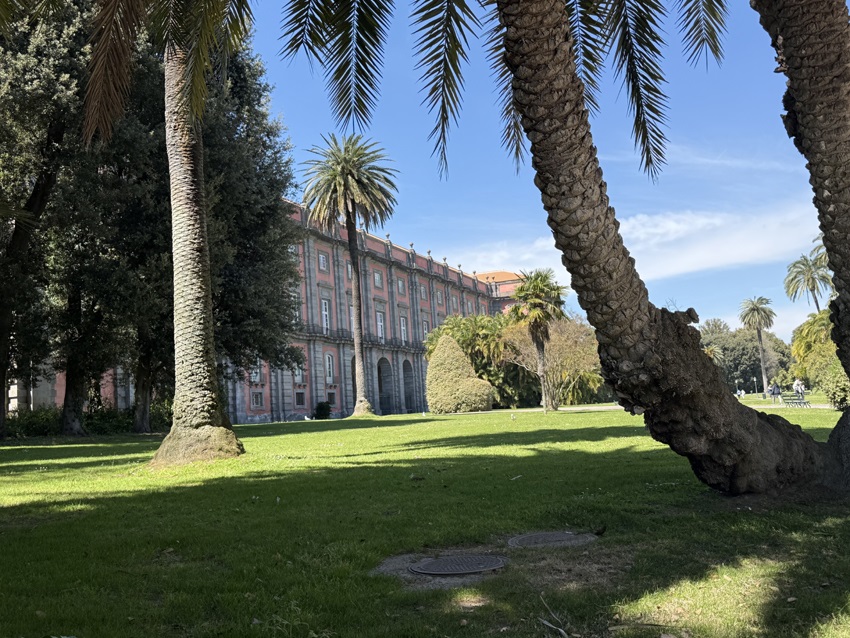
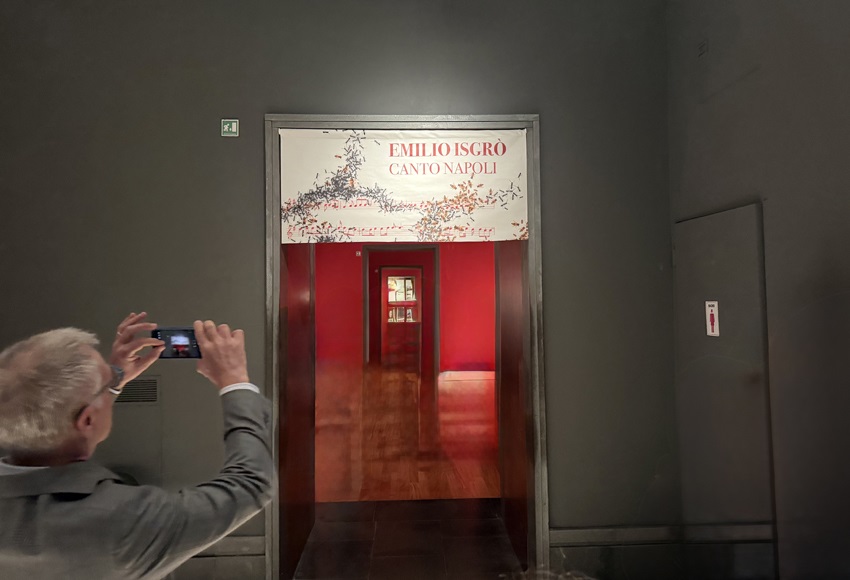
Canto Napoli è la mostra che Emilio Isgrò dedica alla città di Napoli, un progetto inedito curato da Eike Schmidt, Direttore del Museo e Real Bosco di Capodimonte, fino al 29 settembre nelle sale 81-83-84 del secondo piano. Di seguito, Carmine Negro ci guida nell’itinerario dell’esposizione.
Un palinsesto urbano
Napoli è una città che non si limita a essere vissuta: va decifrata. Ogni suo strato – archeologico, linguistico, sociale – è una sovrascrittura che non cancella mai del tutto ciò che c’era prima. Sotto le strade pulsa il magma del Vesuvio, sopra le strade si intrecciano memorie, superstizioni, lingue, gesti. Napoli è un palinsesto vivente, un testo che non smette di riscriversi.
È in questo contesto che Canto Napoli, il nuovo progetto espositivo di Emilio Isgrò – artista concettuale e pittore, ma anche poeta, scrittore, drammaturgo e regista – trova la sua ragion d’essere. Perché Napoli, più di altre città, conosce il valore del non detto, del nascosto, del rimosso che ritorna. Ed è proprio in quella soglia tra visibile e invisibile che si inserisce la poetica della cancellatura.
Un gesto che genera
Isgrò non cancella per eliminare, ma per far emergere. La sua è una sottrazione che aggiunge, un gesto che apre spazi di senso invece di chiuderli. La cancellatura, cifra distintiva della sua ricerca, non è mai un atto di negazione: è un modo per rivelare ciò che il testo – o la storia – non riesce più a dire da sola.
In Canto Napoli questo linguaggio, applicato per la prima volta alla musica napoletana, si innesta su una città che vive di contrasti, eccessi e stratificazioni. La cancellatura diventa allora un modo per ascoltare Napoli, per farla parlare attraverso omissioni, pause e vuoti eloquenti.
Per Isgrò la cancellatura è figlia diretta della filosofia siculo-greca, una grecità che riguarda anche Napoli: da un lato i sofisti, per cui nulla esiste e nulla può essere conosciuto, dall’altro la tradizione socratica che interroga senza sosta.
Il ruolo del curatore
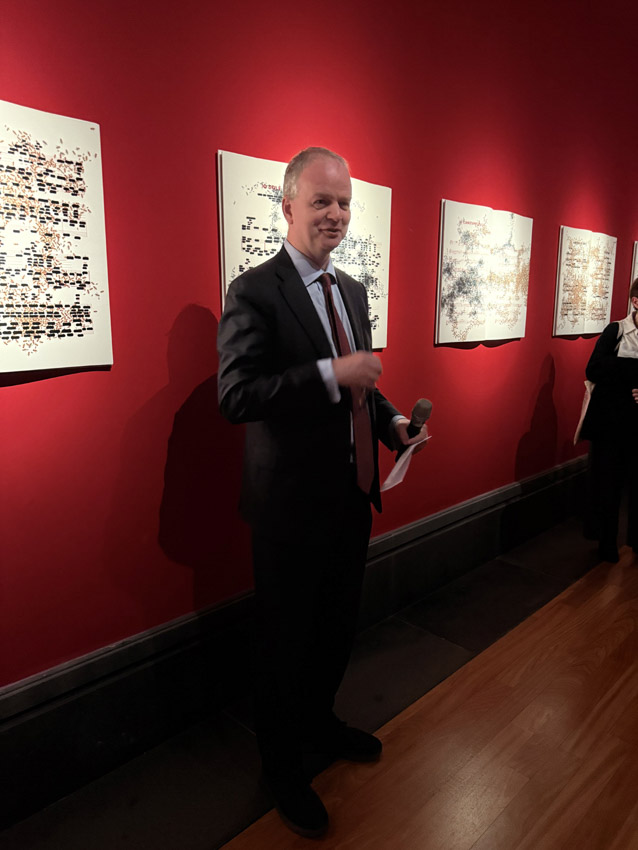
La mostra, curata da Eike Schmidt, direttore del Museo di Capodimonte, si inserisce in una visione museale che mira a far dialogare il patrimonio storico con la contemporaneità. Schmidt non si limita a ospitare Isgrò: lo mette in relazione con la città e con il museo stesso, creando un ponte tra linguaggi diversi.
La scelta di Isgrò non è casuale. La cancellatura, applicata a un contesto come Napoli, diventa un dispositivo critico capace di interrogare la storia senza musealizzarla, evocando la tradizione senza celebrarla in modo retorico. È un modo per aprire Capodimonte alla città e la città al museo.
La città come testo da riscrivere
Napoli è un racconto infinito, un romanzo collettivo che non ha mai una versione definitiva. Isgrò interviene su questo testo fluido, lo attraversa, lo sospende. La cancellatura diventa un modo per far emergere ciò che la città trattiene sotto la superficie: memorie, conflitti, identità.
Napoli come voce. Il titolo Canto Napoli suggerisce una dimensione sonora. La città è un coro di voci, dialetti, rumori. La cancellatura, funziona come una pausa, un respiro, un ritmo. Non silenzia Napoli: la fa risuonare diversamente.
Napoli come simbolo. Nei testi delle canzoni ricorrono il Vesuvio, il mare, la teatralità quotidiana, la superstizione. Isgrò non rappresenta questi simboli, li interroga. Li attraversa con il suo gesto, li sospende, li lascia vibrare nel bianco della cancellatura. Napoli diventa così un repertorio di segni da decifrare, non da illustrare.
Le opere: scene di un dialogo
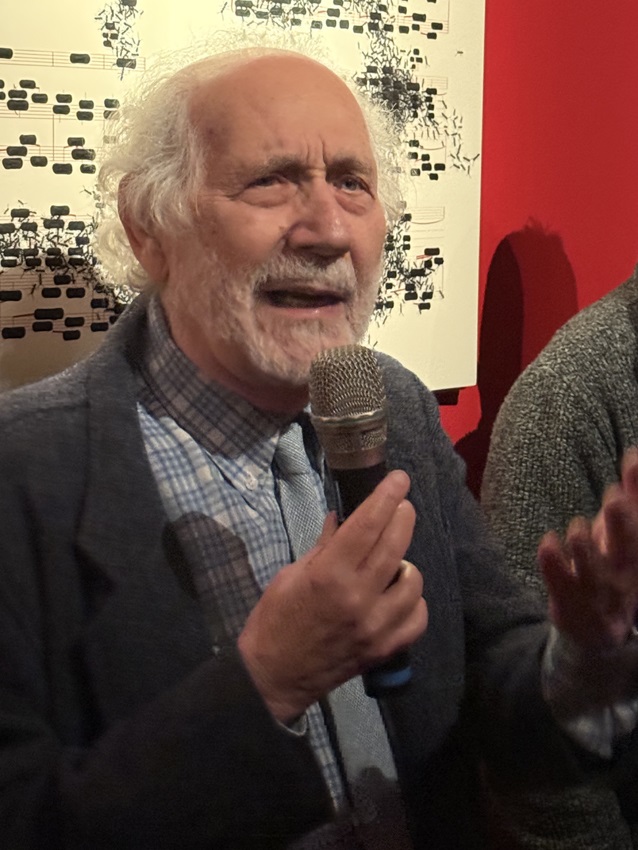
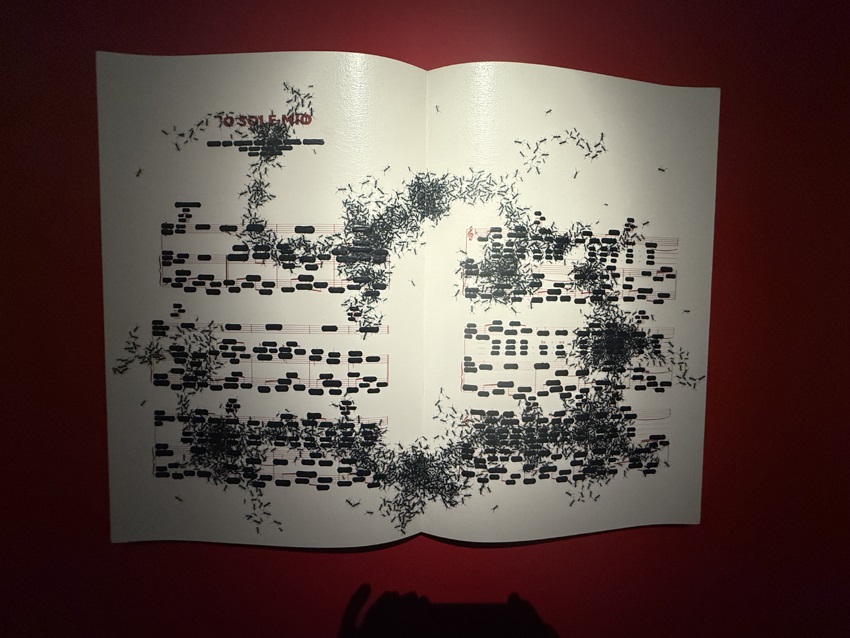
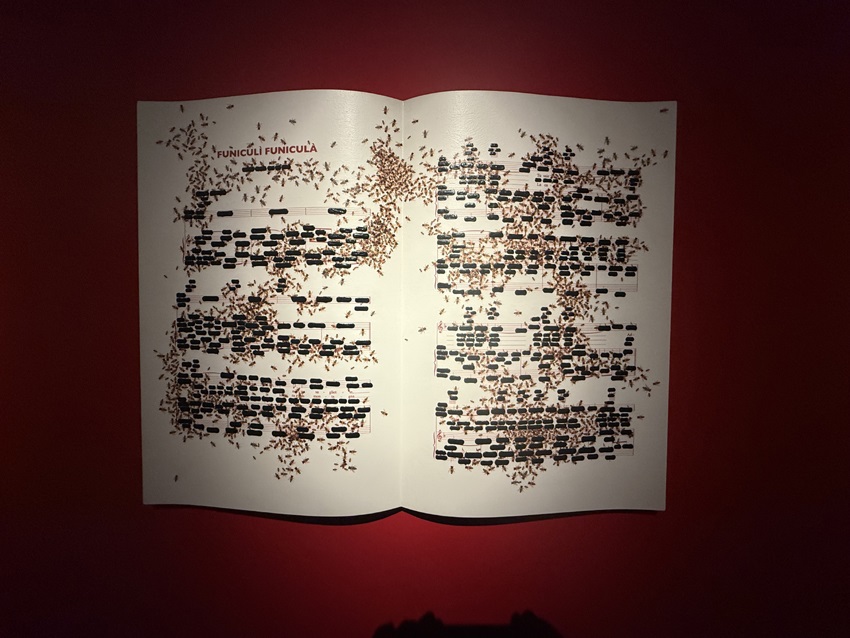
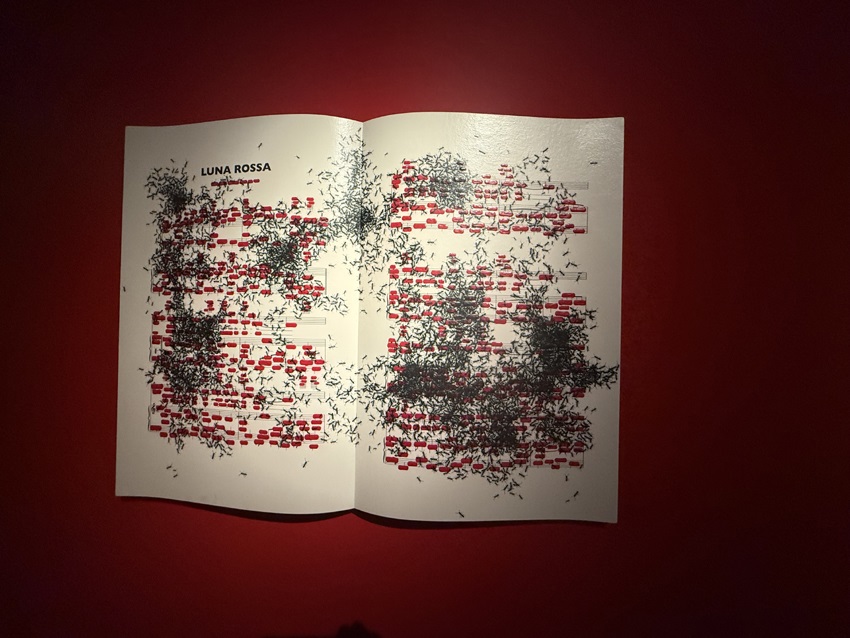
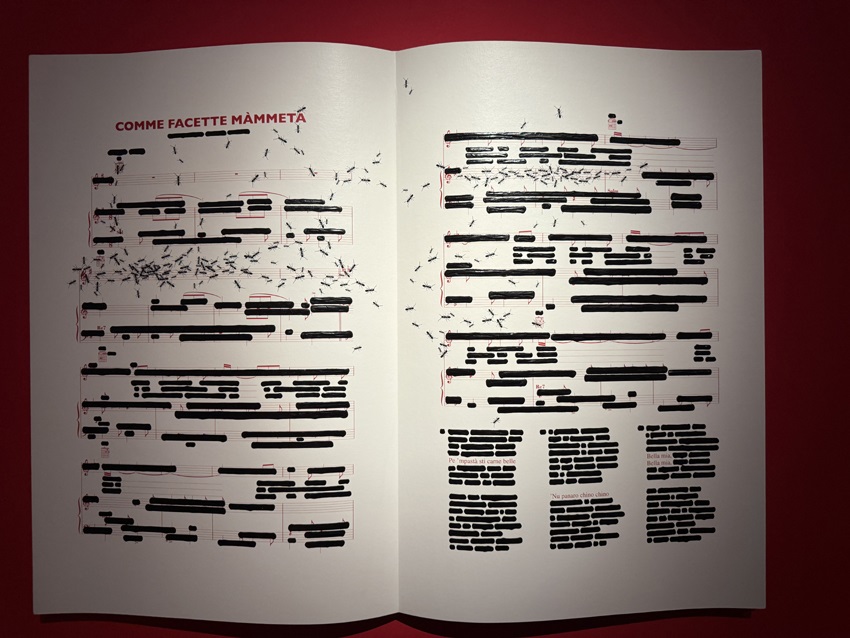
Le venticinque canzoni del repertorio partenopeo scelte sono state sottoposte a una rigorosa operazione di Cancellatura sulla cui superficie si posano insetti, come attratti dalla dolcezza della melodia, dall’armonia, dal ritmo e dai versi, custoditi sotto la superficie coperta.
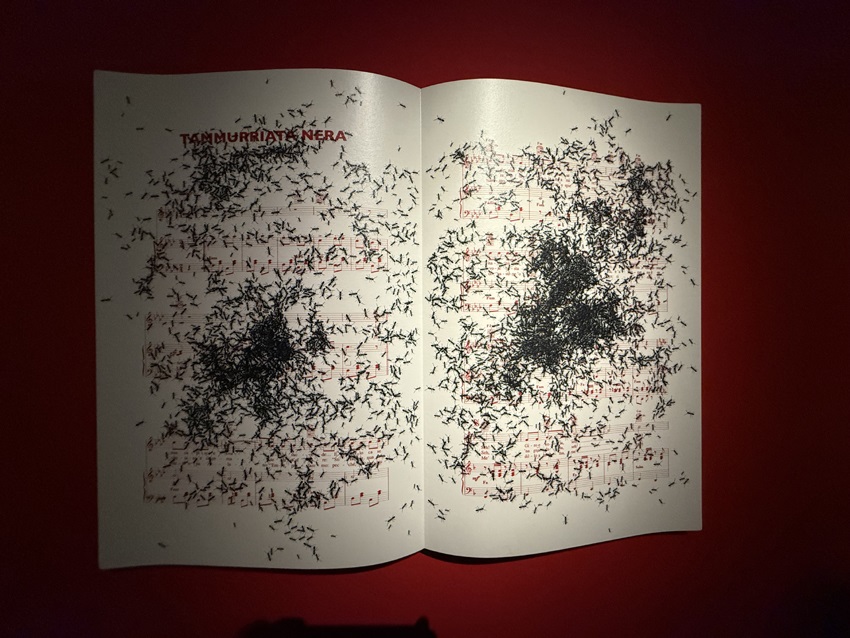
Eike Schmidt osserva: «Le api e le formiche musicali di Isgrò sono emanazioni della mente dell’artista. Se le cancellature evidenziano e celano il testo nello stesso tempo, coprendolo per proteggerlo, le processioni degli insetti introducono un elemento dinamico. La loro coreografia collettiva rende evidente la dimensione sociale della canzone: si pensi ai grandi grumi brulicanti sullo spartito della Tammurriata nera».
Accanto alle partiture musicali riarrangiate trovano posto tre lavori tridimensionali: due mandolini e una chitarra classica a grandezza reale, anch’essi attraversati dagli insetti.
Per Isgrò questo progetto nasce da un amore antico per la canzone napoletana, espressione di una tradizione che affonda le radici nella grande musica europea: da Pergolesi alla scuola del San Carlo, da Paisiello fino a figure come Salvatore Di Giacomo o Pino Daniele. “Da siciliano – ricorda Isgrò – non posso dimenticare che chi voleva studiare musica, come Vincenzo Bellini, doveva venire a Napoli, a San Pietro a Majella”
Le partiture cancellate, realizzate con tecnica mista su carta stoffa montata su legno, instaurano un dialogo serrato fra tradizione e ricerca concettuale. In alcune opere affiorano parole isolate che diventano nuove coordinate emotive; in altre, il gesto di Isgrò si sovrappone a melodie iconiche, trasformandole in apparizioni sospese, quasi fantasmi della memoria collettiva.
Cosa resta dopo
Ogni opera è una scena: non descrive Napoli, ma la evoca. Non la racconta, la ascolta.
Alla fine del percorso, ciò che colpisce non è ciò che Isgrò ha cancellato, ma ciò che ha lasciato emergere. Canto Napoli non è un omaggio alla città, né una sua interpretazione univoca: è un dialogo aperto, un incontro tra due linguaggi che si riconoscono nella complessità.
La cancellatura non toglie, ma restituisce. E nel bianco tracciato da Isgrò, Napoli ritrova una voce antica e insieme nuova, capace di cantare anche quando le parole sembrano scomparire.
Un’altra interpretazione
La parola “cancellatura” porta con sé un’ombra difficile da ignorare. Deriva dal latino cancellare, “chiudere con una grata”, e rimanda all’antica pratica di tracciare sbarre incrociate sui testi errati per renderli illeggibili. È un gesto nato per negare, per eliminare, per far sparire. E se dietro ogni testo c’è una persona, cancellare significa interrompere la relazione, sottrarre la parola dell’altro, togliere spazio al dialogo.
Da qui la percezione di violenza: cancellare può diventare il primo passo per imporre la propria voce, per affermare la legge del più forte, per eliminare mediazione e confronto.
Ed è proprio da questa ambiguità che parte Isgrò. L’artista non rimuove la potenziale violenza del gesto: la assume, la espone, la mette in crisi. La sua operazione consiste nel rovesciare il senso originario della cancellatura, trasformandola da strumento di soppressione a dispositivo di rivelazione.
Nelle sue opere, ciò che è cancellato non scompare: continua a esistere sotto il segno che lo attraversa, come un respiro trattenuto. La cancellatura non annulla il testo: lo sospende, lo mette in attesa, lo protegge da un eccesso di significato che rischierebbe di soffocarlo.
Così, ciò che etimologicamente nasce come una grata che separa diventa, nell’opera di Isgrò, una membrana sottile che lascia intravedere, custodisce e invita a un ascolto più profondo. La cancellatura non è più il gesto che elimina l’altro, ma il gesto che ci costringe a cercarlo.
Per saperne di più
Learn more
https://capodimonte.cultura.gov.it/
Canto Napoli is the exhibition that Emilio Isgrò has dedicated to the city of Naples, a brand-new project curated by Eike Schmidt, Director of the Capodimonte Museum and Royal Park, running until the 29th of September in rooms 81-83-84 on the second floor. Below, Carmine Negro guides us through the exhibition.
Museo e Real Bosco di Capodimonte/ Singing Naples: Emilio Isgrò erases the city to reveal it (better)
An urban palimpsest
Naples is a city that is not merely to be experienced: it must be deciphered. Every layer of it – archaeological, linguistic, social – is an overwriting that never entirely erases what came before. Beneath the streets pulses the magma of Vesuvius; above the streets, memories, superstitions, languages and gestures intertwine. Naples is a living palimpsest, a text that never ceases to rewrite itself.
It is within this context that Canto Napoli, the new exhibition project by Emilio Isgrò – a conceptual artist and painter, but also a poet, writer, playwright and director – finds its raison d’être. For Naples, more than any other city, understands the value of the unsaid, the hidden, the repressed that returns. And it is precisely in that threshold between the visible and the invisible that the poetics of erasure finds its place.
A gesture that creates
Isgrò does not erase to eliminate, but to bring things to light. What he does is a form of subtraction that adds; a gesture that opens up spaces of meaning rather than closing them off. Erasure, the hallmark of his work, is never an act of negation: it is a way of revealing what the text – or the story – can no longer express on its own.
In Canto Napoli, this language, applied for the first time to Neapolitan music, is grafted onto a city that thrives on contrasts, excesses and layers. Erasure thus becomes a way of listening to Naples, of letting it speak through omissions, pauses and eloquent voids.
For Isgrò, erasure is a direct offspring of Sicilian-Greek philosophy, a Greekness that also pertains to Naples: on the one hand, the Sophists, for whom nothing exists and nothing can be known; on the other, the Socratic tradition that questions ceaselessly.
The role of the curator
The exhibition, curated by Eike Schmidt, director of the Capodimonte Museum, forms part of a curatorial vision that seeks to foster a dialogue between historical heritage and the contemporary world. Schmidt does not merely host Isgrò: he places him in relation to the city and to the museum itself, creating a bridge between different languages.
The choice of Isgrò is no a random one. The act of erasure, applied to a context such as Naples, becomes a critical device capable of questioning history without turning it into a museum piece, evoking tradition without celebrating it in a rhetorical manner. It is a way of opening Capodimonte to the city and the city to the museum.
The city as a text to be rewritten
Naples is an endless narrative, a collective novel that never has a definitive version. Isgrò intervenes in this fluid text, traversing it, suspending it. The act of erasure becomes a way of bringing to the surface what the city holds beneath the surface: memories, conflicts, identities.
Naples as a voice. The title Canto Napoli suggests a sonic dimension. The city is a chorus of voices, dialects, noises. The erasure functions as a pause, a breath, a rhythm. It does not silence Naples: it makes it resonate differently.
Naples as a symbol. Vesuvius, the sea, everyday theatricality and superstition recur in the song lyrics. Isgrò does not represent these symbols; he questions them. He traverses them with his gesture, suspends them, and lets them vibrate in the white of the erasure. Naples thus becomes a repertoire of signs to be deciphered, not illustrated.
The works: scenes from a dialogue
The twenty-five songs selected from the Neapolitan repertoire have undergone a rigorous process of erasure, upon whose surface insects alight, as if drawn by the sweetness of the melody, the harmony, the rhythm and the lyrics, all preserved beneath the covered surface.
Eike Schmidt observes: ‘Isgrò’s musical bees and ants are emanations of the artist’s mind. If the erasures both highlight and conceal the text, at the same time, covering it to protect it, the processions of insects introduce a dynamic element. Their collective choreography highlights the social dimension of the song: consider the large, teeming clusters on the score of the Tammurriata nera’.
Alongside the rearranged musical compositions are three three-dimensional works: two mandolins and a life-size classical guitar, also traversed by insects.
For Isgrò, this project stems from a long-standing love for Neapolitan song, an expression of a tradition rooted in great European music: from Pergolesi to the San Carlo school, from Paisiello to figures such as Salvatore Di Giacomo or Pino Daniele. “As a Sicilian,” recalls Isgrò, “I cannot forget that anyone who wanted to study music, like Vincenzo Bellini, had to come to Naples, to San Pietro a Majella”.
The erased compositions, created using mixed media on fabric paper mounted on wood, establish a close dialogue between tradition and conceptual exploration. In some works, isolated words emerge, becoming new emotional coordinates; in others, Isgrò’s brushstrokes overlap with iconic melodies, transforming them into suspended apparitions, almost like ghosts of the collective memory.
What remains afterwards
Every work is a scene: it does not describe Naples, but evokes it. It does not tell its story, but listens to it.
At the end of the journey, what strikes the viewer is not what Isgrò has erased, but what he has allowed to emerge. Canto Napoli is neither a tribute to the city nor a single interpretation of it: it is an open dialogue, an encounter between two languages that recognise one another in complexity.
Erasure does not take away, but restores. And in the white space traced by Isgrò, Naples rediscovers a voice that is both ancient and new, capable of singing even when the words seem to vanish.
An alternative interpretation
The word ‘cancellation’ carries with it a connotation that is hard to ignore. It derives from the Latin *cancellare*, meaning ‘to close with a grille’, and refers to the ancient practice of drawing crossed-out lines over incorrect texts to render them illegible. It is a gesture designed to deny, to eliminate, to make something disappear. And if there is a person behind every text, erasure means severing the relationship, taking away the other’s voice, removing space for dialogue.
Hence the perception of violence: erasure can become the first step towards imposing one’s own voice, towards asserting the law of the strongest, towards eliminating mediation and dialogue.
And it is precisely from this ambiguity from which Isgrò starts. The artist does not remove the potential violence of the gesture: he embraces it, exposes it, challenges it. His approach consists of overturning the original meaning of erasure, transforming it from an instrument of suppression into a device of revelation.
In his works, what is erased does not disappear: it continues to exist beneath the mark that crosses it, like a held breath. Erasure does not annul the text: it suspends it, puts it on hold, protects it from an excess of meaning that would risk suffocating it.
And so, what etymologically began as a grille that separates becomes, in Isgrò’s work, a thin membrane that offers a glimpse, preserves, and invites us to listen more deeply. Erasure is no longer the act of eliminating the other, but the act that compels us to seek it out.