
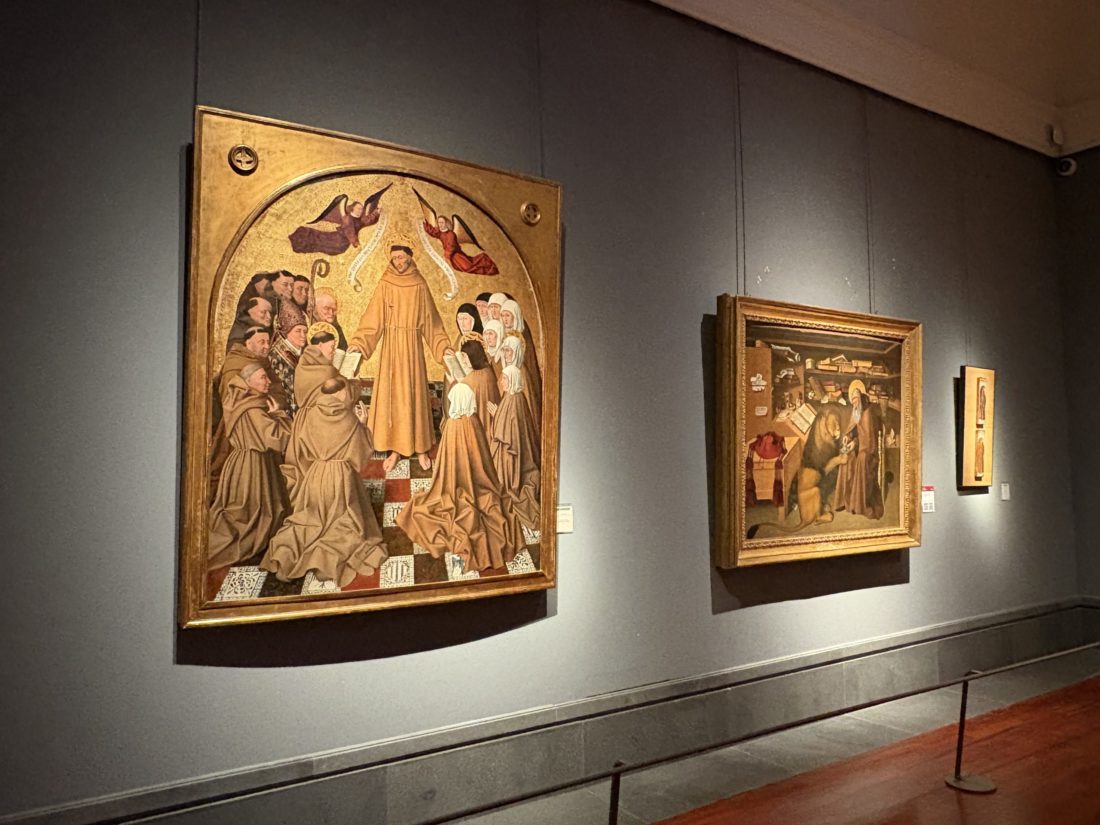
Capodimonte celebra la prima domenica gratuita del mese di febbraio con un rientro dopo il restauro. Quello del dipinto San Francesco che consegna la regola agli ordini francescani’ (1444 – 1450) di Colantonio, maestro napoletano del rinascimento meridionale.
Un ritorno che apre simbolicamente le iniziative che il Museo e Real Bosco di Capodimonte nel 2026 dedicate agli 800 anni dalla morte del Santo Patrono, figura presente in molte opere delle collezioni.
Il museo riunisce nella sala 67 del secondo piano, tutta dedicata a Colantonio, le opere del polittico della chiesa di San Lorenzo Maggiore di Napoli, il più antico luogo francescano della città.
L’imponente pala (probabilmente commissionata da Alfonso il Magnanimo e originariamente posta nella tribuna centrale) era infatti composta dal ‘San Girolamo nel suo studio’ (al quale era intitolato l’altare) e dal San Francesco, (150×185 cm, restaurato nell’ambito del programma Restituzioni di Intesa San Paolo) circondati da dieci ‘beatini francescani’ di cui due, Morico e Leone, entrati recentemente nelle collezioni di Capodimonte grazie a un acquisto del Mic direzione generale architettura, belle arti e paesaggio.
Al loro arrivo nel dicembre del 2024 il San Francesco non era nelle sale espositive ma nei laboratori del Museo di Capodimonte per restauro.
Con lo smembramento del polittico intorno al 1639, il dipinto di San Girolamo venne trasferito nella sacrestia di San Lorenzo mentre il San Francesco fu utilizzato come pala d’altare per il barocco Cappellone, nel transetto destro della chiesa.
Nel periodo napoleonico, con la soppressione degli ordini monastici, il San Girolamo fu musealizzato (1808), raggiunto solo nel 1922 dal San Francesco, inventariato nel 1930 nelle collezioni dell’allora Museo Nazionale, poi entrambi trasferiti a Capodimonte nel 1957. Le piccole tavole con i beati francescani avevano preso intanto la via del collezionismo. Le restanti otto identificate dagli studiosi sono infatti oggi proprietà di privati in Italia e Usa.
Attivo in città dal 1440 al 1460 circa, maestro di Antonello da Messina, Colantonio si formò al gusto della pittura fiamminga grazie al re Renato d’Angiò, che aveva forse conosciuto i grandi nordici van Eyck e van der Weyden anche loro provenienti dalle Fiandre o dalla Provenza. I dipinti del grande retablo a due livelli per San Lorenzo impegnarono a lungo Colantonio.
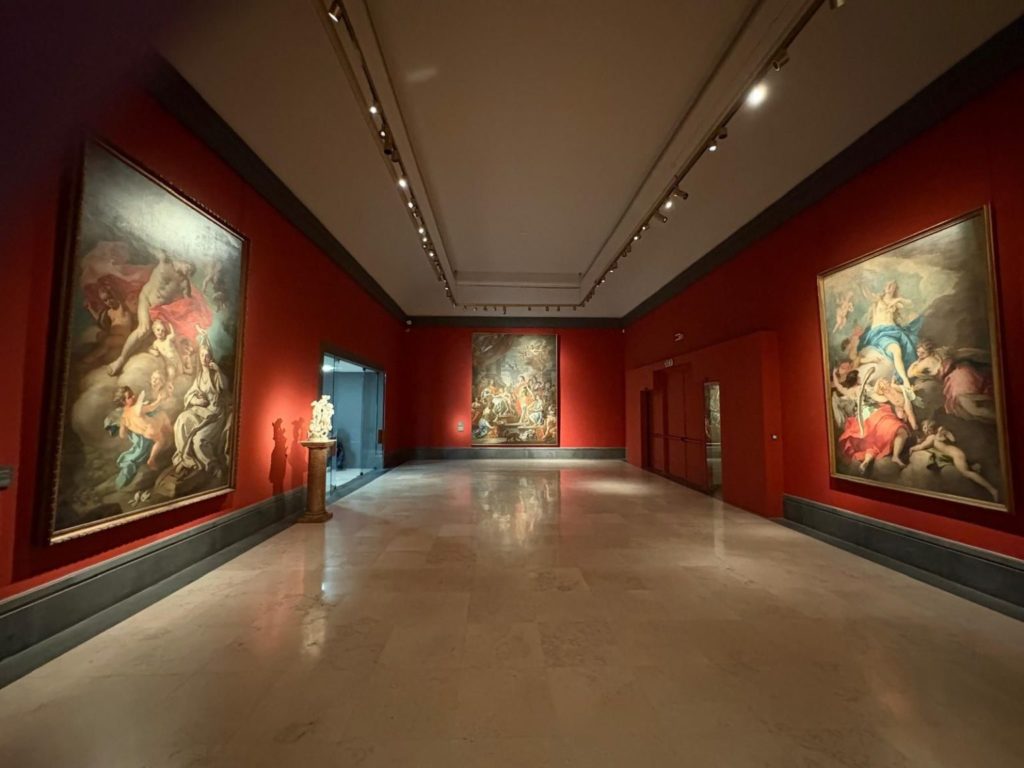
Sempre al secondo piano in sala 61, invece, (in dialogo con la sala 62 detta dei Capolavori, da Caravaggio a Parmigianino a Warhol) sono esposte opere di Francesco Solimena (Enea e Didone), Francesco De Mura (‘Imeneo che toglie il velo alla Pudicizia’), Giuseppe Sanmartino (‘Lotta di amorini’) e Sebastiano Ricci (‘Assunzione della Maddalena’).
Nella domenica gratuita del primo febbraio resterà chiuso il primo piano del museo e la sala Causa.
Per saperne di più
Museo e Real Bosco di Capodimonte
Capodimonte/ San Francesco by Colantonio is back after restoration. Free Sunday: the public will see the polyptych of San Lorenzo Maggiore reunited in one room
Capodimonte celebrates the first free Sunday in February with a return after restoration. That of the painting St Francis delivering the rule to the Franciscan orders (1444 – 1450) by Colantonio, a Neapolitan master of the southern Renaissance.
This return symbolically opens the initiatives that the Museum and Royal Woods of Capodimonte will dedicate in 2026 to the 800th anniversary of the death of the patron saint, a figure present in many works in the collections.
The museum brings together in room 67 on the second floor, entirely dedicated to Colantonio, the works of the polyptych from the Church of San Lorenzo Maggiore in Naples, the oldest Franciscan site in the city.
The imposing altarpiece (probably commissioned by Alfonso the Magnanimous and originally placed in the central tribune) was in fact composed of “St Jerome in his study” (to whom the altar was dedicated) and St Francis, (150×185 cm, restored as part of the Intesa San Paolo Restituzioni programme) surrounded by ten “Franciscan blesseds”, two of whom, Morico and Leone, recently entered the Capodimonte collections thanks to a purchase by the Mic Directorate-General for Architecture, Fine Arts and Landscape.
When they arrived in December 2024, St Francis was not in the exhibition rooms but in the Capodimonte Museum’s restoration workshops.
When the polyptych was dismantled around 1639, the painting of St Jerome was transferred to the sacristy of San Lorenzo, while St Francis was used as an altarpiece for the Baroque Cappellone in the right transept of the church.
During the Napoleonic period, with the suppression of the monastic orders, Saint Jerome was placed in a museum (1808), joined only in 1922 by Saint Francis, inventoried in 1930 in the collections of the then National Museum, then both transferred to Capodimonte in 1957. The small panels depicting the Franciscan saints had meanwhile found their way into private collections. The remaining eight identified by scholars are now owned by private individuals in Italy and the Usa.
Active in the city from around 1440 to 1460, Colantonio was the teacher of Antonello da Messina and was influenced by Flemish painting thanks to King Renato d’Angiò, who may have known the great Northern artists van Eyck and van der Weyden, who also came from Flanders or Provence. The paintings of the large two-level altarpiece for San Lorenzo kept Colantonio busy for a long time.
Also on the second floor, in room 61, (in dialogue with room 62, known as the Masterpieces room, from Caravaggio to Parmigianino to Warhol) are works by Francesco Solimena (Aeneas and Dido), Francesco De Mura (“Hymen removing the veil from Modesty”), Giuseppe Sanmartino (“Fight of the Cupids”) and Sebastiano Ricci (“Assumption of Mary Magdalene”).
On the free Sunday of 1st February, the first floor of the museum and the Causa room will be closed.
.
.