
La creatività non invecchia. Anzi l’età le dà nuova luce. Come è accaduto a Monet che a oltre 80 anni ha creato le sue indimenticabili ninfee, a Verdi che da ottantenne ci ha regalato una delle sue opere più innovative, il Falstaff, a Michelangelo, architetto instancabile nella Basilica di San Pietro fino alla morte avvenuta a 89 anni.
Anche oggi è così. Un esempio è la mostra napoletana «Il silenzio delle carte. La voce del corpo» , che l’artista sannita Giuseppe Leone (classe 1948) inaugura giovedì 24 settembre, alle 17.30, a Palazzo Ricca, negli spazi de IlCartastorie – Museo dell’Archivio Storico del Banco di Napoli confermando come il suo spirito creativo riesca a inventare nuove forme e percorsi affascinanti. Sempre in dialogo con il presente.
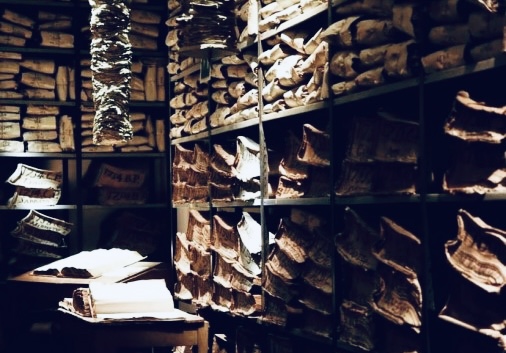
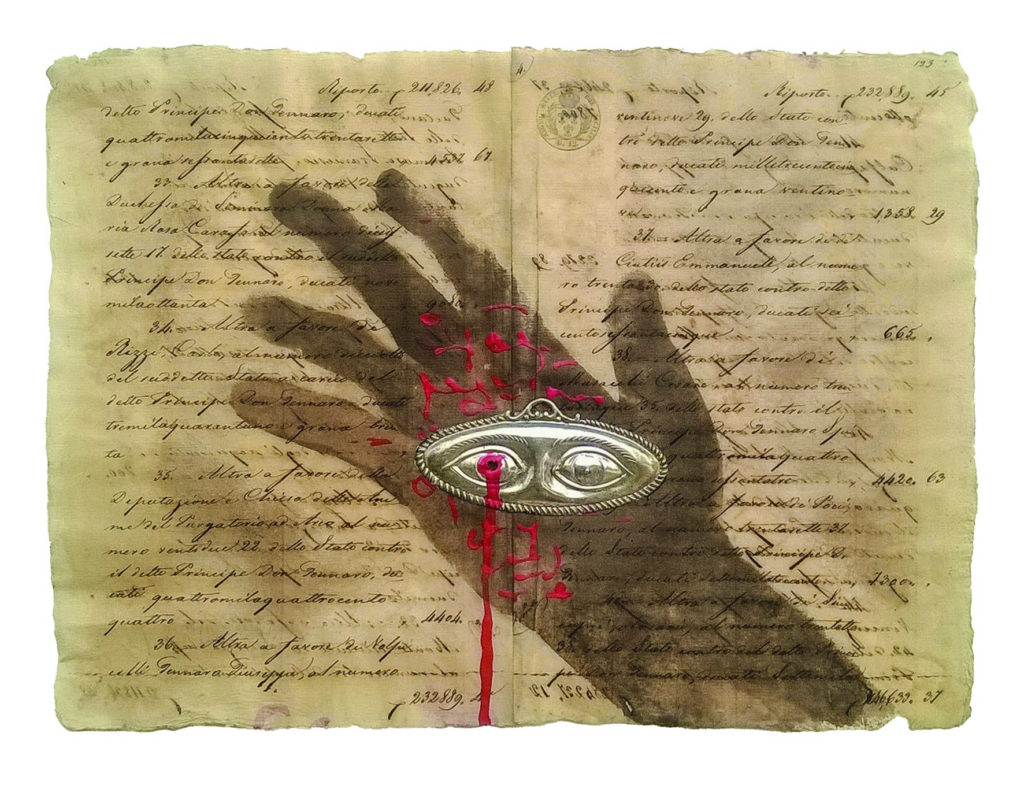
L’esposizione, a cura di Noemi Verdeoliva, nasce dalla connessione tra arte contemporanea, manoscritti, documenti d’archivio ed ex voto che diventano corpi narrativi: antichi manoscritti, fedi di credito, atti notarili e entrano nell’opera da protagonisti, come tracce di vite, gesti e vicende che la pittura di Leone riattiva e restituisce alla memoria contemporanea.
Al centro della ricerca di Leone ci sono anche gli ex voto elaborati come piccoli racconti di dolore, grazia, sopravvivenza, affidati a un’immagine perché non vengano dimenticati. E nel suo universo artistico emerge pure la “scrittura afona”, alfabeto fatto di gesti e segni che accompagna le antiche scritture senza cancellarle, creando un incontro tra la memoria scritta e quella dipinta.
Alle opere si affianca il corto “Francesco Branchetti legge Giuseppe Leone”, che sarà presentato in anteprima nazionale nell’ambito del progetto “M2 Filming Experience – Mezzogiorno e Mediterraneo”, promosso e cofinanziato dal Comune di Napoli nell’ambito della programmazione culturale 2026/2027, con la partnership della Fondazione Banco di Napoli e della Fondazione ilCartastorie.
La voce e la presenza scenica di Francesco Branchetti, attore e regista, attraversano l’universo dell’artista e inventano una nuova dimensione alle immagini e alle tracce custodite nei documenti.
Branchetti, interprete e regista formatosi anche attraverso l’incontro con maestri come Vittorio Gassman e Gabriele Ferzetti, ha sviluppato nel corso della sua carriera una ricerca centrata sulla complessità dell’essere umano, sulla memoria e sulla relazione. Un percorso che trova nel lavoro su Giuseppe Leone un nuovo terreno di confronto tra parola, immagine e presenza.
Dal 25 settembre, inoltre, il pubblico potrà vedere il film gratuitamente per 14 giorni alla banchina della stazione EAV di Napoli Piazza Garibaldi, attraverso un’installazione multimediale con QR code.
storico del banco di Napoli
Historical Archive of the Banco di Napoli / In the silence of the papers, the voice of the body: Giuseppe Leone breathes new life into manuscripts and notarial deeds
Creativity never grows old. On the contrary, age sheds new light on it. This was the case with Monet, who, at over 80, created his unforgettable water lilies; with Verdi, who, at the age of 80, gave us one of his most innovative operas, *Falstaff*; and with Michelangelo, a tireless architect who worked on St Peter’s Basilica right up until his death at the age of 89.
This remains true today. One example is the Neapolitan exhibition ‘The Silence of the Papers. The Voice of the Body’, which the Samnite artist Giuseppe Leone (born 1948) opens on the 24th of September at 5.30 pm at Palazzo Ricca, within the spaces of IlCartastorie – the Museum of the Historical Archive of the Banco di Napoli at Palazzo Ricca – confirming how his creative spirit continues to invent new forms and fascinating paths. Always in dialogue with the present.
The exhibition, curated by Noemi Verdeoliva, stems from the connection between contemporary art, manuscripts, archival documents and ex-votos, which become narrative entities: ancient manuscripts, promissory notes and notarial deeds take centre stage in the work, as traces of lives, gestures and events that Leone’s painting reawakens and restores to contemporary memory.
At the heart of Leone’s research are also votive offerings, conceived as small tales of pain, grace and survival, entrusted to an image so that they may not be forgotten. And within her artistic universe, ‘silent writing’ also emerges – an alphabet made up of gestures and signs that accompanies the ancient writings without erasing them, creating an encounter between written and painted memory.
Alongside the artworks is the short film “Francesco Branchetti reads Giuseppe Leone”, which will have its national premiere as part of the “M2 Filming Experience – Mezzogiorno e Mediterraneo” project, promoted and co-funded by the City of Naples as part of its 2026/2027 cultural programme, in partnership with the Banco di Napoli Foundation and the ilCartastorie Foundation.
The voice and stage presence of Francesco Branchetti, actor and director, traverse the artist’s universe and imbue the images and traces preserved in the documents with a new dimension.
Branchetti, an actor and director whose training was shaped in part by his encounters with masters such as Vittorio Gassman and Gabriele Ferzetti, has, over the course of his career, developed a body of work centred on the complexity of the human condition, memory and relationships. This creative journey finds, in his work on Giuseppe Leone, a new arena for the interplay between words, images and presence.
Furthermore, from 25 September, the public will be able to watch the film free of charge for 14 days on the platform of the EAV station at Piazza Garibaldi in Naples, via a multimedia installation featuring a QR code.