
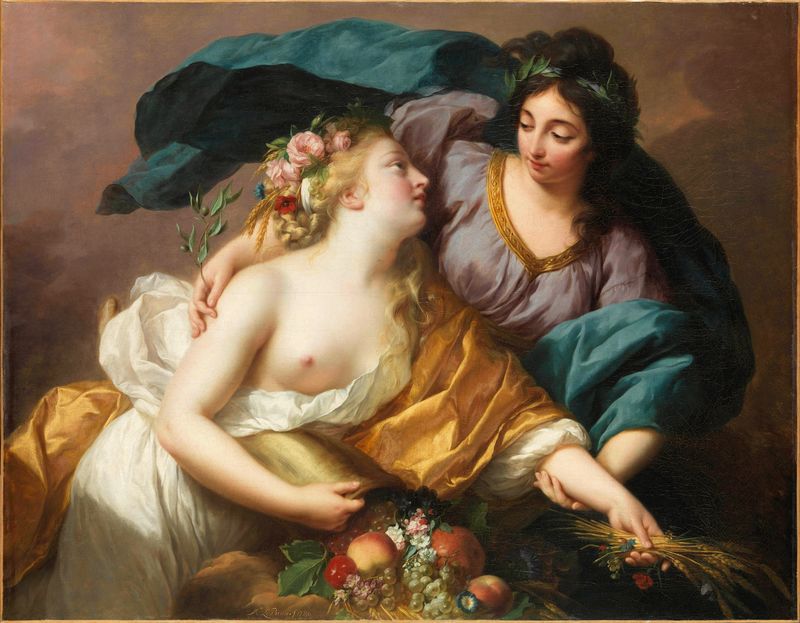
Kauffmann e Vigée Le Brun. La storia della pittura al femminile tra Settecento e Ottocento si propone attraverso due grandi protagoniste nella mostra che aprirà domani 6 novembre (fino al 7 marzo 2027) alle Gallerie d’Italia Napoli.
Angelica e Élisabeth. L’età delle donne pittrici è la mostra curata da Francesco Leone, Fernando Mazzocca e Elisabetta Rasy dedicata a 2 autrici che riuscirono ad affermarsi professionalmente tra la fine dell’Antico Regime e la nascita dell’Europa moderna.
Entrambe impararono a dipingere osservando i rispettivi padri, colte, indipendenti e cosmopolite: seppero conquistare una clientela internazionale e il favore delle corti europee, affermandosi in un mondo dell’arte ancora dominato dagli uomini.
L’esposizione mette per la prima volta a confronto le loro vite e le loro opere, seguendo due percorsi artistici diversi ma uniti da genialità e volontà di emancipazione.
Con 73 opere tra dipinti, disegni, incisioni e sculture, provenienti da importanti collezioni pubbliche e private italiane e internazionali – tra cui Gallerie degli Uffizi, Musée du Louvre, Musei Capitolini, National Portrait Gallery di Londra, Accademia Nazionale di San Luca ETS, Liechtenstein – The Princely Collections, Museo e Real Bosco di Capodimonte, National Museum of Women in the Arts di Washington, Musée des Beaux-Arts di Rouen e Galleria Nazionale della Pilotta di Parma – l’esposizione ricostruisce le sorprendenti analogie e le profonde differenze dei percorsi delle due artiste.
Tra le opere più significative spiccano i due autoritratti delle protagoniste provenienti dalle Gallerie degli Uffizi: quello di Élisabeth Louise Vigée Le Brun, realizzato nel 1789 e donato dalla stessa artista, e quello di Angelica Kauffmann, del 1787. Attraverso questi dipinti la mostra introduce uno dei temi centrali del progetto: la consapevolezza con cui entrambe le artiste seppero costruire e governare la propria immagine pubblica.
E Napoli fu per entrambe un importante centro di committenza e di confronto con la cultura internazionale. Kauffmann e Vigée Le Brun lavorarono infatti, in momenti diversi, per la corte borbonica, lasciando attraverso i loro ritratti due interpretazioni della famiglia reale e della società napoletana.
Terra natale di Kauffmann fu Coira (30 settembre 1741), nel cantone dei Grigioni, in Svizzera: la pittrice si confrontò con la storia, considerata il genere più elevato nella gerarchia accademica, oltre a cimentarsi con una grande varietà di soggetti.
Élisabeth Louise Vigée Le Brun (quest’ultimo è il cognome da sposata), nacque a Parigi nel 1755 e concentrò invece il proprio talento soprattutto sul ritratto, raggiungendo risultati di altissima qualità. La sua carriera fu segnata dal rapporto privilegiato con Maria Antonietta, di cui divenne una delle principali interpreti, e dalla capacità di costruire una clientela internazionale tra corti, aristocrazie e ambienti culturali.
Il loro riconoscimento raggiunse anche istituzioni tradizionalmente precluse alle donne. Kauffmann fu, insieme a Mary Moser, l’unica donna tra i membri fondatori della Royal Academy di Londra, mentre Vigée Le Brun fu ammessa all’Académie Royale de Peinture et de Sculpture di Parigi. Entrambe furono così riconosciute ai massimi livelli della gerarchia artistica del loro tempo.
Il percorso espositivo alla Gallerie d’Italua Napoli si apre inoltre alla più ampia presenza delle donne pittrici tra Settecento e primo Ottocento, mostrando come il successo di Kauffmann e Vigée Le Brun si inserisca in una dimensione dove altre artiste seppero affermarsi malgrado il predominio maschile. Sono presenti, tra le altre, opere di Adélaïde Labille-Guiard, Sofia Clerk Giordano, Maria Callani, Adèle Romanee, Marie-Geneviève Bouliard, Marie Guilhelmine Benoist e Constance Mayer.
Il catalogo della mostra è realizzato da Società Editrice Allemandi.
La mostra si collega al progetto delle Gallerie d’Italia di Napoli dedicato alle artiste attive nella Napoli spagnola del Seicento, proseguendo la riflessione sulla presenza delle donne nella storia dell’arte e valorizzando figure capaci di affermarsi sulla scena culturale del proprio tempo.
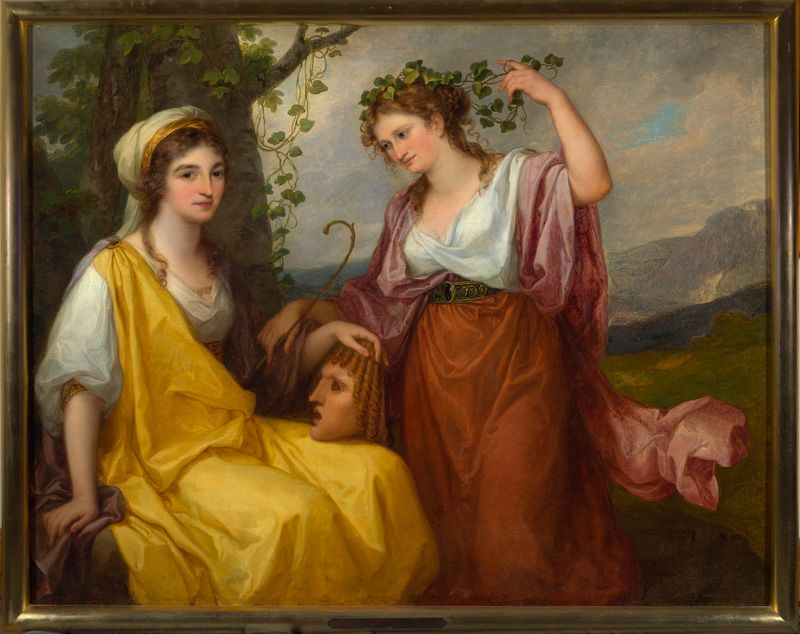
In copertina, un dipinto di Angelica Kauffmann
Galleries of Italy: Naples / Angelica Kauffmann and Élisabeth Vigée Le Brun: a life as leading figures in painting. Between the 18th and 19th centuries
Kaufmann and Vigée Le Brun. The history of women’s painting between the 18th and 19th centuries is explored through two major figures in the exhibition opening tomorrow, 6 November (running until 7 March 2027) at the Gallerie d’Italia in Naples.
‘Angelica and Élisabeth: The Age of Women Painters’ is an exhibition curated by Francesco Leone, Fernando Mazzocca and Elisabetta Rasy, dedicated to two female artists who succeeded in establishing themselves professionally between the end of the Ancien Régime and the birth of modern Europe.
Both learnt to paint by observing their respective fathers; cultured, independent and cosmopolitan, they succeeded in winning over an international clientele and the favour of European courts, making their mark in an art world still dominated by men.
The exhibition brings their lives and works into comparison for the first time, tracing two distinct artistic paths that are nevertheless united by genius and a desire for emancipation.
Featuring 73 works – including paintings, drawings, engravings and sculptures – coming from major Italian and international public and private collections – amongst them the Uffizi Galleries, the Musée du Louvre, the Capitoline Museums, the National Portrait Gallery in London, the Accademia Nazionale di San Luca ETS, Liechtenstein – The Princely Collections, the Capodimonte Museum and Royal Park, the National Museum of Women in the Arts in Washington, the Musée des Beaux-Arts in Rouen and the Pilotta National Gallery in Parma – the exhibition traces the striking similarities and profound differences in the two artists’ creative journeys.
Among the most significant works are the two self-portraits of the protagonists from the Uffizi Galleries: that of Élisabeth Louise Vigée Le Brun, painted in 1789 and donated by the artist herself, and that of Angelica Kauffmann, from 1787. Through these paintings, the exhibition introduces one of the project’s central themes: the awareness with which both artists were able to construct and manage their public image.
And Naples was, for both of them, an important centre for commissions and for engagement with international culture. Kauffmann and Vigée Le Brun both worked, at different times, for the Bourbon court, leaving behind, through their portraits, two interpretations of the royal family and Neapolitan society.
Kauffmann was born in Chur (30 September 1741), in the canton of Graubünden, Switzerland: the painter tackled history painting – considered the highest genre in the academic hierarchy – whilst also exploring a wide variety of subjects.
Élisabeth Louise Vigée Le Brun (the latter being her married name) was born in Paris in 1755 and focused her talent primarily on portraiture, achieving works of the very highest quality. Her career was marked by her close relationship with Marie Antoinette, of whom she became one of the principal portraitists, and by her ability to build an international clientele amongst courts, the aristocracy and cultural circles.
Their recognition extended even to institutions traditionally closed to women. Kauffmann was, alongside Mary Moser, the only woman amongst the founding members of the Royal Academy in London, whilst Vigée Le Brun was admitted to the Académie Royale de Peinture et de Sculpture in Paris. Both were thus recognised at the very highest levels of the artistic hierarchy of their time.
The exhibition at the Gallerie d’Italia in Naples also highlights the wider presence of women painters between the 18th and early 19th centuries, demonstrating how the success of Kauffmann and Vigée Le Brun forms part of a broader context in which other female artists were able to make their mark despite male dominance. On display are, amongst others, works by Adélaïde Labille-Guiard, Sofia Clerk Giordano, Maria Callani, Adèle Romanee, Marie-Geneviève Bouliard, Marie Guilhelmine Benoist and Constance Mayer. The exhibition catalogue has been published by Società Editrice Allemandi.
The exhibition ties in with the Gallerie d’Italia in Naples’ project dedicated to female artists active in 17th-century Spanish Naples, continuing the exploration of women’s presence in art history and highlighting figures who were able to make their mark on the cultural scene of their time.
.