
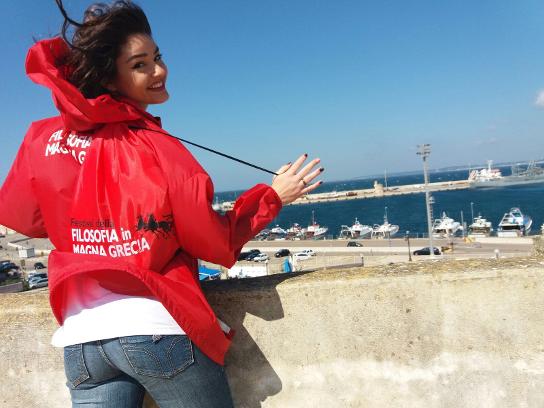
Parthenope, Mito-Logos. Parte da questo tema il Festival della Filosofia in Magna Grecia ideato da Giuseppina Russo (realizzato insieme al direttore scientifico Annalisa Di Nuzzo, e al responsabile della Metodologia didattica Salvatore Ferrara e a un importante team) che si svolgerà a Napoli, Cuma e Pompei dal 19 al 23 ottobre.
L’unico dedicato agli adolescenti, offre l’anima solare e sotterranea, di questi territori, aperta al mare e radicata nella profondità della sua storia, dalle sibille al racconto di Plinio il giovane, da Epicuro al confronto con la modernità della catastrofe interpretato da Lucrezia Ercoli.
Apertura al parco archeologico Cuma lunedì 19 ottobre alle 10 con l’accoglienza degli studenti provenienti da tutta Italia.
L’Antro della Sibilla porta il viaggio là dove la parola diventa oracolo: non spiegazione immediata, ma voce da ascoltare, decifrare, attraversare. Napoli raccoglie questa tensione nel vivo della città: nella luce delle piazze, delle chiese e del mare, ma anche nelle cavità, nei passaggi e nelle memorie che continuano sotto il selciato.
Pompei consegna la ricerca alla materia del tempo: ciò che è stato sepolto riaffiora nelle case, nelle strade, nei gesti interrotti, e non appartiene più soltanto al passato.
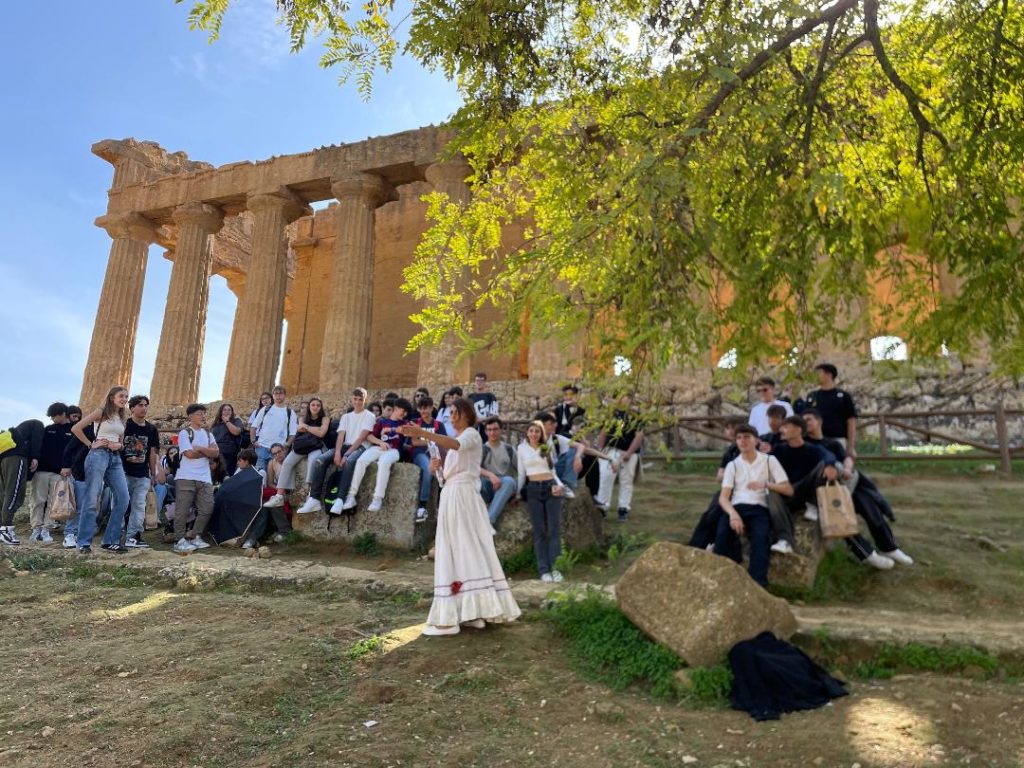
Il 21 ottobre alle 9.30 al Teatro Grande di Pompei la filosofa Lucrezia Ercoli terrà il suo dialogo maieutico con gli studenti dal titolo “Filosofia e no la terra trema. Filosofia e miti della della catastrofe”. Studentesse e studenti camminano in questi luoghi con le passeggiate filosofico teatrali nella Napoli medievale, monumentale e borbonica e negli scavi di Pompei, ascoltano, discutono, lavorano nei laboratori, danno forma alle domande attraverso la voce, il corpo, l’immagine, il movimento, la relazione con il gruppo.
Per i docenti è un percorso educativo che porta la filosofia fuori dalla canonica lezione in aula e la restituisce alla sua dimensione più viva: ricerca condivisa, esercizio critico, confronto con ciò che i luoghi custodiscono e provocano.
Spiega l’ideatrice, Giuseppina Russo: «Il Festival della Filosofia nasce in Magna Grecia negli scavi dell’antica Velia in Cilento dove Parmenide coltivò il proprio pensiero insieme al suo allievo Zenone ed è l’unico dedicato interamente agli adolescenti. Un evento di approfondimento culturale con una spiccata connotazione sociale: la divulgazione della filosofia, in forma esperienziale, tra gli studenti dei licei. L’obiettivo è proporre ai giovani occasioni e percorsi di educazione non formale, legati all’esperienza filosofica. L’iniziativa esalta il Genius Loci unendo proposte culturali e azioni territoriali attraverso la riscoperta e la valorizzazione della realtà in cui si svolge».
Nato in Campania negli scavi di Velia, dal 2008 si svolge in tutta la Magna Grecia (Siracusa, Ragusa e Noto, Matera e Metaponto, oltre Velia e Paestum e gli innumerevoli eventi come il premio Parmenide a Brescia a Casa Severino e le giornate filosofiche nel convento di San Domenico a Napoli) e da 11 anni anche in Grecia grazie a una stretta collaborazione e al sostegno dell’Istituto Italiano di cultura, dell’Ambasciata d’Italia ad Atene e della Scuola Italiana della capitale greca.
Dialoghi filosofici, passeggiate filosofico-teatrali, laboratori, Agon filosofici, sono le proposte per le ragazze e i ragazzi cui si affiancano le agorà tra docenti e un caleidoscopio di altre attività. La missione didattica affianca un progetto di valorizzazione territoriale.
Per saperne di più
Learn more
https://www.filosofiafestival.it/
Naples, Cuma & Pompeii / Philosophy Festival in Magna Graecia: students and teachers taking a stroll through philosophy (19 – 23 October)
“Parthenope”, Mito-Logos. This is the theme of the Philosophy Festival in Magna Graecia, conceived by Giuseppina Russo (organised in collaboration with the scientific director Annalisa Di Nuzzo, the head of teaching methodology Salvatore Ferrara, and a distinguished team), which will take place in Naples, Cuma and Pompeii from the19th to 23rd of October.
The only festival dedicated to teenagers, it explores the sunny and subterranean spirit of these lands, open to the sea and rooted in the depths of their history – from the Sibyls to the account of Pliny the Younger, from Epicurus to an examination of the modernity of catastrophe, interpreted by Lucrezia Ercoli.
The festival opens at the Cuma Archaeological Park on Monday the 19th of October at 10.00 am with a welcome for students from all over Italy. The Cave of the Sibyl takes the journey to the place where the word becomes an oracle: not an immediate explanation, but a voice to be listened to, deciphered and navigated. Naples captures this tension at the very heart of the city: in the light of the squares, the churches and the sea, but also in the caverns, the passageways and the memories that lie beneath the paving stones.
Pompeii entrusts this exploration to the fabric of time: what was once buried resurfaces in the houses, the streets and the interrupted gestures, and no longer belongs solely to the past.
On the21st October at 9.30 am at the Teatro Grande in Pompeii, the philosopher Lucrezia Ercoli will hold her maieutic dialogue with students, entitled ‘Philosophy and No, the Earth Trembles. Philosophy and the Myths of Catastrophe’.
Students walk through these places on philosophical-theatrical walks through medieval, monumental and Bourbon-era Naples and the excavations at Pompeii; they listen, discuss, work in workshops, and give shape to their questions through voice, body, image, movement and interaction with the group.
For teachers, it is an educational journey that takes philosophy beyond the traditional classroom lesson and restores it to its most vibrant form: shared exploration, critical engagement, and an encounter with what these places preserve and evoke.
The creator, Giuseppina Russo, explains: ‘The Philosophy Festival originated in Magna Graecia at the archaeological site of ancient Velia in Cilento, where Parmenides developed his philosophy alongside his pupil Zeno, and is the only one dedicated entirely to teenagers. It is an event promoting cultural enrichment with a strong social dimension: the dissemination of philosophy, through experiential learning, amongst sixth-form students. The aim is to offer young people opportunities and pathways for non-formal education linked to the philosophical experience. The initiative celebrates the Genius Loci by combining cultural initiatives and local actions through the rediscovery and promotion of the very setting in which it takes place’.
Founded in Campania at the Velia excavations, since 2008 it has been held throughout Magna Graecia (Syracuse, Ragusa and Noto, Matera and Metaponto, as well as Velia and Paestum, and countless other events such as the Parmenides Prize in Brescia at Casa Severino and the philosophy days at the Convent of San Domenico in Naples) and, for the past 11 years, also in Greece thanks to close collaboration and the support of the Italian Cultural Institute, the Italian Embassy in Athens and the Italian School in the Greek capital.
Philosophical dialogues, philosophical-theatrical walks, workshops and philosophical ‘Agons’ are the activities on offer for young people, complemented by forums for teachers and a kaleidoscope of other activities. The educational mission goes hand in hand with a project to promote the local area.