
L’eco di Artemide. Un titolo che unisce il Museo archeologico nazionale di Napoli al Museo e Real Bosco di Capodimonte: di nuovo insieme, per raccontare un pezzo di storia comune grazie al forte legame tra le antichità farnesiane e la Real Fabbrica di Napoli.
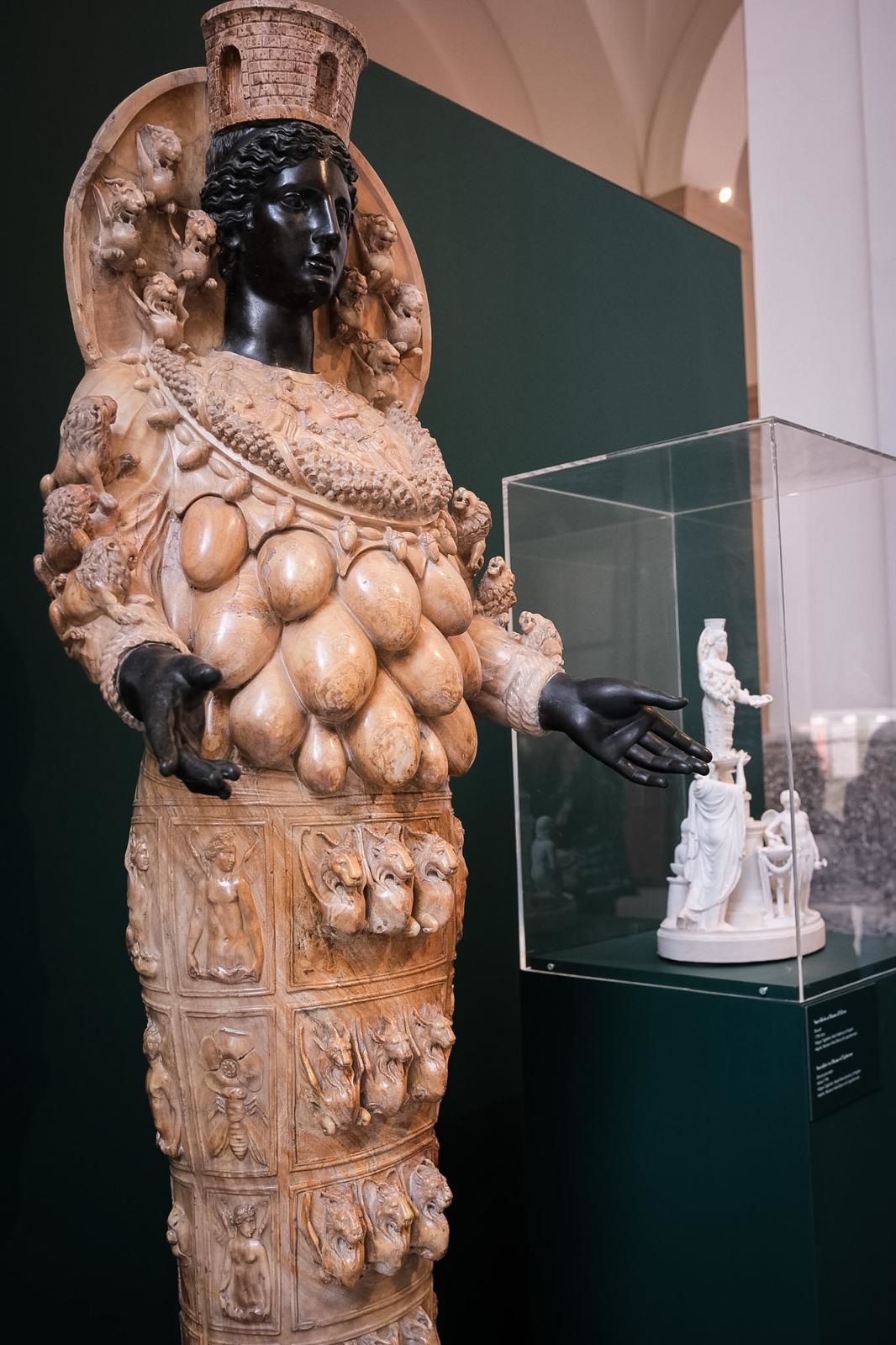
L’allestimento espositivo, nell’atrio del Mann dal 13 maggio all’8 giugno (foto), fa dialogare la celebre statua antica dell’Artemide Efesia (II secolo d.C.) con il ‘Il sacrificio a Diana d’Efeso’ (1790 circa) di Filippo Tagliolini, prezioso biscuit appena entrato nelle collezioni di Capodimonte.
L’iniziativa nasce nel segno di una crescente collaborazione tra due grandi istituzioni museali dal patrimonio così strettamente connesso.
Spiega Francesco Sirano, direttore dell’Archeologico: «Costruire connessioni di tempi e identità: con questo presupposto accogliamo l’installazione sull’eco di Artemide come primo passo di un percorso culturale che ci porterà a raccontare, in una dimensione sempre condivisa con il pubblico, la fortuna storica e l’attualità delle nostre collezioni. Abbiamo scelto di intraprendere questo viaggio partendo fisicamente dal nostro Atrio, punto di accoglienza dei visitatori e dal dialogo con Capodimonte, l’altro grande museo statale della città, legato a doppio filo al Mann per profilo museografico e storia del patrimonio».
Aggiunge il suo omologo a Capodimonte, Eike Schmidt: «La recente acquisizione da parte del Mministero della cultura per Capodimonte, che ha permesso alla preziosa opera proveniente dal mercato antiquario di rimanere in Italia, è stata una bella occasione per questa significativa collaborazione. Grande è la suggestione nell’ammirare la porcellana settecentesca accanto alla scultura che ne ispirò la creazione. Un’anteprima che vuole annunciare l’apertura al Museo e Real Bosco di Capodimonte, il prossimo 12 giugno, di 14 sale tutte dedicate alla porcellana, percorso che per la prima volta rende accessibile al pubblico una delle collezioni più grandi e più importanti al mondo di questa arte preziosissima»..
La statua di Artemide Efesia, in alabastro e bronzo, appartiene al nucleo costitutivo cinquecentesco della collezione Farnese, trasferita nel 1788 da Roma a Napoli. E, proprio in vista di questo spostamento, lo scultore Giuseppe Valadier aveva realizzato, in bronzo verniciato, la testa, i piedi e le mani mancanti della statua. Queste ultime, danneggiate durante l’occupazione francese, furono poi nuovamente integrate nel 1805, quando la collezione Farnese fu trasferita al Nuovo Museo dei Vecchi Studi di Napoli, di cui il Mann è l’erede.
Nel 1796, la scultura dell’Artemide Efesia è censita negli inventari del Nuovo Museo e Fabbrica della Porcellana di Napoli, dove fu riprodotta in diverse creazioni in biscuit. Il biscuit, che viene presentato in anteprima al Mann, integra la figura della dea con quelle di tre offerenti, tra cui un genio alato. Con molta probabilità, infatti, la porcellana in mostra è stata realizzata già alla fine del Settecento.
Per saperne di più
Learn more
https://www.museoarcheologiconapoli.it/
Preview/ The Mann embraces Capodimonte in the spirit of Artemis. Tagliolini’s 18th-century work enters into dialogue with the ancient statue representing the goddess in the atrium of the Archaeological Museum
The echo of Artemis. A title that brings together the National Archaeological Museum of Naples and the Capodimonte Museum and Royal Park: united once more to share a piece of their shared history, thanks to the strong link between the Farnese collection of antiquities and the Royal Factory of Naples.
The exhibition, in the atrium of the Mann from the 13th of May to the 8th of June (photo), creates a dialogue between the famous ancient statue of Artemis of Ephesus (2nd century AD) and ‘The Sacrifice to Diana of Ephesus’ (c. 1790) by Filippo Tagliolini, a precious biscuit porcelain piece that has recently entered the Capodimonte collections.
The initiative stems from a growing collaboration between two major museum institutions with such closely linked heritage.
Francesco Sirano, director of the Archaeological Museum, explains: ‘Building connections between times and identities: with this premise in mind, we welcome the installation on the echo of Artemis as the first step in a cultural journey that will lead us to recount, in a dimension always shared with the public, the historical significance and contemporary relevance of our collections. We have chosen to embark on this journey by starting physically from our Atrium, the point where visitors are welcomed, and through dialogue with Capodimonte, the city’s other important state museum, which is inextricably linked to the MANN in terms of its curatorial profile and heritage history.”
His colleague at Capodimonte, Eike Schmidt, adds: ‘The recent acquisition by the Ministry of Culture on behalf of Capodimonte, which has enabled this precious work from the antiques market to remain in Italy, has provided a wonderful opportunity for this significant collaboration. It is truly evocative to admire the 18th-century porcelain alongside the sculpture that inspired its creation. This preview heralds the opening, on 12 June, of 14 galleries at the Capodimonte Museum and Royal Park, all dedicated to porcelain – a display that, for the first time, makes one of the world’s largest and most important collections of this precious art accessible to the public.”
In 1796, the sculpture of Artemis of Ephesus was listed in the inventories of the New Museum and Porcelain Factory of Naples, where it was reproduced in various biscuit porcelain creations. The biscuit, which is being previewed at the Mann, combines the figure of the goddess with those of three offerers, including a winged genius. In fact, it is highly likely that the porcelain on display was produced as early as the late 18th century.