
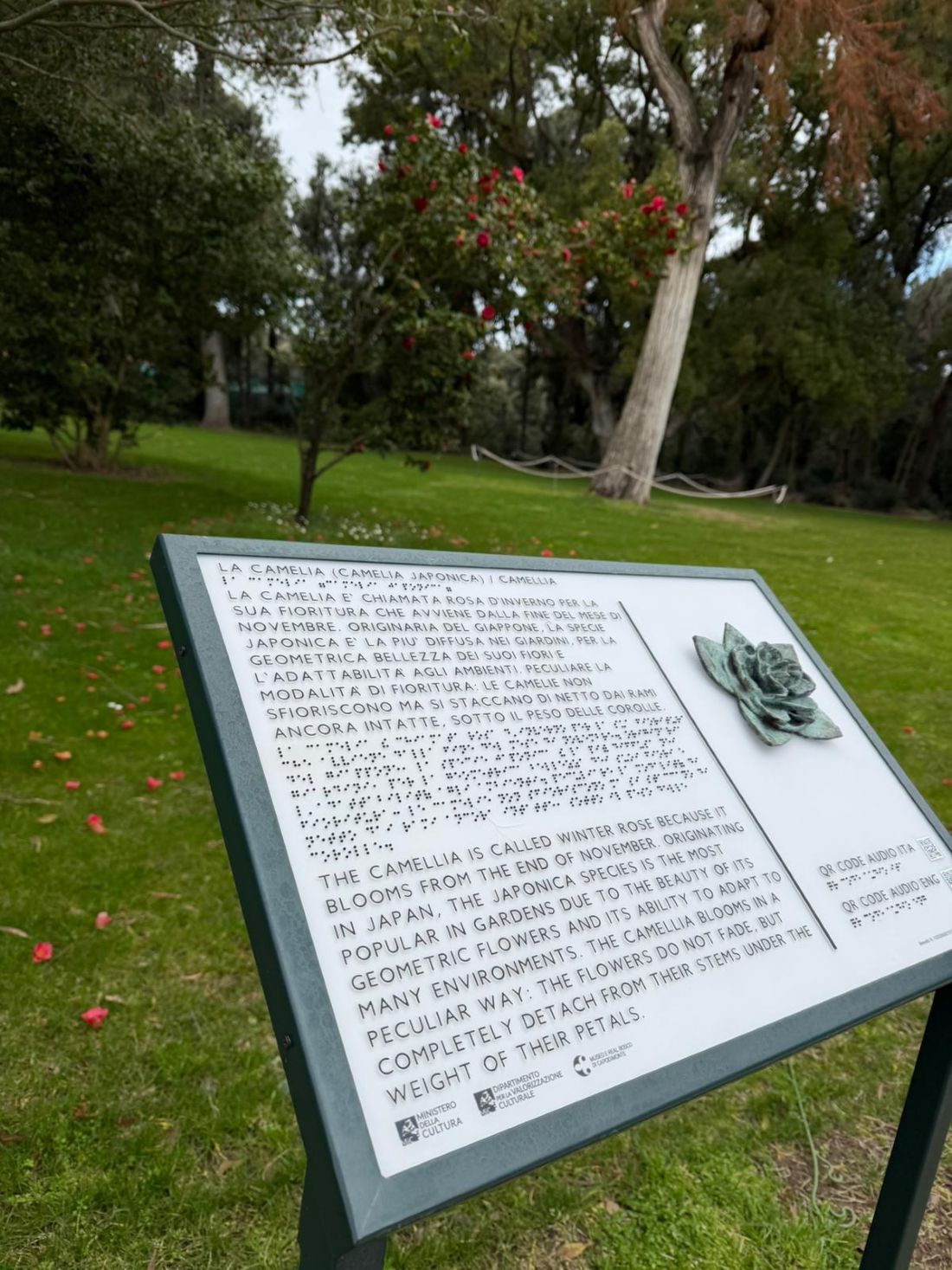
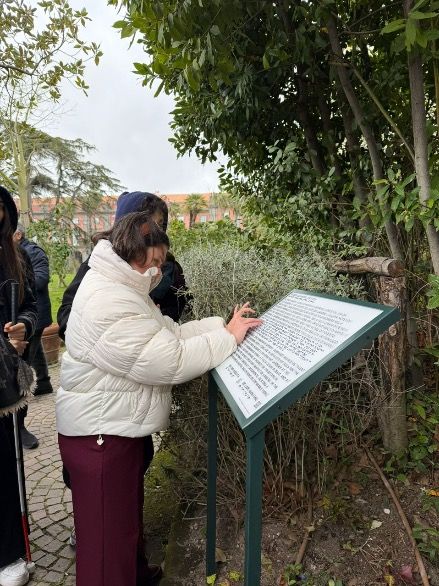
Giornata nazionale del Braille (21 febbraio). E per questa occasione a Capodimonte nel giardino dei principi sono stati inaugurati i pannelli tattili-olfattivi (foto), nuova offerta per l’accessibilità realizzata grazie ai finanziamenti PNRR 1.2.
I pannelli , infatti, sono corredati da essenze profumate naturali e qr code che rimandano a contenuti multimediali. Realizzate anche riproduzione in bronzo di foglie e fiori, disponibili per non vedenti e ipovedenti schede portatili e planimetria del Bosco.
In lingua italiana e inglese, i nuovi pannelli di orientamento tattile hanno testi in nero (caratteri normali ingranditi a lettura tattile a rilievo) e caratteri a rilievo Braille. Utilizzato un trattamento superficiale antibatterico, autoigienizzante e con funzione protettiva.
Sono stati inoltre effettuati lavori di recupero e di rifacimento del viale che va da Porta Piccola all’ingresso del Museo e acquistati due veicoli elettrici per il trasporto del pubblico con particolari esigenze.
I pannelli sono stati studiati per orientare i visitatori – anche con difficoltà percettive – sui punti di interesse dei 134 ettari di Real Bosco oltre a fornire un’introduzione sul valore storico e paesaggistico del giardino più prossimo al museo, ovvero il giardino dei principi recentemente restaurato.
La riproduzione in bronzo – presa dal vero con un calco in cera – delle foglie e dei fiori, restituisce tattilmente i dettagli delle specie vegetali. Il diffusore di essenza profumata su alcuni dei pannelli rende l’esperienza sensoriale ancora più immersiva esaltando le specie rare del giardino.
La presenza di qr code sui pannelli integra il percorso tattile con i contenuti digitali di video LIS e audiodescrizioni. I due pannelli introduttivi offrono il contesto storico sulla realizzazione del giardino del XIX secolo, secondo il gusto anglo-cinese, a cura del botanico paesaggista Friedrich Dehnhardt (1787-1870) e sono corredati da qr code con l’audiodescrizione biografica di Dehnhardt e il video LIS sui giardini di Capodimonte.
Ecco alcuni pannelli nel giardino dei principi. Eucalipto: descrive l’albero esotico, proveniente dalla Tasmania, censito tra gli alberi monumentali della regione Campania. Corredato di riproduzione in bronzo della foglia, qr code che rimanda al video LIS sulle specie vegetali di Capodimonte e lo sportello per l’esperienza olfattiva dell’essenza.
Camelia: racconta dell’importanza del fiore nei giardini dei siti reali napoletani. Canforo: escrive l’albero monumentale proveniente dalla Cina. Pepe rosa: descrive la specie profumata del giardino.
Sono state realizzate inoltre venti schede tattili a rilievo portatili di formato agevole, bifacciali, con rappresentazione grafica a rilievo sul retro e descrizione in nero/braille sul verso. Nei contenuti, informazioni sull’intero sito, parco (zona intorno alla Reggia), museo, giardino dei principi, specie vegetali.
Per saperne di più
https://museinapoli.it/museo-real-bosco-capodimonte/
Capodimonte/ Braille panels that smell like flowers: this is how the princes’ garden welcomes the public (without exclusion)
National Braille Day ( the 21st of February). To mark the occasion, tactile-olfactory panels (photo) were inaugurated in the Princes’ Garden at Capodimonte, a new accessibility feature made possible thanks to PNRR 1.2 funding.
The panels are accompanied by natural scented essences and QR codes that link to multimedia content. Bronze reproductions of leaves and flowers have also been created, and portable cards and a map of the forest are available for the blind and visually impaired.
In Italian and English, the new tactile orientation panels have text in black (normal characters enlarged for tactile reading in relief) and Braille characters in relief. An antibacterial, self-sanitising and protective surface treatment has been used.
Restoration and renovation work has also been carried out on the avenue leading from Porta Piccola to the museum entrance, and two electric vehicles have been purchased to transport members of the public with special needs.
The panels have been designed to guide visitors – including those with perceptual difficulties – to points of interest in the 134 hectares of the Royal Forest, as well as providing an introduction to the historical and landscape value of the garden closest to the museum, namely the recently restored Giardino dei Principi (Princes’ Garden).
The bronze reproduction – taken from life with a wax cast – of the leaves and flowers tactilely captures the details of the plant species. The scent diffuser on some of the panels makes the sensory experience even more immersive, enhancing the rare species in the garden.
The QR codes on the panels integrate the tactile experience with digital content in the form of LIS videos and audio descriptions. The two introductory panels provide historical context on the creation of the 19th-century garden, designed in Anglo-Chinese style by landscape botanist Friedrich Dehnhardt (1787-1870), and are accompanied by QR codes with an audio description of Dehnhardt’s biography and an LIS video on the gardens of Capodimonte.
Here are some of the panels in the Princes’ Garden. Eucalyptus: describes the exotic tree, native to Tasmania, listed among the monumental trees of the Campania region. Accompanied by a bronze reproduction of the leaf, a QR code linking to the LIS video on the plant species of Capodimonte and a panel for the olfactory experience of the essence.
Camellia: describes the importance of this flower in the gardens of Neapolitan royal residences. Camphor tree: describes this monumental tree originating from China. Pink pepper: describes this fragrant species found in the garden.
Twenty portable tactile relief cards have also been produced in a convenient format, double-sided, with a relief graphic representation on the back and a description in black/Braille on the front. The contents include information on the entire site, the park (the area around the Royal Palace), the museum, the princes’ garden and plant species.