
L’immagine nasce dai sensi
ma si illumina di bellezza nell’intelletto.
Aldo Grassini
Un’immersione di Carmine Negro nella mostra Vortici dell’artista statunitense Alexi Worth, Gallerie d’Italia Napoli, 3 aprile fino al 5 luglio 2026
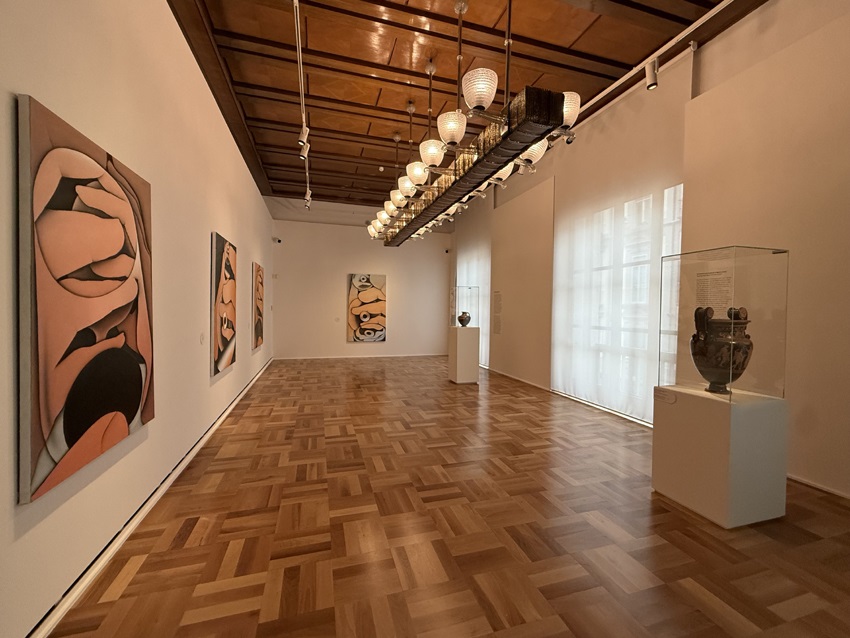
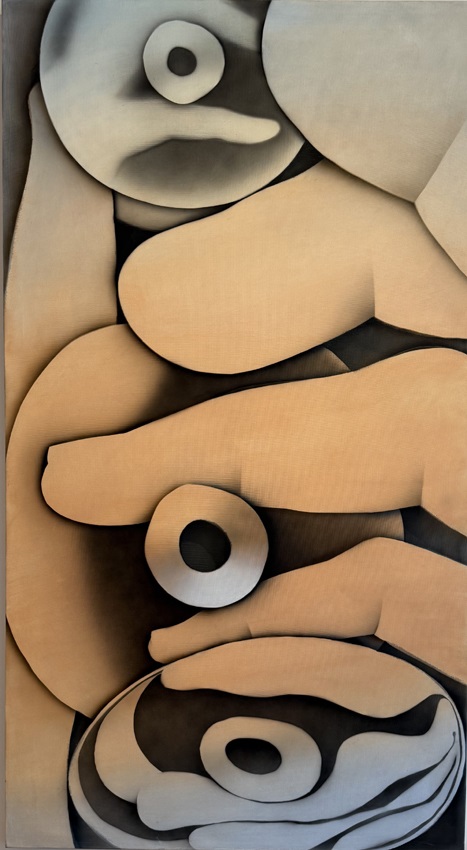
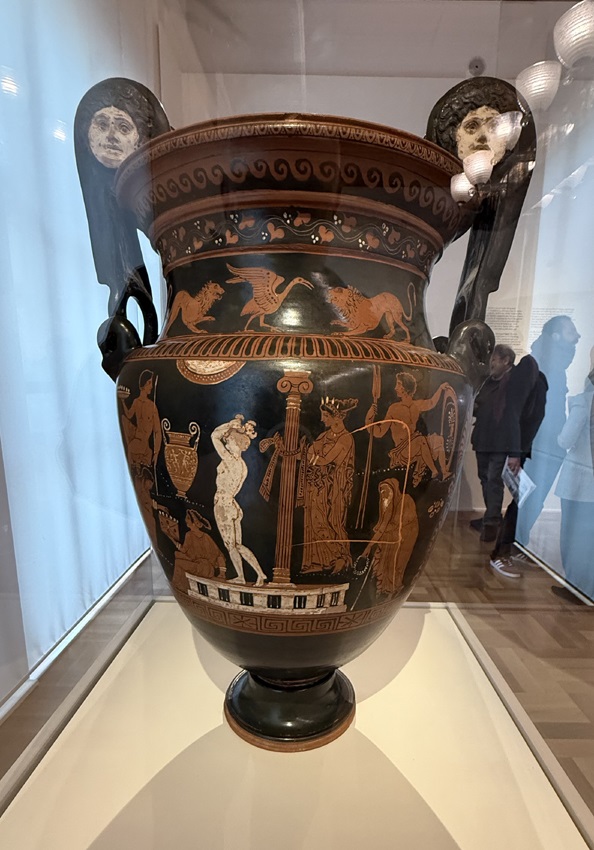
Entrare nelle sale delle Gallerie d’Italia di Napoli che ospitano Vortici significa attraversare una soglia nel senso più pieno del termine. Le superfici traslucide delle opere di Alexi Worth non si limitano a riflettere la luce: la filtrano, la trattengono, la rendono incerta. Accanto, le figure nere e rosse delle ceramiche attiche e magnogreche emergono come presenze antiche ma sorprendentemente attuali.
Non è un accostamento pacificato, ma un vero cortocircuito temporale: lo sguardo è trascinato avanti e indietro nei secoli, costretto a interrogarsi, a rallentare. La mostra non costruisce una continuità, ma una frizione produttiva tra immagini che fissano il gesto e immagini che lo rendono instabile, tra un visibile codificato e uno che sembra sempre sul punto di dissolversi.
Un dispositivo visivo che chiede lentezza
Il percorso espositivo si configura come un dispositivo percettivo più che come una sequenza narrativa. Le sale non si attraversano semplicemente: si abitano.
Da un lato, anfore e crateri con la loro grammatica visiva rigorosa; dall’altro, le immagini di Worth, fatte di mani sospese, ombre che diventano soggetti, superfici che sembrano sottrarre materia invece di aggiungerla. Qui la lentezza non è un valore accessorio, ma una condizione necessaria. Ogni accostamento introduce una frattura temporale che obbliga l’occhio a sostare.
Vortici mette alla prova lo sguardo proprio perché ne espone i limiti: vedere non è un atto immediato, ma un processo faticoso, reversibile, mai del tutto risolto.
L’immagine come soglia instabile
Per molti visitatori italiani, la mostra rappresenta il primo incontro con Alexi Worth. Pittore e teorico dell’immagine, Worth lavora da anni su una questione centrale della visione contemporanea: che cosa significa vedere in un’epoca in cui l’immagine è ovunque, ma raramente viene davvero guardata?
La sua pratica si colloca sulla soglia tra figurazione e trasparenza. La figurazione offre elementi riconoscibili — mani, bicchieri, foglie — ridotti all’essenziale, quasi schematici. La trasparenza, resa concreta dall’uso di supporti come mesh e reti, introduce una dimensione di instabilità: l’opera non chiude lo spazio, lo attraversa. Non si impone come superficie opaca, ma come filtro.
La soglia non è qui un tema iconografico, ma un vero regime del visibile. Le immagini di Worth sono al tempo stesso presenti e sfuggenti, solide e illusorie. Generano una sensazione di prossimità che mette in crisi la percezione: ciò che vediamo è davvero lì, o sta già scivolando altrove? Le opere appaiono come viste attraverso un vetro satinato, sospese tra presenza e dissolvenza.
L’aerografo come scelta concettuale
La tecnica di Worth — aerografo e stencil — non è mai neutrale. L’assenza della pennellata, la nettezza dei contorni, la piattezza delle campiture producono immagini che sembrano quasi autogenerate. Il gesto manuale non scompare, ma si ritrae, lasciando emergere forme che appaiono già date.
Questa scelta richiama l’estetica arcaica delle figure nere e rosse della ceramica greca, ma la innesta in un linguaggio contemporaneo, vicino al registro fotografico e grafico. Il risultato è un’immagine sospesa tra arcaico e attuale.
I gesti rappresentati — una mano che afferra, un’ombra che si allunga — diventano frammenti di un linguaggio essenziale, quasi archetipico. Spogliati del racconto, rimandano a una dimensione prenarrativa, in cui il gesto precede il significato e continua a interrogarlo.
Le opere in mostra
Un nucleo di opere presenti in mostra permette di cogliere con precisione la varietà dei modi in cui Alexi Worth mette in crisi la stabilità dell’immagine.
In Curtain(2020), una superficie reticolare simile a un sipario lascia intravedere una figura appena accennata: la visione si fa filtrata, esitante, come se l’immagine stessa trattenesse il proprio apparire. È la soglia nella sua forma più letterale, un vedere attraverso che non si concede mai del tutto.
Con Ladder (2022), l’instabilità assume un carattere diverso. Una scala, oggetto funzionale e quotidiano, emerge dalla trama del mesh come un’apparizione incerta, priva della sua abituale solidità. La scala suggerisce ascesa, passaggio, movimento verticale, ma qui resta sospesa, come trattenuta tra due stati: un segno che non conduce, ma interroga.
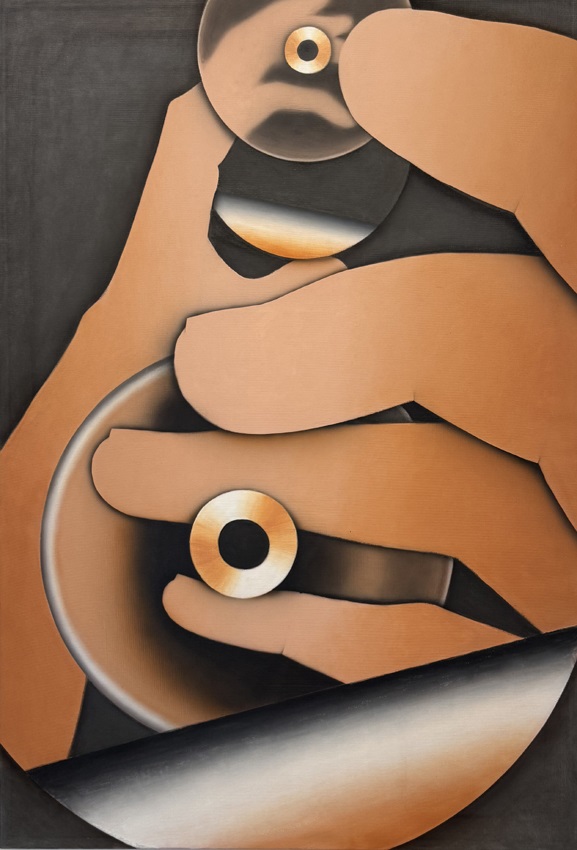
In Seesaw (Mylar) (2019), la tensione diventa dinamica. Due figure ridotte all’essenziale si bilanciano su un dondolo che sembra fluttuare nello spazio. L’equilibrio è fragile, continuamente minacciato, e traduce visivamente la precarietà del vedere contemporaneo: un oscillare continuo tra presenza e assenza, tra gesto e forma.
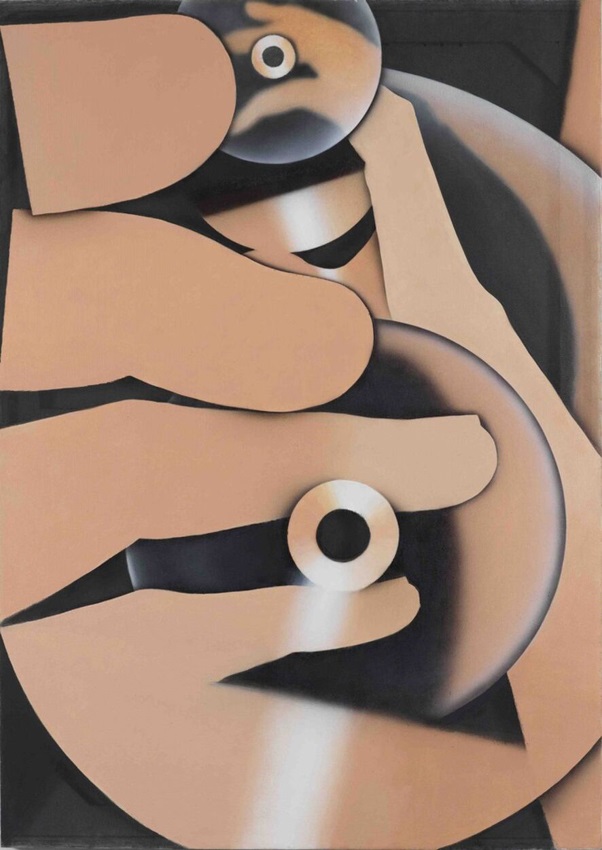
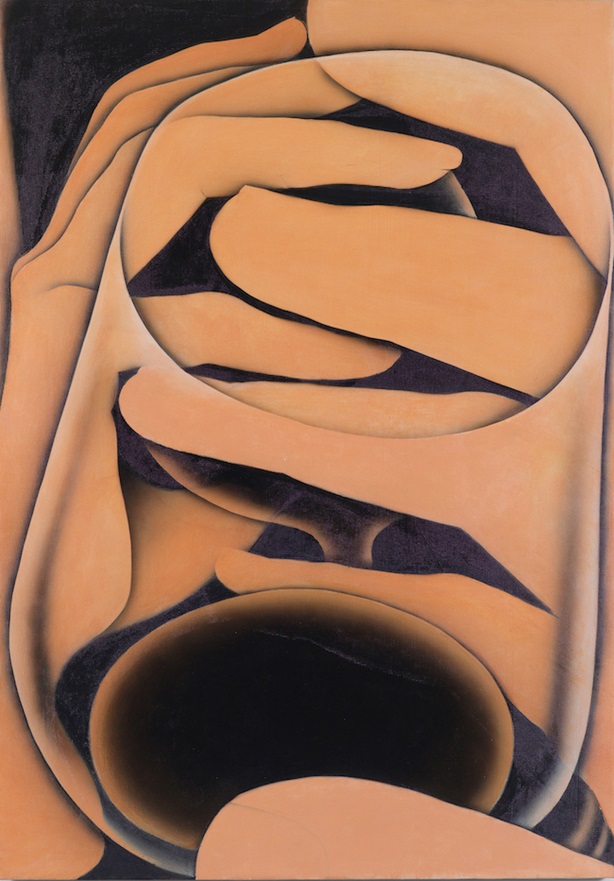
Infine, Tipping (2020) porta l’attenzione sul gesto minimo. Una mano inclina un bicchiere, ma ciò che domina è la vibrazione dell’ombra, più presente dell’oggetto stesso. L’immagine registra non il gesto compiuto, ma il suo imminente accadere, come se la visione fosse sempre un attimo in ritardo rispetto al mondo.
Il dialogo con l’antico
La curatela, ovvero la scelta e la modalità espositiva, costruisce un confronto serrato, evitando ogni forma di estetizzazione rassicurante. Le ceramiche non sono un contesto, ma veri interlocutori.
I gesti degli eroi e degli atleti dipinti sulle anfore trovano un’eco nelle opere di Worth, ma non per somiglianza. Le ceramiche fissano l’azione in un tempo stabile, quasi eterno; Worth, al contrario, la sospende, la rende ambigua, la priva di esito. Là dove l’antico stabilizza, il contemporaneo destabilizza.
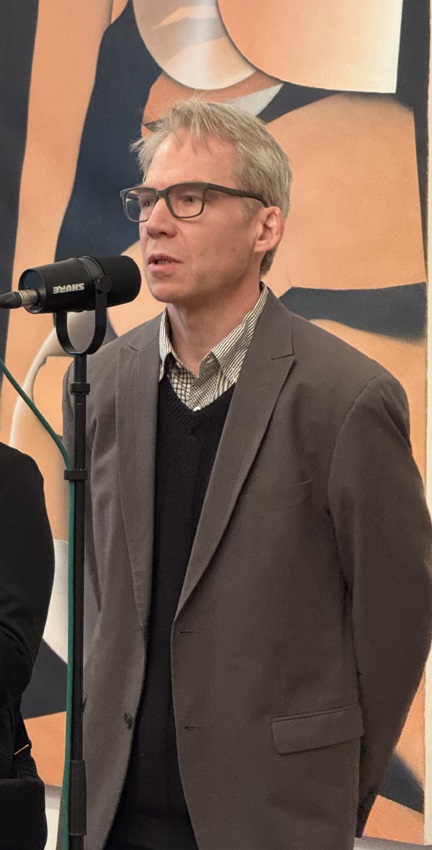
Richard Neer, professore di Storia dell’arte all’Università di Chicago e co-curatore della mostra, ha selezionato personalmente i vasi antichi per costruire un dialogo centrato sul simposio e sulla gestualità del bere. La scelta di collocare i crateri al centro delle sale, trasformando le opere di Worth negli “invitati” di un simposio contemporaneo, rende evidente che il confronto è anche culturale. Il simposio riemerge non come scena, ma come forma di pensiero condiviso, in cui il gesto del bere diventa dispositivo relazionale.
Rito antico e velocità contemporanea
Il titolo della mostra, ricorda la curatrice Silvia Gaspardo Moro richiama il movimento del vino e dell’acqua nelle ceramiche antiche, gesto carico di valore sociale: riunire, condividere, creare comunità. Ma evoca anche un altro vortice, profondamente contemporaneo: quello di un mondo visivo dominato dalla velocità, dalla sovrapproduzione e dalla fruizione distratta.
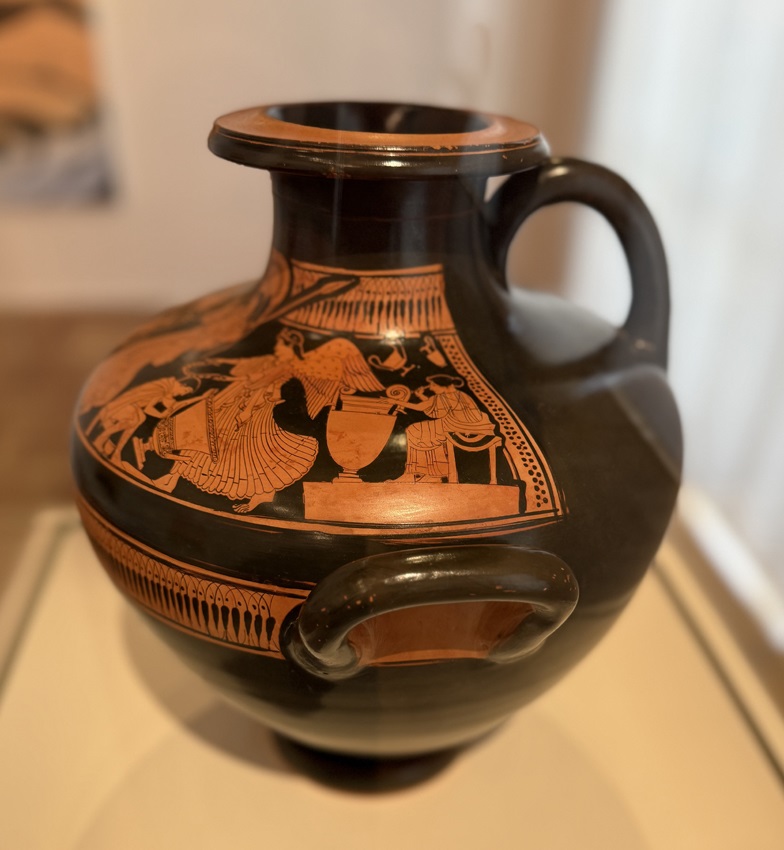
In questo senso, Vortici si configura come un contromovimento. Worth non propone semplicemente immagini più lente, ma un’altra idea di visione. Guardare torna a essere un atto impegnativo, quasi etico: richiede tempo, attenzione, disponibilità.
Come nei “corsi e ricorsi” di Giambattista Vico, ciò che ritorna non è la forma delle immagini, ma il bisogno di interrogare il visibile quando il presente si fa opaco.
La complessità del vedere
Il nodo teorico di Vortici è la visibilità stessa. Le superfici traslucide, le ombre protagoniste, le figure che emergono e scompaiono mettono in scena un’idea precisa: il visibile non è un dato acquisito, ma un campo di tensioni.
Colpisce come le ceramiche antiche, pur così lontane nel tempo, condividano questa economia dell’essenziale: un profilo, un gesto, un contorno bastano a evocare un mondo. In entrambi i casi, l’immagine non mostra tutto: lascia spazio all’interrogazione.
Uno sguardo da ricostruire
La mostra chiede lentezza, ma soprattutto disponibilità. In un’epoca in cui le immagini scorrono senza lasciare traccia, Vortici propone una forma di resistenza: ricostruire lo sguardo come pratica consapevole.
Alla fine, la domanda che accompagna il visitatore non riguarda soltanto il passato o il presente dell’arte, ma il nostro modo di stare nel mondo. Quanto tempo concediamo alle immagini? Quanto siamo ancora capaci di vedere ciò che non si offre immediatamente?
Forse il vero vortice è proprio questo: la tensione continua tra ciò che scorre e ciò che resta, tra il gesto che si ripete e uno sguardo che deve imparare, ogni volta, da capo.
©Riproduzione riservata
“The image is born from the senses
but it is illuminated by beauty in the intellect.”
— Aldo Grassini
Alexi Worth and the Complexity of the Visible
Vortici, Gallerie d’Italia – Naples, April 3rd / July 5th, 2026
Entering the galleries of Gallerie d’Italia in Naples that host Vortici means crossing a threshold in the fullest sense of the term. The translucent surfaces of Alexi Worth’s works do not merely reflect light: they filter it, hold it, make it uncertain. Nearby, the black- and red-figure Attic and South Italian ceramics emerge as ancient yet surprisingly contemporary presences.
This is not a peaceful juxtaposition, but a true temporal short circuit: the gaze is pulled back and forth across centuries, forced to question itself, to slow down. The exhibition does not build continuity but rather a productive friction between images that fix the gesture and images that render it unstable, between a codified visible and one that seems always on the verge of dissolving.
A visual device that demands slowness
The exhibition path functions more as a perceptual device than a narrative sequence. The rooms are not simply traversed — they are inhabited.
On one side, amphorae and kraters with their rigorous visual grammar; on the other, Worth’s images, made of suspended hands, shadows that become subjects, surfaces that seem to subtract matter rather than add it. Here, slowness is not an accessory value but a necessary condition. Each juxtaposition introduces a temporal fracture that forces the eye to linger.
Vortici tests the gaze precisely because it exposes its limits: seeing is not an immediate act but a laborious, reversible process, never fully resolved
The image as an unstable threshold
For many Italian visitors, the exhibition represents their first encounter with Alexi Worth. Painter and theorist of the image, Worth has long worked on a central question of contemporary vision: what does it mean to see in an era in which images are everywhere, yet rarely truly looked at?
His practice lies on the threshold between figuration and transparency. Figuration offers recognizable elements — hands, glasses, leaves — reduced to the essential, almost schematic. Transparency, made concrete through supports such as mesh and netting, introduces a dimension of instability: the work does not close space but passes through it. It does not impose itself as an opaque surface but as a filter.
The threshold is not an iconographic theme here, but a true regime of the visible. Worth’s images are at once present and elusive, solid and illusory. They generate a sensation of proximity that unsettles perception: is what we see really there, or already slipping elsewhere? The works appear as if seen through frosted glass, suspended between presence and dissolution.
Technique and thought: the airbrush as conceptual choice
Worth’s technique — airbrush and stencil — is never neutral. The absence of brushstroke, the sharpness of contours, the flatness of color fields produce images that seem almost self-generated. The manual gesture does not disappear but withdraws, allowing forms to emerge as if already given.
This choice recalls the archaic aesthetic of Greek black- and red-figure ceramics, yet grafts it onto a contemporary language close to photographic and graphic registers. The result is an image suspended between the archaic and the current.
The gestures depicted — a hand grasping, a shadow stretching — become fragments of an essential, almost archetypal language. Stripped of narrative, they point to a pre-narrative dimension in which gesture precedes meaning and continues to question it.
The works on display
A core group of works in the exhibition allows us to grasp the variety of ways in which Alexi Worth destabilizes the image.
Curtain (2020) presents a net-like surface resembling a curtain that lets a barely sketched figure show through: vision becomes filtered, hesitant, as if the image itself were withholding its appearance. This is the threshold in its most literal form — a seeing-through that never fully yields.
With Ladder (2022), instability takes on a different character. A ladder — a functional, everyday object — emerges from the mesh as an uncertain apparition, deprived of its usual solidity. The ladder suggests ascent, passage, vertical movement, yet here it remains suspended, held between two states: a sign that does not lead but questions.
In Seesaw (Mylar) (2019), tension becomes dynamic. Two essentialized figures balance on a seesaw that seems to float in space. The equilibrium is fragile, continuously threatened, visually translating the precariousness of contemporary seeing: a constant oscillation between presence and absence, gesture and form.
Finally, Tipping (2020) focuses on the minimal gesture. A hand tilts a glass, yet what dominates is the vibration of the shadow, more present than the object itself. The image records not the completed gesture but its imminent occurrence, as if vision were always a moment behind the world.
Dialogue with antiquity: not continuity, but friction
The curatorial approach — the selection and display — constructs a tight confrontation, avoiding any reassuring aestheticization. The ceramics are not a backdrop but true interlocutors.
The gestures of heroes and athletes painted on the amphorae find an echo in Worth’s works, but not through resemblance. The ceramics fix action in a stable, almost eternal time; Worth, by contrast, suspends it, renders it ambiguous, deprives it of outcome. Where the ancient stabilizes, the contemporary destabilizes.
Richard Neer, Professor of Art History at the University of Chicago and co-curator of the exhibition, personally selected the ancient vases to build a dialogue centered on the symposium and the gestures of drinking. Placing the kraters at the center of the rooms, turning Worth’s works into the “guests” of a contemporary symposium, makes clear that the confrontation is also cultural. The symposium re-emerges not as a scene but as a shared form of thought, in which the act of drinking becomes a relational device.
Vortici: between ancient ritual and contemporary speed
The exhibition title, as curator Silvia Gaspardo Moro notes, recalls the swirling movement of wine and water in ancient ceramics — a gesture rich in social meaning: gathering, sharing, creating community. But it also evokes another vortex, profoundly contemporary: that of a visual world dominated by speed, overproduction, and distracted consumption.
In this sense, Vortici becomes a counter-movement. Worth does not simply propose slower images but another idea of vision. Looking becomes an effortful, almost ethical act: it requires time, attention, availability.
As in Giambattista Vico’s “courses and recourses,” what returns is not the form of images but the need to interrogate the visible when the present becomes opaque.
The complexity of seeing
The theoretical core of Vortici is visibility itself. Translucent surfaces, protagonist shadows, figures that emerge and disappear stage a precise idea: the visible is not a given but a field of tensions.
Strikingly, the ancient ceramics — despite their temporal distance — share this economy of the essential: a profile, a gesture, a contour are enough to evoke a world. In both cases, the image does not show everything; it leaves room for questioning.
A gaze to be reconstructed
The exhibition demands slowness, but above all availability. In an age in which images flow without leaving a trace, Vortici proposes a form of resistance: reconstructing the gaze as a conscious practice.
In the end, the question that accompanies the visitor concerns not only the past or present of art but our way of inhabiting the world. How much time do we grant images? How capable are we of seeing what does not offer itself immediately?
Perhaps the true vortex is precisely this: the continuous tension between what flows and what remains, between the gesture that repeats and a gaze that must learn, each time, anew.