
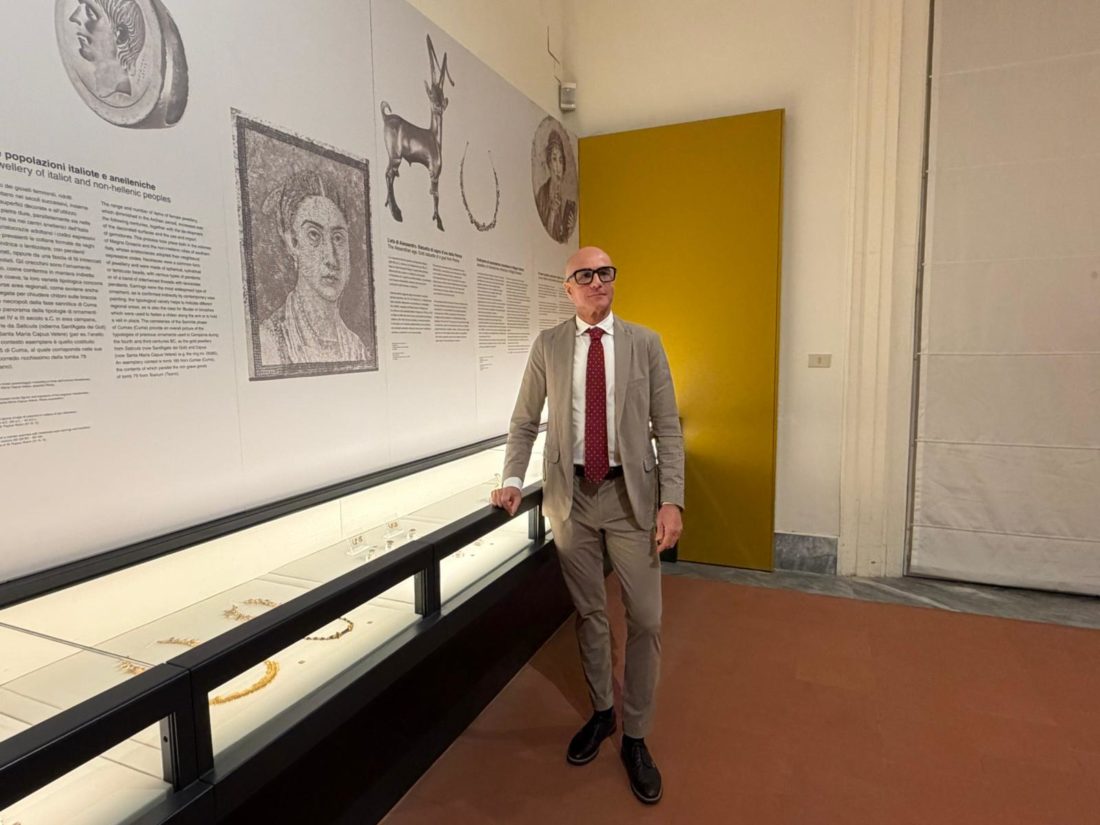
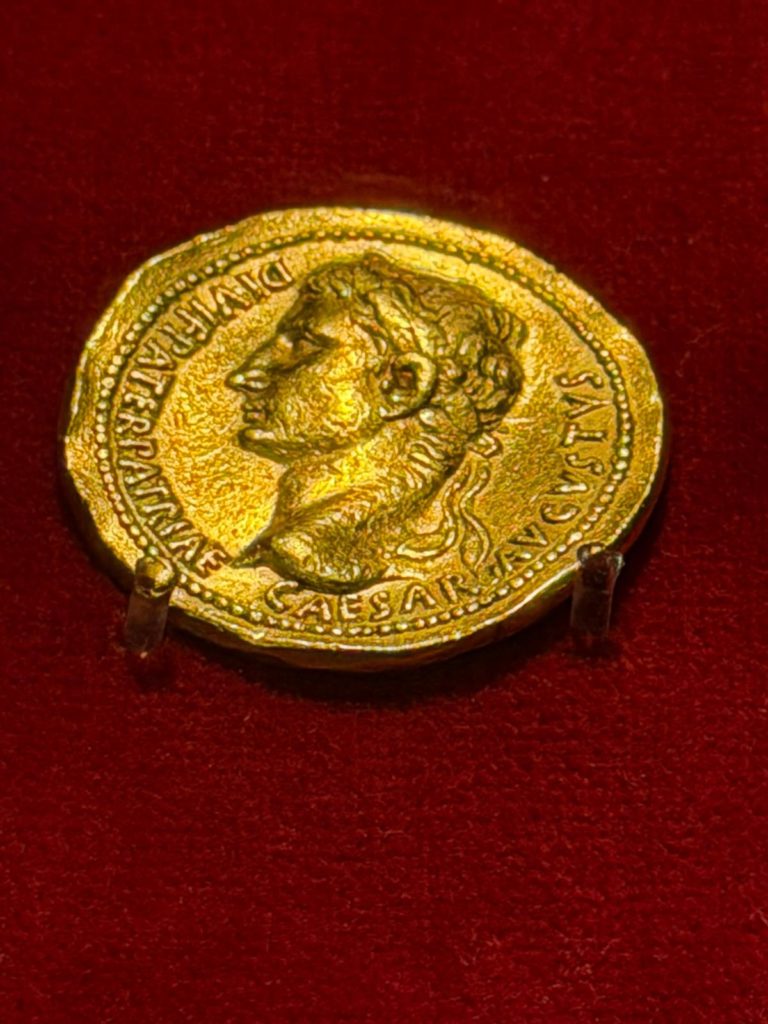
In the photo, one of the coins on display. On the cover, museum director Francesco Sirano at the entrance to the numismatic section
Mann/ The Archaeological Museum’s numismatic section is reopening: a day at the museum to explore the world’s economy, from ancient Greece to the modern age
Riapre al pubblico la sezione numismatica del Museo nazionale archeologico di Napoli (Mann). Benché oggi sia sempre più smaterializzata, la moneta ricopre ancora un ruolo che va ben oltre la sfera economica: si pensi all’Euro e al suo valore simbolico nella prospettiva dell’UE. La moneta ha una lunghissima storia fatta di tecnologia, controlli da parte di un’autorità, sistemi di cambio, scale di valore, simboli e immagini che diventano in alcuni casi capolavori d’arte.
E al Mann c’è quasi un museo nel museo che la valorizza: oltre seimila monete, medaglie, coni e punzoni, insieme a tanti altri materiali archeologici conducono il visitatore alla scoperta dell’economia nel mondo greco, romano, medievale, rinascimentale e moderno, aprendo uno spaccato su temi ancora attuali, come gli interessi sui prestiti e l’inflazione.
Grazie a un finanziamento straordinario del Ministero della Cultura (PON Cultura e Sviluppo 2014-2020, integrato da fondi ordinari 2024 e 2025), la sezione numismatica non solo ridiventa accessibile ma propone anche molte novità.
L’ampliamento più significativo della sezione riguarda centotrenta gioielli in oro, metalli preziosi e gemme, esposti nuovamente dopo cinquant’anni: i raffinati esemplari (greci, italici, magno-greci, etruschi, romani e tardo-antichi), sono presentati in un percorso diacronico e, ove possibile, per contesti di ritrovamento; i gioielli testimoniano manifatture dall’alto valore artistico e socioculturale.
Di eccezionale rilevanza i rarissimi tessuti aurei provenienti dagli scavi nell’area seppellita dall’eruzione del Vesuvio del 79 d.C.: si ripresentano al pubblico dopo un meticoloso restauro, realizzato in collaborazione con l’Opificio delle Pietre Dure di Firenze.
Curata da Renata Cantilena e Floriana Miele, con la collaborazione scientifica di Lucia Amalia Scatozza per la sezione dedicata alle antiche gioiellerie, la Numismatica sarà inaugurata il 25 maggio alle 11.30): in vista della riapertura, si è lavorato anche al risanamento degli arredi storici e alla pulitura e restauro di tutti gli esemplari esposti, così come all’aggiornamento dell’illuminazione e del sistema di videosorveglianza nelle vetrine.
Tra le novità espositive, oltre i gioielli, figurano un prezioso ripostiglio di monete dalla Caupona di Salvius a Pompei e un’importante iscrizione funeraria di un nummularius (una sorta di cambiavalute in ambito romano).
The numismatic section of the National Archaeological Museum of Naples (MANN) is reopening to the public. Although currency is becoming increasingly dematerialised today, it still plays a role that extends far beyond the economic sphere: consider the euro and its symbolic value within the context of the EU. Currency has a very long history shaped by technology, regulation by authorities, exchange systems, scales of value, symbols and images that in some cases become masterpieces of art.
And at the MANN, there is almost a museum within a museum dedicated to showcasing this: over six thousand coins, medals, dies and stamps, alongside many other archaeological artefacts, guide visitors on a journey of discovery through the economies of the Greek, Roman, medieval, Renaissance and modern worlds, offering insights into issues that remain relevant today, such as interest on loans and inflation.
Thanks to exceptional funding from the Ministry of Culture (PON Culture and Development 2014–2020, supplemented by regular funds for 2024 and 2025), the numismatic section is not only accessible once more but also offers many new features.
The most significant expansion of the section concerns 130 pieces of jewellery in gold, precious metals and gemstones, on display once again after fifty years: these exquisite examples (Greek, Italic, Magna Graecian, Etruscan, Roman and Late Antique) are presented in a diachronic sequence and, where possible, according to the contexts in which they were found; the jewellery bears witness to craftsmanship of high artistic and socio-cultural value.
Of exceptional significance are the extremely rare gold fabrics recovered from the excavations in the area buried by the eruption of Vesuvius in 79 AD: they are being displayed to the public once again following meticulous restoration, carried out in collaboration with the Opificio delle Pietre Dure in Florence.
Curated by Renata Cantilena and Floriana Miele, with scientific collaboration from Lucia Amalia Scatozza for the section dedicated to ancient jewellery, the Numismatics exhibition will open on the 25th of May at 11.30 am: in preparation for the reopening, work has also been carried out on the restoration of the historic furnishings and the cleaning and restoration of all the exhibits, as well as the upgrading of the lighting and the video surveillance system in the display cases.
Among the new exhibits, in addition to the jewellery, are a precious coin hoard from the Caupona di Salvius in Pompeii and an important funerary inscription of a nummularius (a sort of money changer in Roman times).