
Omaggio a un artista che aveva grande gentilezza d’animo. Fortissimo dal punto di vista creativo ma anche umano, con infinita passione per la musica. Venerdì 19 giugno, alle 18.30 verrà inaugurato a Vico Equense il Museo Armando De Stefano, un Maestro del Novecento a Napoli.
Voluto dalla città e dalla Famiglia De Stefano, in collaborazione con l’Accademia di Belle Arti di Napoli, il museo, apre nel centenario della nascita (1926 – 2021) e intende custodire, valorizzare, trasmettere l’eredità artistica e umana di Armando De Stefano, artista profondamente legato alla città di Vico Equense e alla Penisola Sorrentina.
Allestito all’interno della sede storica del palazzo comunale (in corso Filangieri, 98), il museo è pensato come spazio di restituzione pubblica, capace di rendere condivisibile il legame profondo che unì Armando De Stefano a Vico Equense.
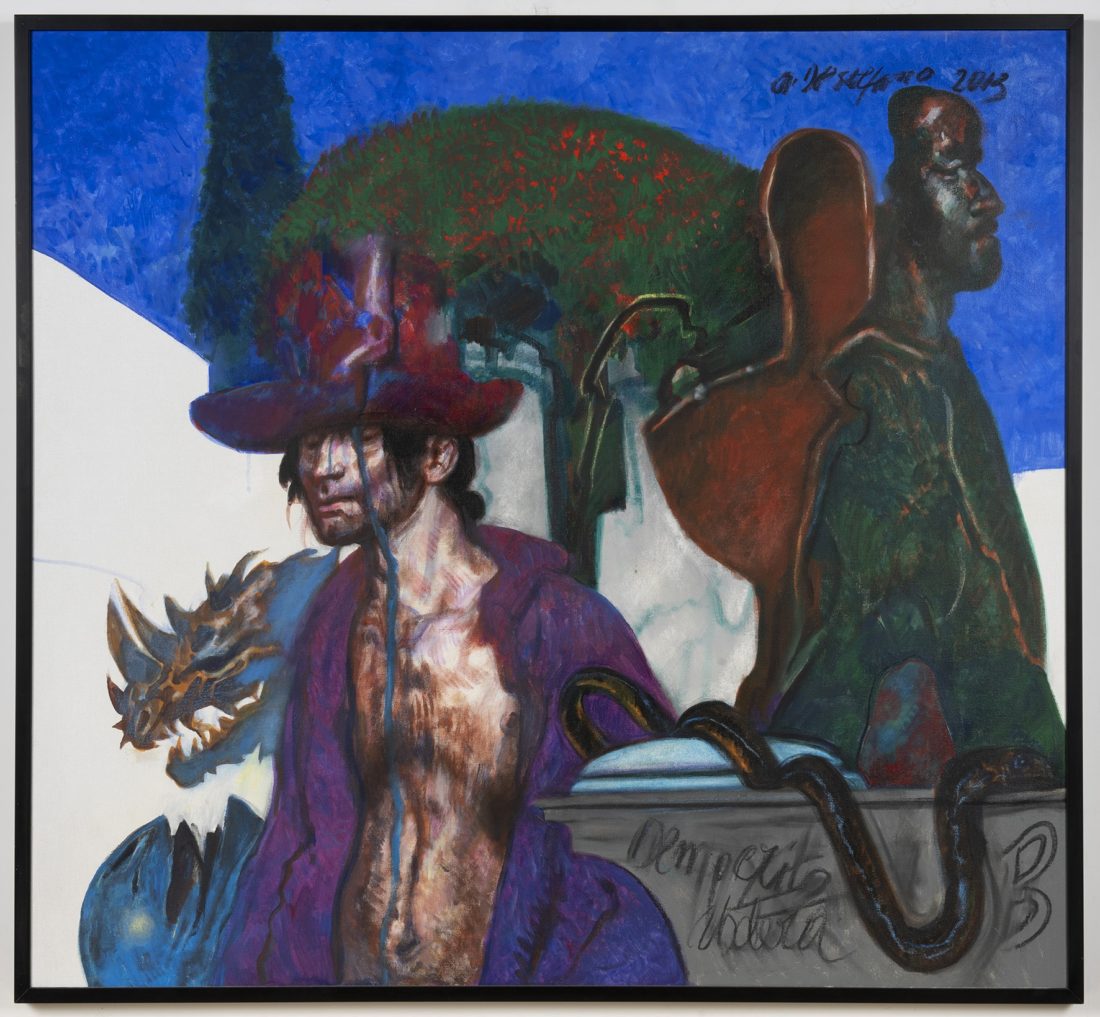
Il percorso, in tre sale, raccoglie circa 30 dipinti e disegni, assieme a oggetti e arredi provenienti dalla dimora napoletana dell’artista, restituendo non soltanto un nucleo significativo della sua produzione pittorica, ma anche l’atmosfera intima e quotidiana della sua casa-studio. Cavalletti, tavoli da lavoro, libri, antichità, teste in gesso, manichini, elmi e cappelli ricompongono un universo visivo e affettivo in cui arte e vita appaiono profondamente intrecciate.
L’allestimento gli dà una forma di un museo-casa, capace di evocare gli spazi in cui De Stefano era solito disegnare, dipingere, leggere e osservare. Le sale del museo restituiscono questa complessità attraverso un percorso che non segue un rigido ordinamento cronologico, ma privilegia nessi, atmosfere e nuclei poetici.
Accanto alle opere degli anni Cinquanta e Sessanta, nelle quali la figura si confronta con la materia pittorica e con una visione sempre più inquieta e interiore, trovano spazio lavori più tardi, segnati dal rapporto tra storia e allegoria, memoria personale e destino collettivo, mito e attualità. Il museo documenta anche altri momenti fondamentali della ricerca dell’artista: dal ciclo sulla Rivoluzione napoletana del 1799 al ciclo Dafne fino al ciclo Porta di Stabia, realizzato a partire dal 2014 e dedicato alla memoria dell’archeologo Amedeo Maiuri.
Una sezione significativa è dedicata alle suggestioni borgesiane, elaborate da De Stefano a partire dal 2012.
L’apertura del Museo Armando De Stefano rappresenta per Vico Equense un importante momento culturale e civile. Il nuovo spazio museale restituisce alla comunità un patrimonio artistico di grande valore e, al tempo stesso, rinnova il legame tra l’opera di De Stefano e un territorio che l’artista amò profondamente e che già conserva opere del Maestro napoletano nella sala consiliare del Comune di Vico Equense, nella Cattedrale Santissima Annunziata e nella chiesa di San Giovanni Evangelista a Bonea.
Conclude il sindaco Giuseppe Aiello: «Abbiamo voluto rendere omaggio a un artista che ha lasciato un segno profondo nella storia dell’arte italiana del Novecento e che ha scelto Vico Equense come luogo dell’anima, instaurando con il nostro territorio un legame autentico e duraturo. Non inauguriamo soltanto uno spazio espositivo, ma consegniamo alle future generazioni un luogo di memoria, di conoscenza e di confronto, dove l’arte possa continuare a parlare alle persone e a stimolare riflessioni sul nostro tempo».
L’ARTISTA
Dopo aver studiato al Liceo artistico, si forma all’Accademia di Belle Arti di Napoli, dove insegna Pittura dal 1950 al 1992. Nel 1947 partecipa al Gruppo Sud e negli anni Cinquanta aderisce alla stagione neorealista, orientando in seguito la propria ricerca verso una pittura sempre più materica, drammatica e visionaria. Dalla fine degli anni Sessanta elabora grandi cicli tematici, tra cui Marat, Masaniello, Odette e il Jolly, Rivoluzione napoletana del 1799, Eden degli esclusi, Dafne, nei quali storia, mito e impegno civile si intrecciano a una intensa ricerca formale. Presente in importanti rassegne nazionali e internazionali, tra cui la Quadriennale di Roma (1951, 1955, 1960, 1986) e tutte le edizioni della Biennale di Venezia dal 1950 al 1956, e poi, nuovamente, nel 1961 (Padiglione italiano). Tra le più recenti personali: al PAN | Palazzo delle Arti Napoli (2009, 2017); Museo Madre (2011); museo ARCOS di Benevento (2014). Nel 2022, a un anno dalla sua scomparsa, il museo Madre gli dedica una mostra sulla recente produzione grafica. Sue opere sono in numerose collezioni pubbliche a Napoli, Vico Equense, Piano di Sorrento, Chieti, Vasto, Milano, Firenze, Mosca, Durazzo, New York, Chicago.
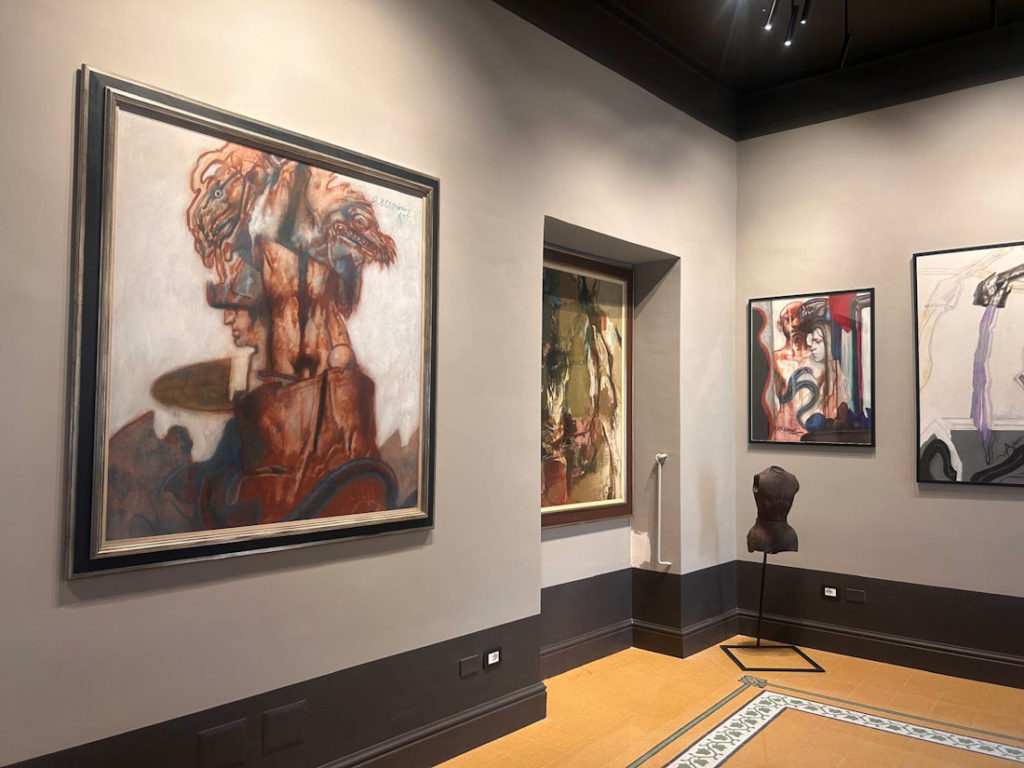
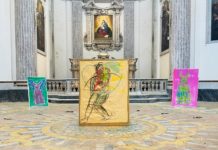
una della sue opere fotografata da Francesco Squeglia
Vico Equense / The Armando De Stefano Museum opens 100 years after his birth. A Master of the 20th century
A tribute to an artist who possessed great kindness of spirit. A true force both creatively and as a person, with boundless passion for music. On Friday the 19th of June, at 6.30 pm, the Armando De Stefano Museum – a 20th-century master in Naples – will be inaugurated in Vico Equense.
Initiated by the town and the De Stefano family, in collaboration with the Academy of Fine Arts in Naples, the museum opens on the centenary of his birth (1926–2021) and aims to preserve, promote and pass on the artistic and human legacy of Armando De Stefano, an artist deeply connected to the town of Vico Equense and the Sorrento Peninsula.
Housed within the historic town hall (at 98 Corso Filangieri), the museum is conceived as a space for public engagement, designed to share the deep bond that united Armando De Stefano with Vico Equense.
The exhibition, spread across three rooms, brings together around 30 paintings and drawings, alongside objects and furnishings from the artist’s Neapolitan home, presenting not only a significant selection of his pictorial output but also the intimate, everyday atmosphere of his home-studio. Easels, work tables, books, antiques, plaster heads, mannequins, helmets and hats come together to recreate a visual and emotional world in which art and life appear deeply intertwined.
The exhibition gives the space the feeling of a house-museum, evoking the rooms where De Stefano used to draw, paint, read and observe. The museum’s rooms convey this complexity through an exhibition itinerary that does not follow a strict chronological order, but instead emphasises connections, atmospheres and poetic themes.
Alongside works from the 1950s and 1960s, in which the figure engages with the painterly medium and an increasingly restless and introspective vision, there are later works characterised by the relationship between history and allegory, personal memory and collective destiny, myth and contemporary issues. The museum also documents other key phases in the artist’s creative journey: from the cycle on the Neapolitan Revolution of 1799 to the ‘Dafne’ cycle, right through to the ‘Porta di Stabia’ cycle, begun in 2014 and dedicated to the memory of the archaeologist Amedeo Maiuri.
A significant section is devoted to Borgesian influences, which De Stefano has been exploring since 2012.
The opening of the Armando De Stefano Museum marks an important cultural and civic milestone for Vico Equense. The new museum space restores an artistic heritage of great value to the community and, at the same time, renews the link between De Stefano’s work and a place that the artist loved deeply – a place that already houses works by the Neapolitan master in the council chamber of Vico Equense Town Hall, in the Cathedral of Santissima Annunziata and in the Church of San Giovanni Evangelista in Bonea.
Mayor Giuseppe Aiello concludes: ‘We wanted to pay tribute to an artist who left a profound impact on the history of 20th-century Italian art and who chose Vico Equense as his spiritual home, forging an authentic and lasting bond with our region. We are not merely opening an exhibition space, but bequeathing to future generations a place of remembrance, knowledge and dialogue, where art can continue to speak to people and stimulate reflection on our times.”
THE ARTIST
After studying at art school, he trained at the Academy of Fine Arts in Naples, where he taught painting from 1950 to 1992. In 1947, he joined the Gruppo Sud, and in the 1950s he became part of the Neorealist movement, subsequently directing his artistic exploration towards a style of painting that was increasingly textural, dramatic and visionary. From the late 1960s, he developed major thematic cycles, including *Marat*, *Masaniello*, *Odette and the Jolly*, *The Neapolitan Revolution of 1799*, *Eden of the Excluded* and *Daphne*, in which history, myth and social commitment are interwoven with an intense formal exploration.
His work has been featured in major national and international exhibitions, including the Rome Quadriennale (1951, 1955, 1960, 1986) and all editions of the Venice Biennale from 1950 to 1956, and again in 1961 (Italian Pavilion).
His most recent solo exhibitions were held at the PAN | Palazzo delle Arti in Naples (2009, 2017); the Madre Museum (2011); and the ARCOS Museum in Benevento (2014). In 2022, one year after his death, the Madre Museum dedicated to him with an exhibition of his recent graphic works. His pieces are held in numerous public collections in Naples, Vico Equense, Piano di Sorrento, Chieti, Vasto, Milan, Florence, Moscow, Durres, New York and Chicago.