
A Hind Rajab,
bambina di sei anni.
Ha detto: «Ho paura del buio».
Poi la disumanità l’ha uccisa.
Rimane la sua voce
a testimoniare la ferocia degli uomini
e ad accendere una luce, monito di speranza.
Ci sono storie che non appartengono al passato ma ritornano ogni volta che l’uomo dimentica di riconoscere l’altro.
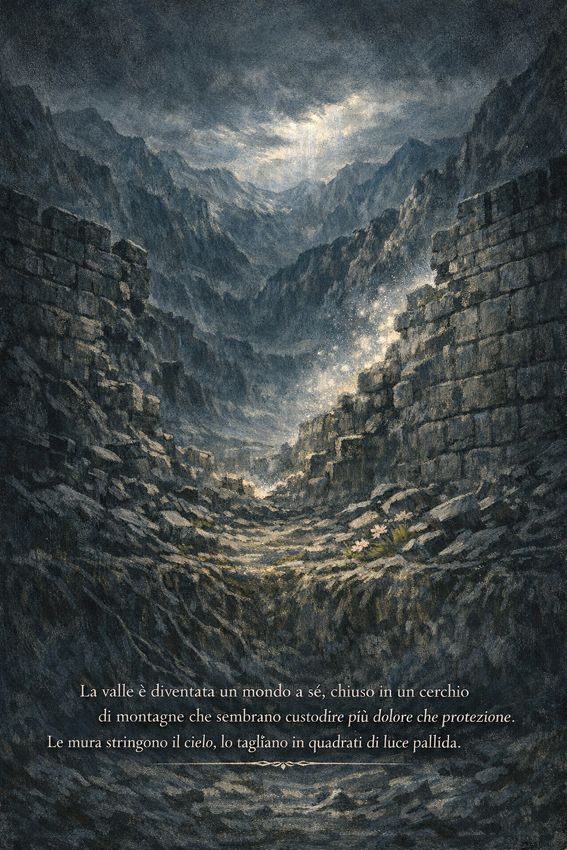
La valle è diventata un mondo a sé, chiuso in un cerchio di montagne che sembrano custodire più dolore che protezione. Le città, una dopo l’altra, hanno innalzato mura sempre più alte, come se la pietra potesse difendere dall’inquietudine che cresce nei cuori.
Le mura sono nate molto prima della guerra: sono nate quando gli uomini hanno smesso di ascoltarsi, quando il sospetto ha preso il posto della parola, quando l’altro ha smesso di essere un volto ed è diventato un pericolo.
Ora quelle mura stringono il cielo, lo tagliano in quadrati di luce pallida, e nessuno ricorda più quando tutto è cominciato.
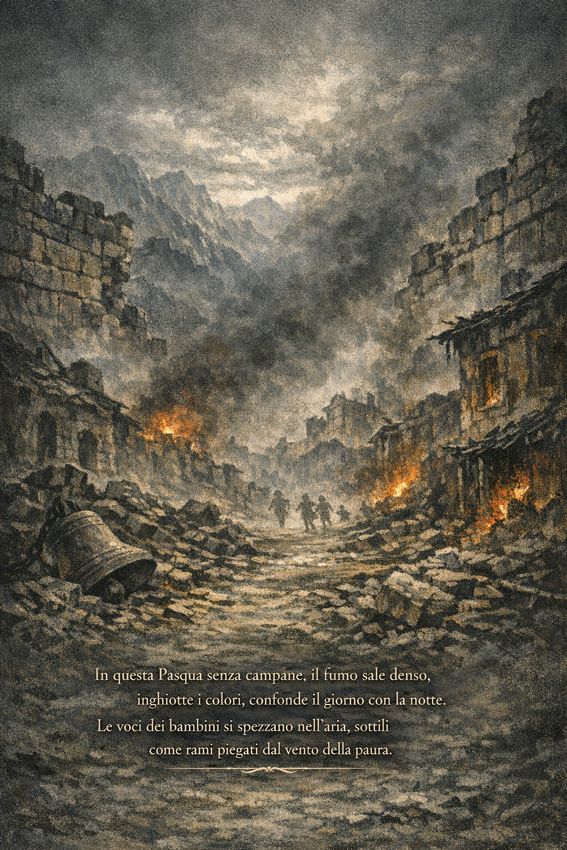
In questa Pasqua senza campane, il fumo sale denso, inghiotte i colori, confonde il giorno con la notte. Le esplosioni scuotono la terra; le sirene lontane non promettono salvezza. Le voci dei bambini si spezzano nell’aria, sottili come rami piegati dal vento della paura. Le madri chiamano nomi che il fumo inghiotte.
Chi bombarda non sente: né il pianto, né il tremore, né il peso della morte che semina.
LA MEMORIA CHE RESISTE SOTTO LE RADICI
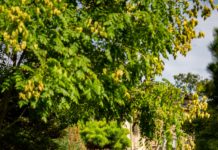
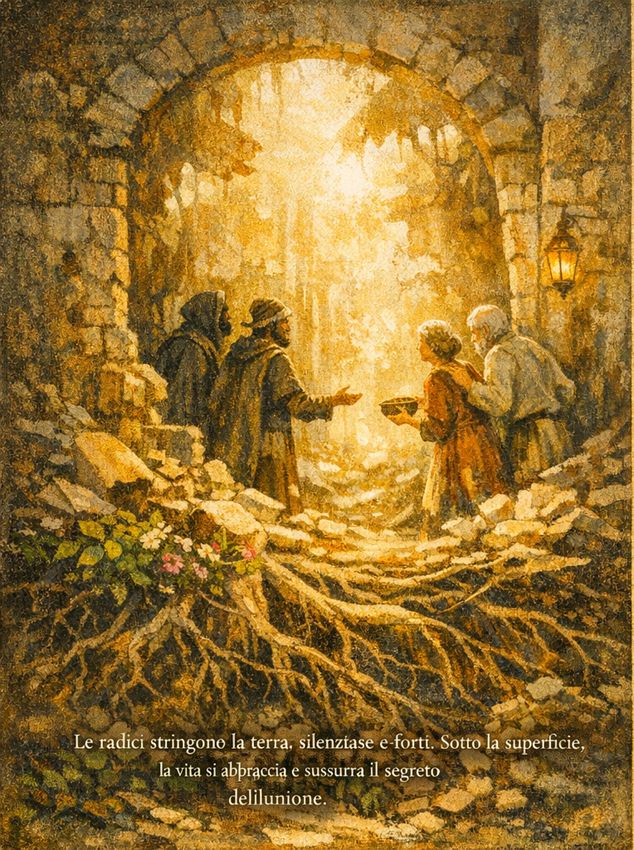
Eppure, nel fondo della valle, dove la vegetazione ostinata continua a vivere, qualcosa cerca ancora un senso. Le radici stringono la terra come mani che non cedono. Le foglie tremano, ma non cadono.In quel tremito nasce un ricordo antico, una storia che parla di accoglienza quando tutto intorno è rifiuto.
IL MITO CHE RITORNA TRA LE MACERIE
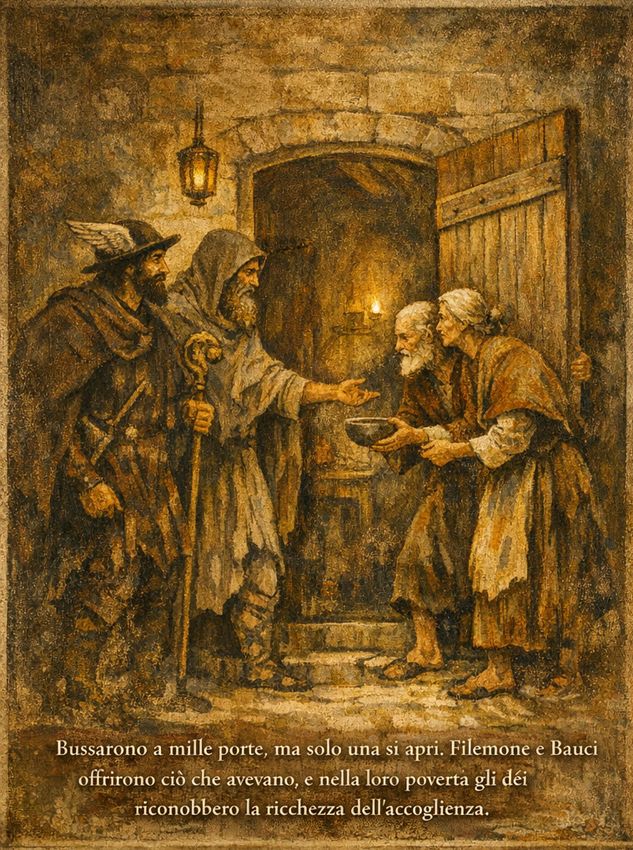
C’era una volta una terra fertile e ricca, dove le persone vivevano in case lussuose protette da mura alte come montagne. Un giorno, due viandanti stanchi e polverosi arrivarono in quella valle. Erano Zeus ed Ermes: avevano deposto fulmini e sandali alati per apparire come poveri stranieri, coperti di stracci.
Bussarono a mille porte. Chiesero solo un po’ d’acqua e un angolo d’ombra. Ma in ogni casa la risposta era la stessa: «Non abbiamo tempo», «Non vi conosciamo», «Andate via, siete un pericolo».
Le mura non proteggevano più: isolavano. Le ricchezze avevano reso i cuori rigidi e chiusi: chi non è dei nostri è un nemico.
Quando ormai stavano per andarsene, videro una capanna umile, fatta di canne e fango. Lì vivevano Filemone e Bauci, una coppia di anziani che non aveva nulla se non il loro amore e la loro dignità.
Quando i due stranieri bussarono, Filemone non chiese: «Chi siete?» o «Cosa volete?». Aprì la porta e disse semplicemente: «Entrate, il calore del nostro fuoco è vostro».
Bauci, con le mani tremanti, offrì loro le poche olive che avevano, un pezzo di formaggio secco e il vino più povero. Ma mentre versava il vino, accadde il prodigio: la coppa, invece di svuotarsi, continuava a riempirsi da sola.
In quel momento i due anziani compresero. Si spaventarono, sentendosi indegni di quegli ospiti divini. Ma Zeus li fermò e disse:
«Non è la vostra povertà che onoriamo, ma la vostra capacità di vedere l’uomo dietro lo straccio. Voi avete riconosciuto la sacralità dell’altro quando tutti gli altri hanno visto solo un disturbo alla loro fretta.»
La valle venne sommersa dalle acque per la sua aridità di cuore, ma la capanna di Filemone e Bauci fu trasformata in un tempio d’oro.
E quando la morte arrivò per loro, gli dèi esaudirono il loro unico desiderio: non essere mai separati.
Filemone divenne una quercia e Bauci un tiglio, i cui rami si intrecciano ancora oggi, offrendo ombra a ogni viandante.
LA VOCE DEGLI ALBERI
Un vento leggero attraversò la valle. La quercia mosse le fronde con timidezza, evitando di sfiorare gli altri alberi. Poi parlò, con un accento che sembrava venire dal cuore del legno, «Accogliere l’altro è l’unico modo per non morire davvero».
Il tiglio le fece eco con una voce che aveva il suono dell’acqua che scorre, e disse: «Non siete soli in questa storia. Anche gli uomini del mare hanno conosciuto il valore dell’ascolto».
ULISSE E I FEACI: L’INCOGNITO, IL PIANTO, LA STORIA
Ulisse giunse a Scheria nudo, naufrago, senza armi, senza nome. Era un uomo spogliato di tutto, tranne della sua vita.
Il re Alcinoo lo accolse senza chiedergli chi fosse. Gli offrì cibo, riparo, dignità. Organizzò giochi in suo onore.
In quel gesto viveva un principio antico: l’uomo veniva accolto non per ciò che rappresentava, ma per il semplice fatto di esistere e di aver bisogno.
Durante il banchetto, il cantore Demodoco intonò le gesta di Troia. Ulisse ascoltò, e il suo volto si spezzò. Le lacrime gli scesero silenziose, come se la sua storia, compressa nel silenzio dell’incognito, non potesse più restare nascosta.
Fu in quel momento che Alcinoo comprese: quello straniero non era un uomo qualunque.
Il re non lo interrogò con durezza, non lo incalzò. Gli si avvicinò con delicatezza e gli chiese: «Dimmi il nome con cui ti chiamano là, nella tua terra».
Solo allora Ulisse parlò. «Io sono Odisseo, figlio di Laerte». E da quel momento la sua storia si aprì come un fiume.
I Feaci ascoltarono senza interrompere, senza giudicare, senza temere.
L’ascolto divenne un atto di riconoscimento.
La storia restituì a Ulisse la sua identità, la sua dignità, la sua umanità.
LA DISSOLUZIONE
Il vento si placò. La valle restava ferita, ma qualcosa era cambiato.
Gli alberi sapevano che uomini e piante condividono la stessa materia: gli stessi atomi, lo stesso respiro, la stessa sete di luce.
Le radici e i polmoni sono fratelli: entrambi trasformano ciò che ricevono in vita.
La quercia parlò ancora: «La vita è breve, e ciò che resta non è la pietra che separa, ma la storia che si dona. Gli uomini che ascoltano possono sciogliere le mura che altri hanno costruito».
Il tiglio aggiunse: «Chi riconosce l’altro costringe anche i più riottosi a vedere ciò che avevano dimenticato: il desiderio di vita è più forte del desiderio di morte».
LA PRIMAVERA SOSPESA
È primavera nella valle, ma solo gli alberi la sentono. Le gemme si aprono con la loro ostinata fiducia, la linfa risale come un ricordo che non vuole morire, e il vento porta un odore nuovo che nessuno, tra gli uomini, riesce più a riconoscere.
Le mura, alte e antiche, trattengono la stagione del risveglio fuori dai cuori.
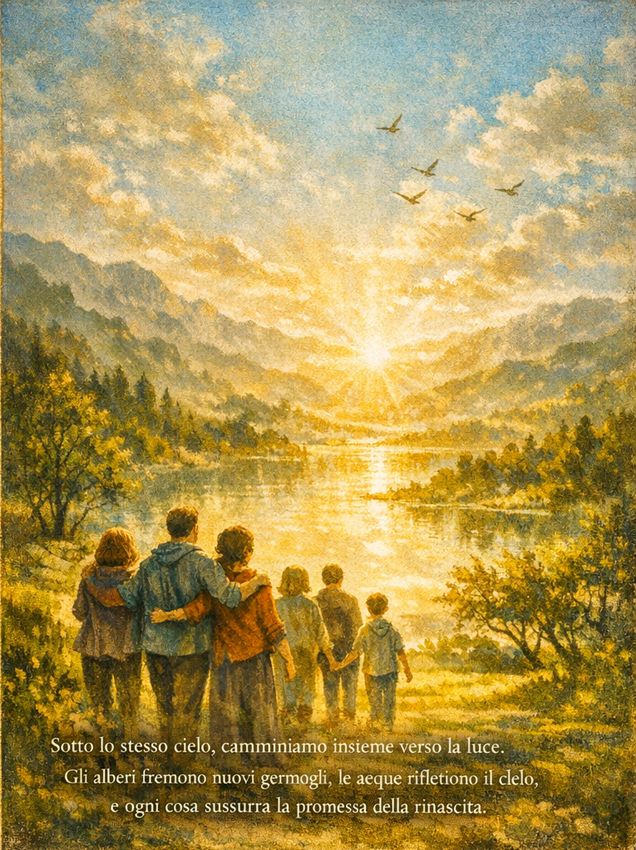
C’è attesa nella valle. Gli alberi affidano la primavera al vento, perché la porti dove i cuori sono ancora chiusi.
Quando gli uomini torneranno ad ascoltare, la stagione entrerà di nuovo nei loro sguardi.
Le mura non cadranno: si scioglieranno, come neve al sole.
E allora si capirà che la resurrezione non è un lampo, ma un lento ritorno di luce: la stessa che gli alberi custodiscono da sempre e che gli uomini possono imparare a riconoscere di nuovo.
In realtà i miti non raccontano ciò che è stato, ma ciò che continua ad accadere, ogni volta che l’uomo sceglie se chiudere o aprire la propria porta.
©Riproduzione riservata
Short story / Spring 2026: The walls of Easter. A world enclosed within a valley
To Hind Rajab,
a six-year-old girl.
She said: ‘I’m afraid of the dark.’
Then the inhumanity killed her.
Her voice remains
to testify to man’s cruelty
and to kindle a light, a sign of hope.
There are stories that do not belong to the past but return whenever people forget to recognise one another.
The valley has become a world apart, enclosed within a ring of mountains that seem to harbour more pain than protection. One after another, the towns have erected ever-higher walls, as if stone could defend against the unease growing in people’s hearts.
The walls were built long before the war: they were built when people stopped listening to one another, when suspicion took the place of words, when the other ceased to be a face and became a danger.
Now those walls constrain the sky, cutting it into squares of pale light, and no one remembers any longer when it all began.
On this Easter without bells, thick smoke rises, swallowing the colours, blurring day and night. Explosions shake the earth; distant sirens offer no promise of salvation. Children’s voices break in the air, as fragile as branches bent by the wind of fear. Mothers call out names that the smoke swallows.
Those who bomb do not hear: neither the weeping, nor the trembling, nor the weight of the death they sow.
THE MEMORY THAT RESISTS UNDER THE ROOTS
And yet, at the bottom of the valley, where the stubborn vegetation continues to thrive, something still seeks meaning. The roots cling to the earth like hands that refuse surrender. The leaves tremble, but do not fall. From that trembling emerges an ancient memory, a story of welcome when all around there is rejection.
THE MYTH THAT RETURNS AMIDST THE RUINS
Once upon a time, there was a fertile and rich land, where people lived in luxurious houses protected by walls as high as mountains. One day, two weary and dusty travellers arrived in that valley. They were Zeus and Hermes: they had laid aside their thunderbolts and winged sandals to appear as poor strangers, clad in rags.
They knocked at a thousand doors. They asked only for a little water and a spot of shade. But in every house the answer was the same: ‘We don’t have time’, ‘We don’t know you’, ‘Go away, you’re a danger’.
The walls no longer offered protection: they served only to isolate. Wealth had made hearts hard and closed: anyone who isn’t one of us is an enemy.
Just as they were about to leave, they saw a humble hut, made of reeds and mud. There lived Philemon and Baucis, an elderly couple who had nothing but their love and their dignity.
When the two strangers knocked, Philemon did not ask, ‘Who are you?’ or ‘What do you want?’. He opened the door and simply said: ‘Come in, the warmth of our fire is yours.’
Baucis, her hands trembling, offered them the few olives they had, a piece of dry cheese and the poorest wine. But as she poured the wine, a miracle occurred: the cup, instead of emptying, kept filling itself.
At that moment, the two elders understood. They were frightened, feeling unworthy of such divine guests. But Zeus stopped them and said:
‘It is not your poverty that we honour, but your ability to see the man behind the rags. You recognised the sacredness of the other when everyone else saw only a hindrance to their haste.’
The valley was submerged by the waters because of the hardness of its heart, but the hut of Philemon and Baucis was transformed into a golden temple.
And when death came for them, the gods granted their one wish: never to be separated.
Philemon became an oak and Baucis a lime tree, whose branches still intertwine today, offering shade to every traveller.
THE VOICE OF THE TREES
A gentle breeze swept through the valley. The oak stirred its leaves timidly, taking care not to brush against the other trees. Then it spoke, with an accent that seemed to come from the heart of the wood, ‘Welcoming the other is the only way not to truly die.’
The lime tree echoed it with a voice that sounded like flowing water, and said, ‘You are not alone in this story. Even the men of the sea have known the value of listening.’
ODYSSEUS AND THE PHAEACIANS: THE UNKNOWN, THE CRY, THE STORY
Odysseus arrived in Scheria naked, shipwrecked, unarmed, nameless. He was a man stripped of everything except his life.
King Alcinous welcomed him without asking who he was. He offered him food, shelter and dignity. He organised games in his honour.
In that gesture lay an ancient principle: the man was welcomed not for what he represented, but for the simple fact of existing and being in need.
During the banquet, the bard Demodocus sang of the deeds of Troy. Ulysses listened, and his face broke. Tears fell silently, as if his story, compressed within the silence of anonymity, could no longer remain hidden.
It was at that moment that Alcinous understood: this stranger was no ordinary man.
The king did not question him harshly, nor did he press him. He approached him gently and asked: ‘Tell me the name by which they call you there, in your land.’
Only then did Odysseus speak. ‘I am Odysseus, son of Laertes.’ And from that moment his story unfolded like a river.
The Phaeacians listened without interrupting, without judging, without fear.
Listening became an act of acknowledgement.
The story restored Ulysses’s identity, his dignity, his humanity.
THE DISSOLUTION
The wind died down. The valley remained wounded, but something had changed.
The trees knew that men and plants share the same matter: the same atoms, the same breath, the same thirst for light.
Roots and lungs are brothers: both transform what they receive into life.
The oak spoke again: ‘Life is short, and what remains is not the stone that divides, but the story that gives of itself. Those who listen can break down the walls that others have built.’
The lime tree added: ‘Those who recognise the other compel even the most rebellious to see what they had forgotten: the desire for life is stronger than the desire for death.’
SPRING IN SUSPENSION
It is spring in the valley, but only the trees sense it. The buds burst open with their stubborn confidence, the sap rises like a memory that refuses to fade, and the wind carries a new scent that no one among men can recognise any longer.
The tall, ancient walls keep the season of reawakening shut out from the hearts.
There is anticipation in the valley. The trees entrust spring to the wind, so that it may carry it to where hearts are still closed.
When people return to listening, the season will enter their gaze once more.
The walls will not fall: they will melt away, like snow in the sun.
And then it will be understood that resurrection is not a flash, but a slow return of light: the same light that the trees have always guarded and that men can learn to recognise once more.
In truth, myths do not tell us what has been, but what continues to happen, every time a person chooses whether to close or open their own door.