
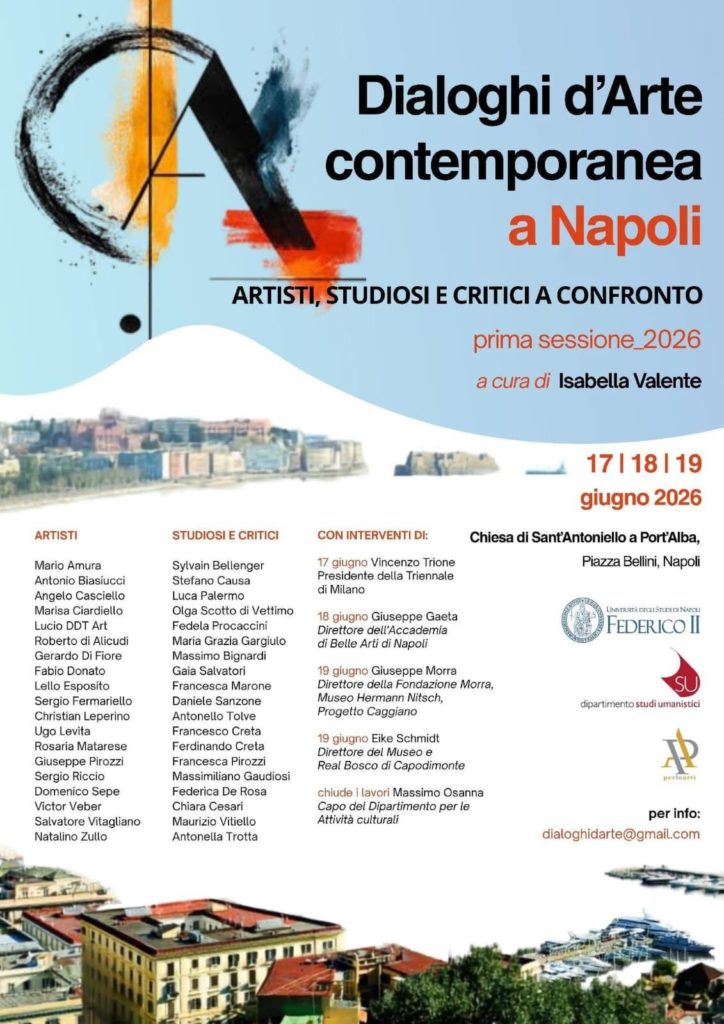
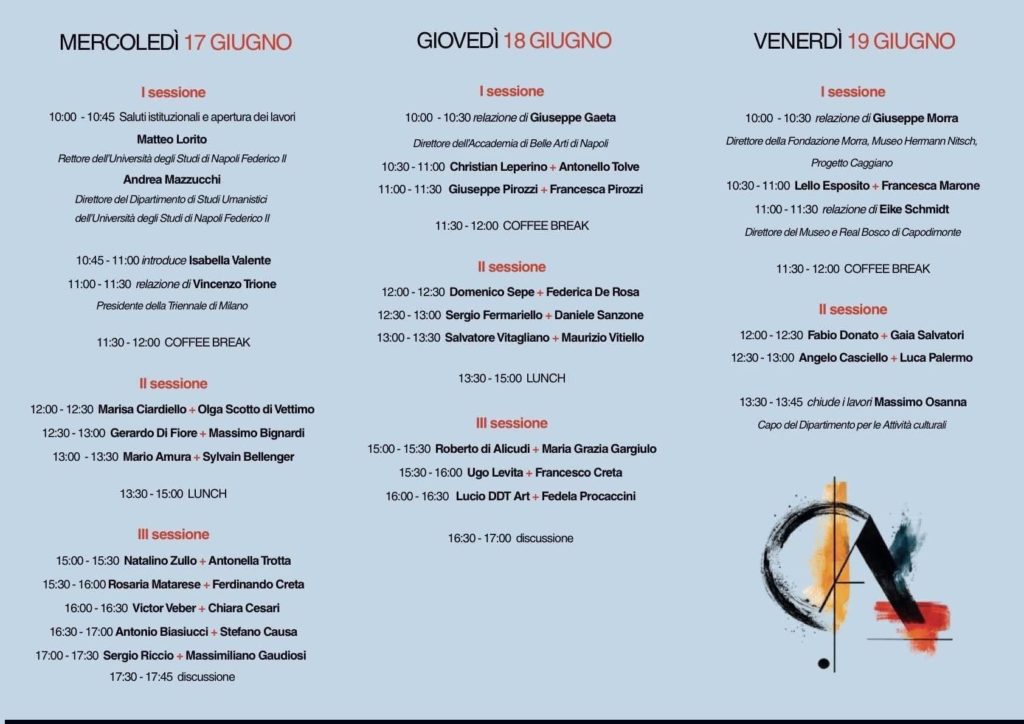
La parola alla creatività. Da oggi 17 giugno fino al 19, a Napoli ci sarà spazio per Dialoghi d’arte contemporanea nella chiesa di Sant’Antonello a Port’Alba nel cuore storico e culturale di Napoli. A parlarne, saranno i protagonisti e le protagoniste: artiste/i, intellettuali, studiose/i, critiche/i d’arte.
In una città dove c’è stata molta confusione sulla strategia giusta da adottare per lanciare nel mondo il talento (visivo e artistico) emergente e quello già affermato, è importante che a dire la loro siano proprio le persone che con il loro immaginario creano bellezza, riflessioni e emozioni.
La confusione, negli ultimi 25 anni circa, è stata prima generata dalla miope sollecitudine di mettere in mostra in piazza del Plebiscito opere di nomi acclamati nel mercato internazionale dell’arte, escludendo quelli (napoletani e campani) fuori del circuito commerciale, producendo un’offensiva emarginazione.
Poi le barriere sono state abbattute da un’apertura totale dove però è mancato un attento progetto di valorizzazione e selezione, infine si è materializzata la figura di un consigliere per l’arte contemporanea del Comune di Napoli cui sono state affidate scelte e iniziative.
Adesso finalmente l’anima di Napoli scende in campo con volti e voci differenti. Nella pagina in cui è pubblicata questa nota, viene inserito il programma dettagliato accompagnato dalla seguente riflessione strutturata intorno a una recente esposizione promossa a maggio in Germania in una città al confine con l’Austria, Passau.
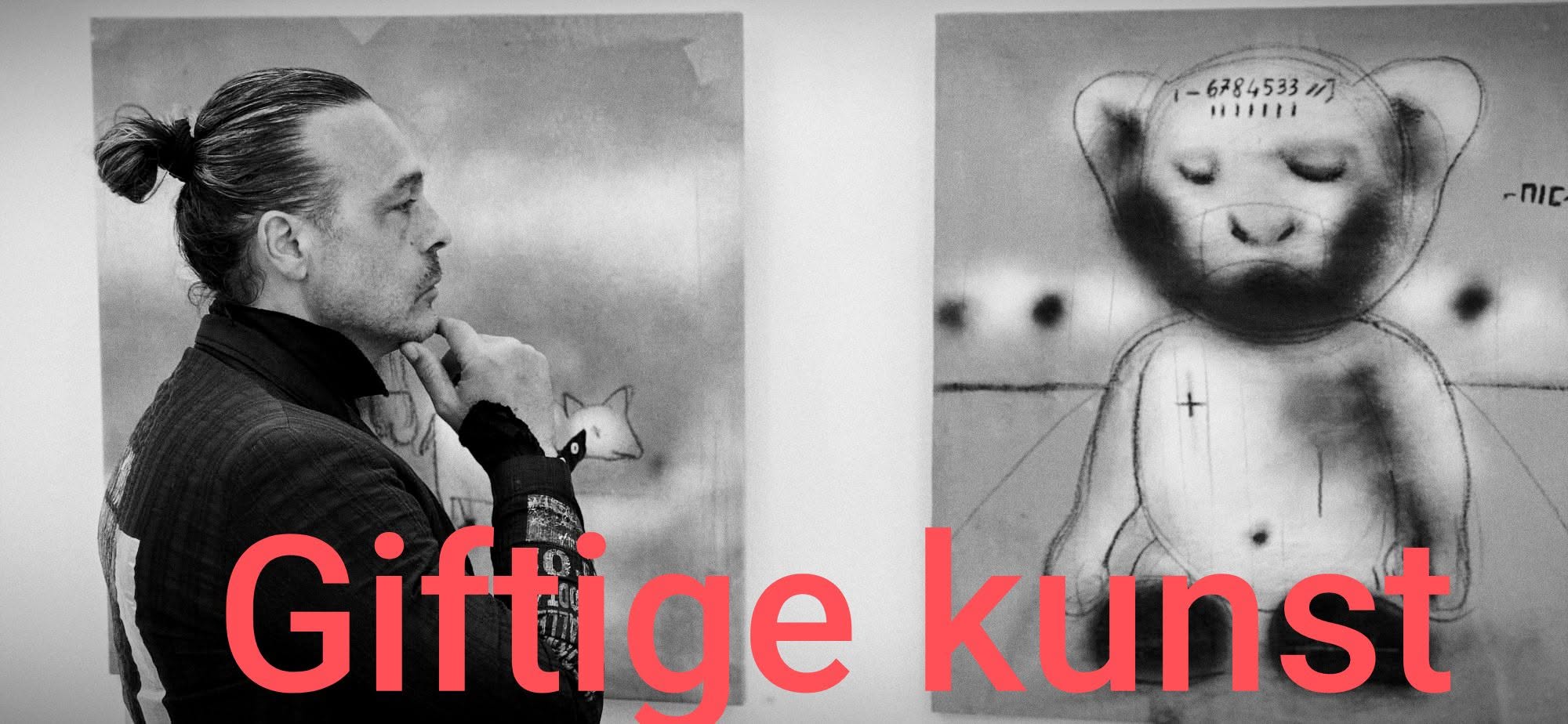
Tra gli artisti che hanno presentato i loro lavori, il partenopeo Giuseppe Lucio Labriola che si propone sulla scena artistica da tempo come Lucio DDT art, utilizzando la sigla del potente insetticida, indicando il doppio binario sui cui agisce: quelle delle scene apocalittiche che dipinge e costruisce in sculture raffiguranti mostruosi reperti dell’umanità e quello del messaggio disturbante, velenoso che trasmette.
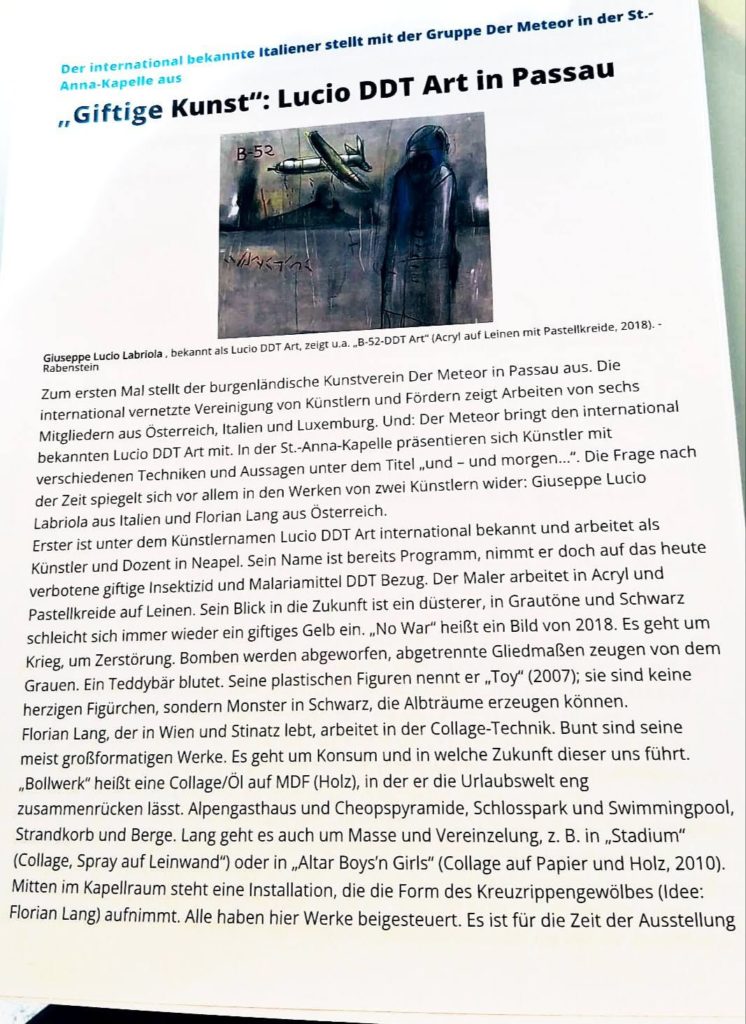
A questa arte tossica (giftige Kunst) una rivista tedesca ha dedicato una pagina intera (foto) spiegando l’effetto dirompente che hanno dipinti e installazioni di Labriola sul pubblico. Possibile mai che questa potente denuncia (attraverso pittura e assemblaggio di materiali diversi) contro il disastro ambientale che produrrà un futuro fosco in Italia non sia deflagrata sulle colonne dei cosiddetti migliori giornali nazionali?
Un interrogativo sospeso che lascia però un dubbio forte sulla capacità di comunicazione nel nostro Belpaese, diretta da appartenenza e schieramenti. Che rendono l’atmosfera culturale davvero tossica. Tanto per restare ancorati al tema.
Port’Alba/ Church of Sant’Antonello: giving creativity a voice. Contemporary art dialogues from the 17th to the 20th of June
Let creativity take centre stage. From today, the 17th of June, until the 19th, Naples will host ‘Dialogues on Contemporary Art’ in the church of Sant’Antonello a Port’Alba, in the historic and cultural heart of the city. The event will feature the key figures themselves: artists, intellectuals, scholars and art critics.
In a city where there has been much confusion over the right strategy to adopt for showcasing both emerging and established (visual and artistic) talent to the world, it is important that the very people who, through their imagination, create beauty, reflections and emotions, have their say.
Over the last 25 years or so, this confusion was initially fuelled by the short-sighted eagerness to exhibit works by artists acclaimed on the international art market in Piazza del Plebiscito, thereby excluding those (from Naples and Campania) outside the commercial circuit, resulting in a blatant marginalisation.
Then the barriers were broken down by a policy of total openness, which, however, did not include a careful plan for promotion and selection; finally, the role of an advisor on contemporary art for the City of Naples was established, entrusted with making decisions and launching initiatives.
Now, at last, the soul of Naples takes centre stage, with different faces and voices. On the page where this note is published, the detailed programme is included, accompanied by the following reflection centred on a recent exhibition promoted in May in Passau, a city in Germany on the border with Austria.
Among the artists who presented their works was the Neapolitan Giuseppe Lucio Labriola, who has long been active on the art scene under the name Lucio DDT art, using the acronym of the powerful insecticide to indicate the dual track along which he operates: that of the apocalyptic scenes he paints and constructs in sculptures depicting monstrous artefacts of humanity, and that of the disturbing, poisonous message he conveys.
A German magazine has dedicated a full page (photo) to this ‘toxic art’ (giftige Kunst), explaining the disruptive effect that Labriola’s paintings and installations have on the public. Is it possible that this powerful indictment (through painting and the assemblage of various materials) of the environmental disaster that will bring about a bleak future in Italy has not made a splash in the pages of the so-called best national newspapers?
This is a question left hanging, yet one that casts serious doubt on the capacity for communication in our Belpaese, which is driven by loyalty and political allegiances. These factors render the cultural atmosphere truly toxic. Just to stay on topic.
.