
San Giovanni a Carbonara è un tempio di bellezza rinascimentale. Chiesa monumentale restaurata nel 2022, si trova nel quartiere di San Lorenzo, vicino a Porta Capuana, adesso crocevia multietnico, a ridosso di Castel Capuano, antico tribunale di Napoli.
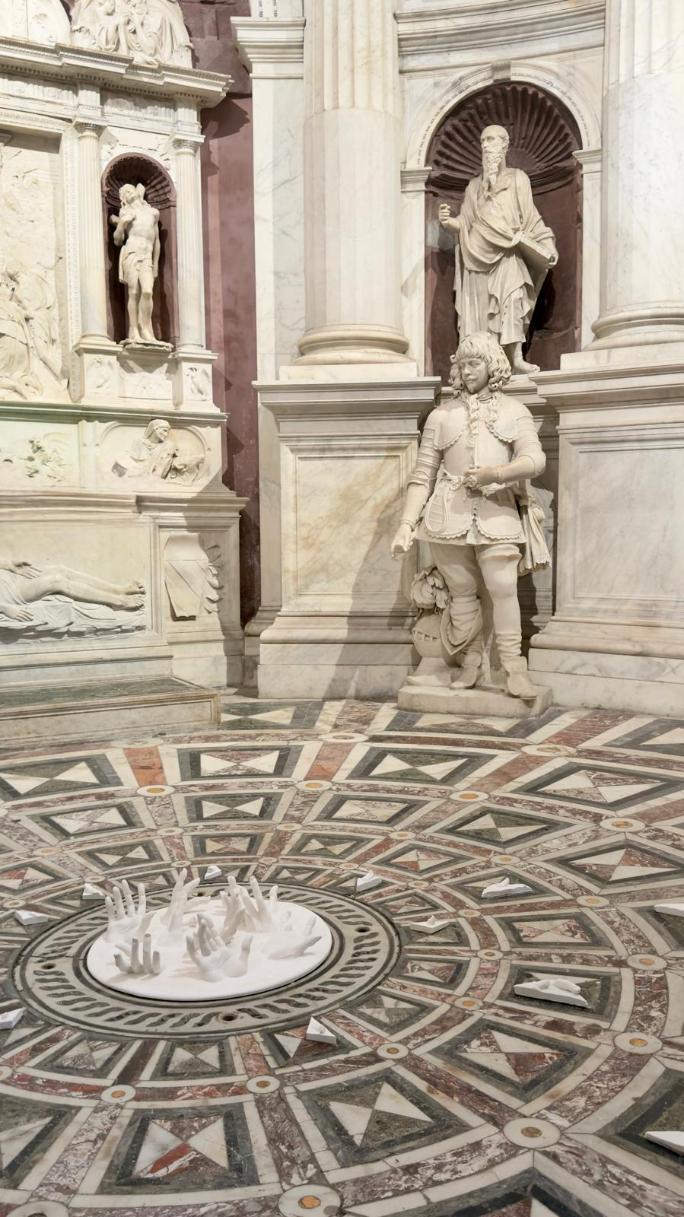
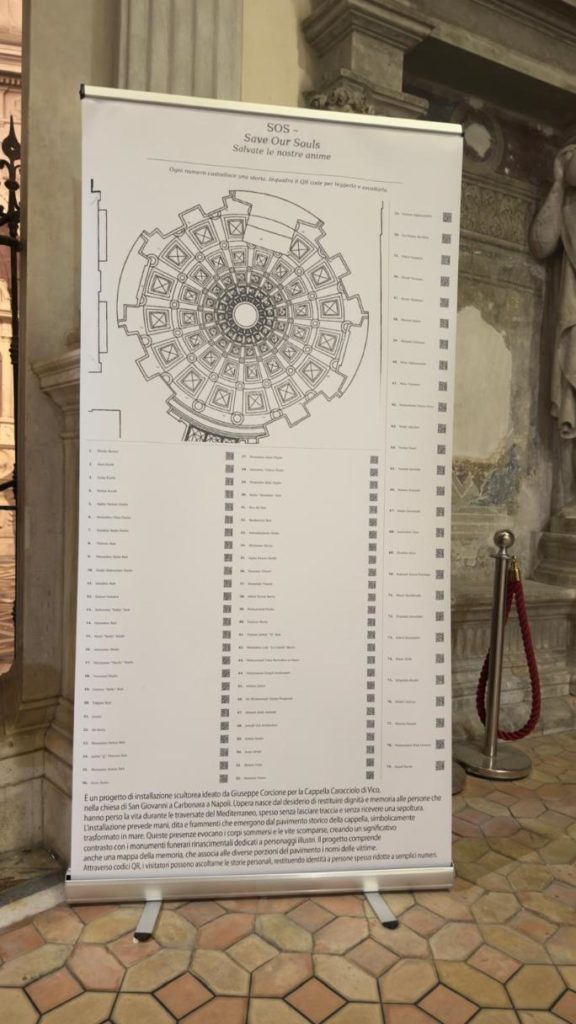
Da ieri e fino a domani ospita l’installazione del partenopeo Giuseppe Corcione. Un’opera commovente e minimalista che s’inserisce nello cappella Caracciolo del complesso.
SOS. Save our souls: chi guarda in basso osserva un cerchio dove tracce di disperazione fanno pensare a istanti di memoria collettiva spesso cancellati dall’egoistica corsa di una società ripiegata su sé stessa e impegnata a salvarsi da sola, malgrado il grido d’aiuto di chi affonda, nel cuore e nel corpo.
Scrive Chiara Reale nel testo critico che accompagna l’installazione: «Emergendo dalla pavimentazione della cappella, le mani, le dita e i frammenti di arti superiori in gesso disseminati da Corcione trasformano l’architettura sacra in una superficie liquida e metafisica. Il pavimento diventa quindi uno specchio d’acqua, le linee geometriche si trasformano in correnti, rotte, traiettorie di viaggio. Nell’opera di Corcione è il frammento a farsi carico del “tutto” in quanto resti di un naufragio e contemporaneamente gesti cristallizzati nel tempo».
Le mani, così, diventano metafora di un naufragio collettivo, quello dell’anima tartassata e soffocata dalla disumanizzazione ormai veloce e costante in un pianeta attraversato da guerre e indifferenza. Dove il male esplode anche anche e soprattutto all’interno delle pareti domestiche che nutrono odio e non cura reciproca.
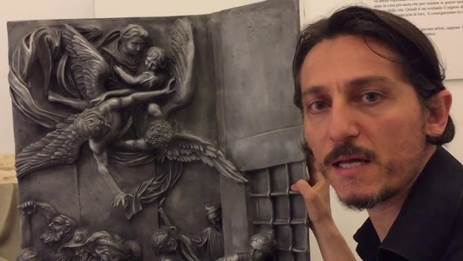
Corcione che insegna anatomia artistica alle Belle Arti di Firenze, è uno degli scultori più attenti alla tradizione del panorama contemporaneo, capace di dialogare con capolavori storici, donando emozioni intense. Tra i suoi lavori più celebri il Cristo Svelato (o Luce Nascosta), realizzato nel 2011 per la cappella del Real Monte Manso di Scala: un’opera che idealmente collegata al Cristo Velato di Sanmartino, realizzata con gesso, polvere di marmo e braccia in plexiglas trasparente.
Con L’Ottava Misericordia (2016) invece ha dato vita a un bassorilievo tattile in alluminio collocato nel Pio Monte della Misericordia che traduce in tre dimensioni il celebre dipinto del Caravaggio, rendendolo accessibile anche ai non vedenti.
San Giovanni a Carbonara / ‘SOS. Save our souls’: an installation by Giuseppe Corcione representing the collective shipwreck of the soul
San Giovanni a Carbonara is a temple of Renaissance beauty. This monumental church, restored in 2022, is situated in the San Lorenzo district of Naples, near Porta Capuana – now a multi-ethnic crossroads – and close to Castel Capuano, Naples’ former courthouse.
From yesterday until tomorrow, it is hosting an installation by the Neapolitan artist Giuseppe Corcione. A moving and minimalist work located in the Caracciolo Chapel within the complex.
SOS. Save our souls: those who look down see a circle where traces of despair evoke moments of collective memory, often erased by the selfish rush of a society turned in on itself and preoccupied with saving itself, despite the cry for help from those who are sinking, in heart and body.
Chiara Reale writes in the critical essay accompanying the installation: ‘Emerging from the chapel floor, the hands, fingers and fragments of upper limbs in plaster scattered by Corcione transform the sacred architecture into a fluid, metaphysical surface. The floor thus becomes a body of water; the geometric lines transform into currents, routes and trajectories of travel. In Corcione’s work, it is the fragment that embodies the ‘whole’, as both the remains of a shipwreck and, at the same time, gestures crystallised in time.”
The hands thus become a metaphor for a collective shipwreck – that of the soul, battered and suffocated by the now rapid and constant dehumanisation on a planet ravaged by war and indifference. Where evil erupts even, and above all, within the walls of the home, which harbour hatred rather than mutual care.
Corcione, who teaches artistic anatomy at the Academy of Fine Arts in Florence, is one of the sculptors on the contemporary scene most attentive to tradition, capable of engaging with historical masterpieces whilst evoking intense emotions. Among his most celebrated works is Christ Unveiled (or Hidden Light), created in 2011 for the chapel of the Real Monte Manso di Scala: a work that is ideologically linked to Sanmartino’s Veiled Christ, crafted from plaster, marble dust and arms made of transparent Plexiglas.
With L’Ottava Misericordia (2016), on the other hand, he created a tactile aluminium bas-relief installed at the Pio Monte della Misericordia, which translates Caravaggio’s famous painting into three dimensions, making it accessible even to the visually impaired.