
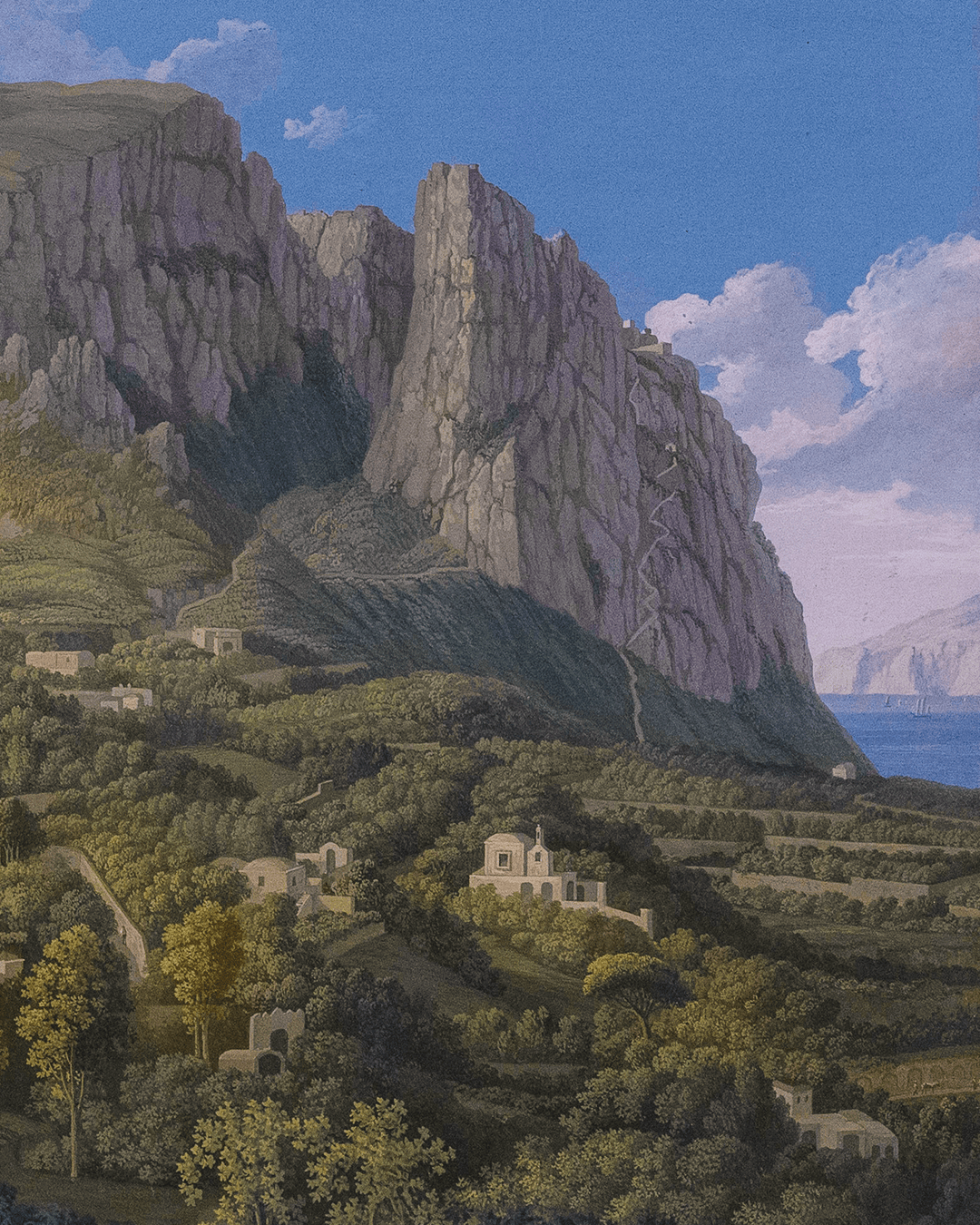
La bellezza della pittura di Philip Hackert arriva nei musei e parchi archeologici di Capri. Grazie a un prestito della Reggia di Caserta la “Veduta di Capri con il Monte Solaro” (1792) approda per la prima volta sull’isola che lo ha ispirato.
Un’operazione culturale che si realizza in occasione della mostra Il mito di Capri. A duecento anni dalla scoperta della Grotta Azzurra (1826–2026), a cura di Massimo Osanna e Luca Di Franco in programma fino al 18 ottobre.
La mostra ripercorre il processo che, tra Settecento e Ottocento, trasformò Capri da luogo appartato e difficilmente accessibile del Golfo di Napoli in una delle mete più celebrate dell’immaginario europeo. Dalle prime esplorazioni antiquarie e dalla riscoperta delle vestigia imperiali alla stagione dei viaggiatori, degli artisti e degli scrittori che ne celebrarono la bellezza, il percorso racconta la progressiva costruzione del mito moderno dell’isola.
Punto di svolta fu la riscoperta della Grotta Azzurra nel 1826 da parte di August Kopisch ed Ernst Fries che segnò l’avvio della fortuna internazionale di Capri. Attraverso dipinti, disegni, libri, reperti archeologici e testimonianze d’epoca, la mostra ricostruisce la stagione in cui l’isola si affermò come luogo d’elezione per artisti e viaggiatori.
Eseguito nel 1792 per Ferdinando IV di Borbone,“Veduta di Capri con il Monte Solaro” è una delle più significative vedute settecentesche dell’isola e una delle prime e più importanti rappresentazioni moderne del paesaggio caprese. Una gouache su carta con cui l’artista tedesco di fama europea Prenzlau, 15 settembre 1737 – San Pietro di Careggi, 28 aprile 1807) inaugura una nuova attenzione alla realtà topografica e paesaggistica di Capri, anticipando la stagione ottocentesca di artisti, scrittori e viaggiatori che contribuirono alla costruzione del mito internazionale dell’isola.
Per saperne di più
Learn more
https://museicapri.cultura.gov.it/it/musei-e-parchi-archeologici-di-capri/
Capri/ A gouache painted by Philip Hackert arrives on the island: a loan from the Royal Palace of Caserta
The beauty of Philip Hackert’s painting comes to Capri’s museums and archaeological parks. Thanks to a loan from the Royal Palace of Caserta, the “View of Capri with Mount Solaro” (1792) landed for the first time on the island that inspired it.
A cultural operation that takes place on the occasion of the exhibition The Myth of Capri. Two hundred years after the discovery of the Blue Grotto (1826–2026), curated by Massimo Osanna and Luca Di Franco, scheduled until October 18.
The exhibition traces the process that, between the eighteenth and nineteenth centuries, transformed Capri from a secluded and difficult-to-access place on the Gulf of Naples into one of the most celebrated destinations in the European imagination. From the first antiquarian explorations and the rediscovery of imperial vestiges to the season of travelers, artists, and writers who celebrated its beauty, the route recounts the progressive construction of the island’s modern myth.
A turning point was the rediscovery of the Blue Grotto in 1826 by August Kopisch and Ernst Fries, which marked the beginning of Capri’s international fortune. Through paintings, drawings, books, archaeological finds, and period testimonies, the exhibition reconstructs the era in which the island established itself as a place of choice for artists and travelers.
Painted in 1792 for Ferdinand IV of Bourbon, “View of Capri with Mount Solaro” is one of the most significant eighteenth-century views of the island and one of the first and most important modern representations of the Capri landscape.
A gouache on paper with which the European-famous German artist (Prenzlau, 15 September 1737 – San Pietro di Careggi, 28 April 1807) inaugurates a new attention to the topographical and landscape reality of Capri, anticipating the nineteenth-century season of artists, writers and travellers who contributed to the construction of the international myth of the island.
.